/
/
Karwa Chauth physical relation rules explained: Know what religious traditions say about intimacy after moonrise and what medical science says about it.
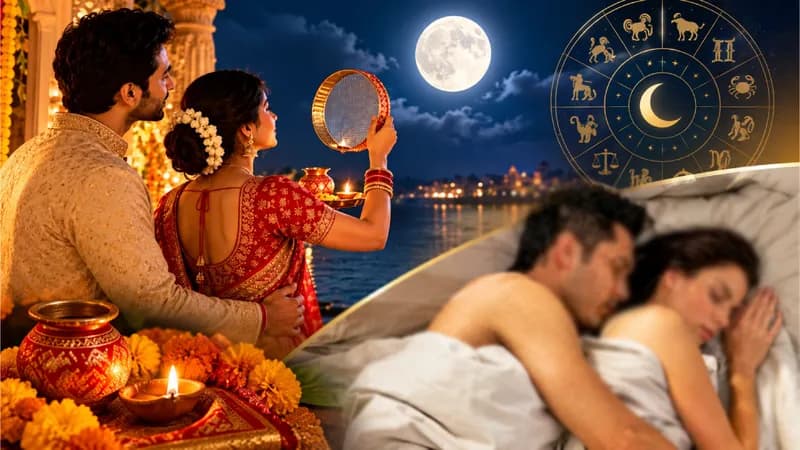
Every year, as Karwa Chauth approaches, one question quietly makes its way into conversations between married couples: is physical intimacy actually allowed on this night? It’s not something most people ask openly, but it’s something many wonder about.
Let’s talk about it honestly, looking at what religious traditions say, what medical science actually tells us, and what couples can reasonably take away from both.
The short answer is that it depends on who you ask and which tradition you follow.
Certain religious teachers and astrologers advise couples to practise restraint during Karwa Chauth fasting, particularly while the vrat is being observed. The thinking behind this is fairly straightforward: the day is meant to be one of devotion, prayer and spiritual discipline. Women fast, many observing a nirjala vrat without food or water from sunrise, as an act of love and prayer for their husbands’ long life and well-being. Within that context, some religious advisers feel that maintaining self-discipline, including avoiding physical intimacy on Karwa Chauth, is consistent with the spirit of the occasion.
That said, it’s worth being clear: these are interpretations, not universal Hindu law. Religious customs across India vary enormously between families, communities and regional traditions. Anyone claiming that intimacy definitively invalidates the fast or erases its spiritual merit should be able to back that up with reliable scriptural support, and that bar isn’t always met.
If you and your partner follow a specific religious tradition and want clarity on what it expects, the best person to ask is a religious authority you actually trust within that tradition.
This is where things get a little more nuanced, and frankly, a little more reasonable.
Karwa Chauth vrat guidelines generally indicate that the fast concludes after the moon is sighted and the customary rituals are completed. Women offer prayers, perform the moon-worship ritual, and break their fast, often with their husbands present. Once that’s done, the religious obligations of the day have technically been fulfilled.
Some advisers recommend abstaining for the entire day as a matter of personal discipline. Others interpret things differently. There is no single, universally accepted ruling that declares sex on Karwa Chauth after moonrise forbidden for every Hindu couple everywhere.
What matters most here is this: a traditional recommendation from within one religious stream is not the same as a binding rule that applies to all. Couples who follow specific family customs may choose to abstain out of respect for those traditions. Others may approach the question based on personal belief and mutual agreement. Both are valid choices, as long as they’re made from a place of understanding rather than fear.
From a purely medical standpoint, Karwa Chauth does not create any special prohibition against sexual activity.
For healthy adults, consensual physical intimacy is not harmful simply because it falls on a religious festival day. However, and this is worth paying attention to, the physical demands of fasting do matter here.
A nirjala fast means no food and no water for many hours. That can lead to dehydration, fatigue, dizziness and general weakness. These effects are real and should be taken seriously, especially in warm weather or for people with underlying health conditions. Physical exertion, including sexual activity, can amplify discomfort for someone who is already running low on fluids and energy.
With that in mind, a few practical things are worth keeping in mind:
People managing diabetes, kidney conditions, a history of fainting or other health concerns that make prolonged fasting risky should speak to a doctor before observing a nirjala vrat.
Medical science addresses the body. It doesn’t determine religious choices, that’s a personal matter.
Karwa Chauth religious beliefs and fasting customs vary considerably across regions and families. Here are some grounded things to keep in mind:
1. Follow the tradition that actually applies to you
Not every Hindu family observes Karwa Chauth the same way. Learn the customs your household follows rather than assuming one universal set of rules exists.
2. Complete the prescribed rituals
The traditional rhythm of the day involves fasting, prayers and the moon-related rituals before the fast is broken. Specific practices may differ by region and family.
3. Talk to each other
A religious observance shouldn’t become a source of tension between partners. If you have different expectations about the day, discuss them calmly. Mutual respect matters as much as ritual observance.
4. Take the physical demands of a nirjala vrat seriously
Going without water all day is hard on the body. Pay attention to how you’re feeling and don’t push through serious discomfort for the sake of completing a ritual.
5. Don’t let customs become absolutes
Some families associate certain colours or practices with auspicious occasions. That’s a family tradition, not necessarily a universal prohibition. Claims that wearing a particular colour automatically invalidates a fast, for example, should be treated with some scepticism unless you have solid religious grounding for them.
Again, the answer depends entirely on the tradition and interpretation being followed.
Within certain religious frameworks, abstaining from physical intimacy on Karwa Chauth during the fast is seen as an appropriate expression of devotion. If that resonates with you and your partner, it’s a perfectly reasonable choice to make.
But there is no solid foundation for the claim that every couple who chooses otherwise will face bad luck, marital problems or any other negative outcome. That kind of fear-based framing doesn’t reflect established religious doctrine, and it certainly doesn’t reflect medical fact.
Karwa Chauth carries real meaning for many couples, not because of fear, but because of love, commitment and shared faith. That meaning doesn’t require scare tactics to hold weight.
When it comes to Karwa Chauth physical relation questions, separating religious belief from medical fact is genuinely helpful.
Certain traditional interpretations suggest avoiding sexual intimacy during the fasting period as a mark of devotion and self-discipline, and within those traditions, that’s worth respecting. But that should not be generalised into a universal prohibition that applies to every Hindu couple without exception.
Medically, the festival itself does not make consensual intimacy harmful. What does deserve attention is the real physical toll of a nirjala fast, dehydration, fatigue and weakness are legitimate concerns, and rest and recovery should come first for anyone feeling unwell after a long day without food or water.
The most grounded approach is also the most human one: consider your religious beliefs, your family’s traditions, your physical health on the day, and your partner’s comfort and consent. Faith is personal. So is this decision. Making it from a place of knowledge rather than fear is always the better path.
Disclaimer: This article provides general information about religious customs and health considerations. Religious practices vary, and this article does not offer a definitive interpretation of Hindu scriptures or personalised medical advice.