/
/
Children's Day 2026 is celebrated on November 14 in India. Know its history, significance, Jawaharlal Nehru's connection and why the day matters for every child.
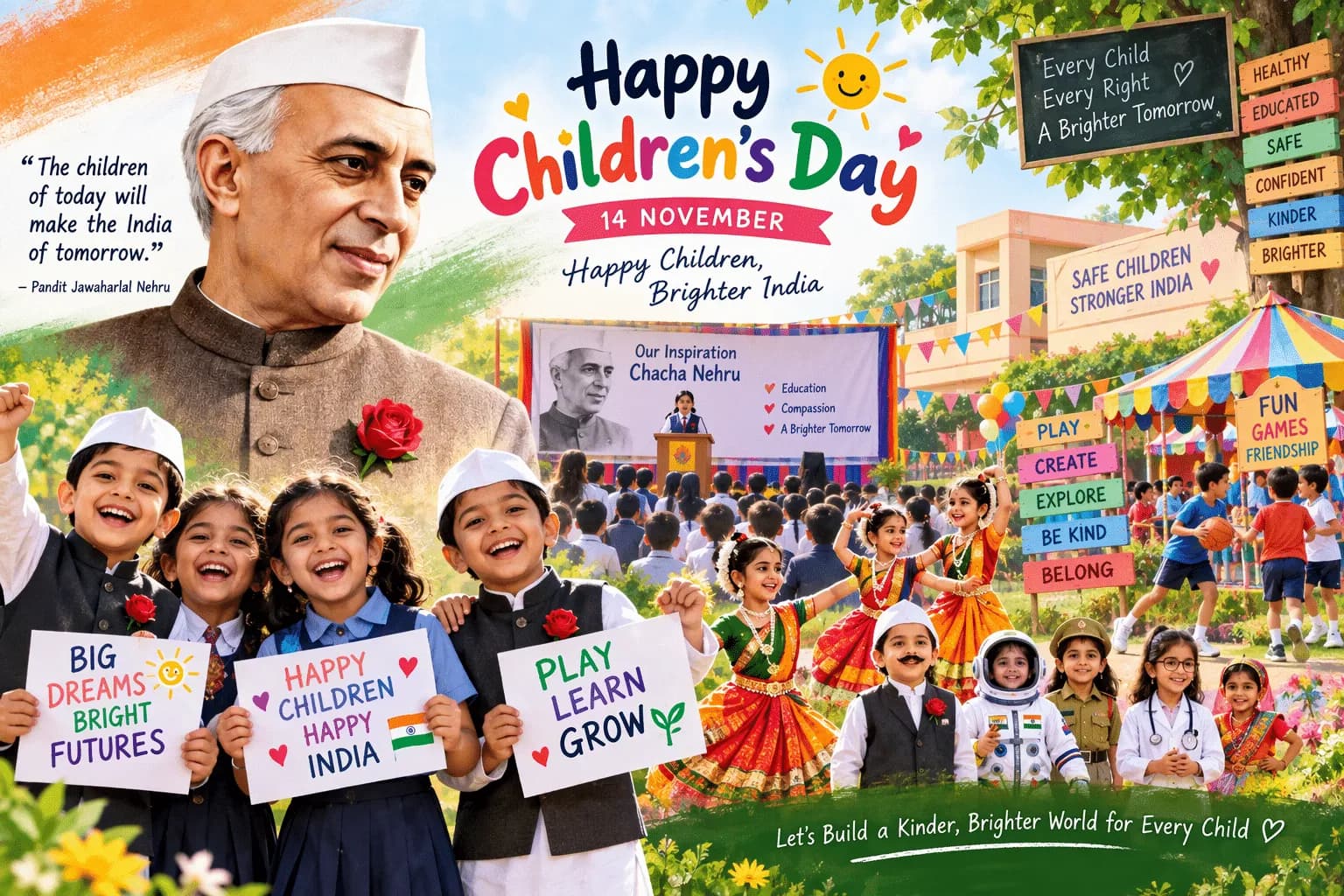
Children's Day 2026 is being celebrated across India today, November 14, to honour the birth anniversary of Pandit Jawaharlal Nehru, the country's first Prime Minister. Popularly known as 'Chacha Nehru', he was remembered for his affection for children and his belief that education, care and opportunities were essential for building a stronger nation.
Also known as Bal Diwas, Children's Day is an occasion dedicated to celebrating childhood while highlighting the importance of children's rights, education, health, safety and overall development.
Schools and educational institutions across the country mark the occasion with cultural programmes, dance performances, drawing competitions, games and special activities. However, the importance of Children's Day goes beyond celebrations. It also reminds parents, teachers and society that every child deserves a safe, happy and supportive environment in which to grow.
Children's Day is observed every year on November 14 in India. In 2026, the occasion falls on Saturday, November 14.
The date marks the birth anniversary of Pandit Jawaharlal Nehru, who was born on November 14, 1889, in Allahabad, now known as Prayagraj, Uttar Pradesh.
| Details | Information |
|---|---|
| Occasion | Children's Day 2026 |
| Also Known As | Bal Diwas |
| Date | November 14, 2026 |
| Day | Saturday |
| Celebrated In | India |
| Associated With | Jawaharlal Nehru |
| Birth Anniversary | 137th |
India celebrates Children's Day on November 14 to commemorate the birth anniversary of Jawaharlal Nehru, who served as the country's first Prime Minister from 1947 to 1964.
Nehru was popularly called 'Chacha Nehru' because of his affection for children. He believed that children were the foundation of the country's future and that their education and development played an important role in nation-building.
His birthday became associated with Children's Day as a tribute to his affection for young people and his vision for their future. After his death in 1964, November 14 continued to be observed as Children's Day in his memory.
The occasion encourages people to recognise that children are not just the future of a country but also an important part of its present.
The history of Children's Day in India is closely connected with the life and legacy of Jawaharlal Nehru.
Born in 1889, Nehru became one of the leading figures of India's freedom movement and later served as the first Prime Minister of independent India. During his political career, he consistently emphasised the importance of education, scientific development and opportunities for younger generations.
His connection with children became an important part of his public image. Children often addressed him as Chacha Nehru, reflecting the affection associated with his personality.
After his death on May 27, 1964, his birth anniversary, November 14, was adopted as the date for celebrating Children's Day in India.
The day has since become an annual reminder of the importance of protecting childhood and providing every child with opportunities to learn, develop and achieve their potential.
Jawaharlal Nehru was fondly known as Chacha Nehru because of his close association with children.
He was often seen interacting with young people during public events and believed that children should receive love, attention, education and encouragement.
His affection for children became so widely recognised that the name Chacha Nehru remained closely connected with his identity.
Even today, his birthday is remembered across India through Children's Day celebrations, school programmes and activities dedicated to children.
Children's Day is not simply an occasion for distributing chocolates, organising games or celebrating at school. It carries a much deeper message about the responsibilities of families, educational institutions and society.
Here are some important reasons why the day matters.
Education is one of the most important foundations of a child's future. Every child deserves access to quality education, regardless of their family background or financial circumstances.
Children's Day encourages society to focus on educational opportunities and create an environment where young people can develop their abilities.
Every child deserves basic rights, including access to education, healthcare, protection from exploitation and the opportunity to express their views.
The day also highlights the importance of preventing child labour, abuse, discrimination and other forms of exploitation.
Children need more than academic success to develop into confident individuals. Their physical health, emotional well-being and mental development are equally important.
Parents and teachers should encourage children to communicate openly, participate in physical activities and develop healthy relationships.
A safe childhood is essential for healthy development. Children should be protected from violence, bullying, neglect and online exploitation.
With increasing internet and smartphone usage, digital safety has also become an important responsibility for parents and educators.
Every child has different interests and abilities. Some enjoy sports, others prefer music, drawing, technology or academic activities.
Children's Day reminds adults to encourage these interests rather than putting unnecessary pressure on children to follow a single definition of success.
Children's Day is celebrated in schools and educational institutions through activities designed to make children feel appreciated and included.
Some common celebrations include:
Cultural Programmes: Students participate in dance performances, music, drama and other stage activities.
Drawing and Painting Competitions: Children showcase their creativity through artwork and colourful presentations.
Games and Sports: Schools organise indoor and outdoor games to encourage participation and teamwork.
Special Assemblies: Teachers and students discuss the importance of childhood, education and children's rights.
Gifts and Sweets: Some schools distribute chocolates, gifts and sweets to make the occasion memorable.
Fun Activities: Storytelling, quizzes, fancy dress competitions and other interactive events are organised.
These activities create happy memories while reminding students about the value of friendship, learning and personal growth.
The meaning of a safe and healthy childhood is changing as technology becomes a bigger part of everyday life.
Children today use smartphones, social media, online games and digital learning platforms from an early age. While technology offers new opportunities for education and creativity, it also introduces challenges related to cyberbullying, online privacy, harmful content and screen addiction.
Artificial intelligence is another important development that is changing how children learn and interact with information.
Parents and teachers need to help children understand how to use technology responsibly. They should also encourage open conversations about online experiences and make sure children know how to seek help when they encounter uncomfortable or unsafe situations.
Children's Day is an opportunity to reflect on these challenges and work towards creating a digital environment that protects young users while allowing them to explore and learn.
One common question people ask is why India celebrates Children's Day on November 14, while World Children's Day is observed on November 20.
The two occasions have different historical associations.
India celebrates National Children's Day on November 14 to honour Jawaharlal Nehru's birth anniversary.
World Children's Day, on the other hand, is observed internationally on November 20. The United Nations established Universal Children's Day in 1954 to promote children's welfare and international understanding.
November 20 also marks two important milestones: the adoption of the Declaration of the Rights of the Child in 1959 and the Convention on the Rights of the Child in 1989.
UNICEF uses World Children's Day to raise awareness about children's rights and encourage governments and communities to listen to children's voices.
For its 2026 global campaign, UNICEF is highlighting the message 'My day, my rights, my future', encouraging children to speak about their lives, rights and the future they want.
Therefore, November 14 and November 20 are separate observances, although both focus on children's well-being and future.
Children need care, protection, encouragement and opportunities throughout the year, not just on one special occasion.
A single day of celebration cannot solve challenges such as unequal access to education, child labour, malnutrition, bullying or online safety risks.
Parents can make a meaningful difference by spending quality time with their children, listening to their concerns, appreciating their efforts and allowing them to explore their interests.
Schools can contribute by creating inclusive classrooms, encouraging creativity and ensuring that every student feels respected and supported.
Similarly, communities and governments have an important responsibility to protect children's rights and improve access to education, healthcare and essential services.
The real message of Children's Day is that every child deserves the opportunity to enjoy childhood without fear, discrimination or unnecessary pressure.
Children's Day 2026 is a reminder that children are among the most valuable members of society and that their well-being should remain a priority every day.
Celebrated on November 14 in memory of Jawaharlal Nehru, Bal Diwas honours his association with children while highlighting the importance of education, safety, equality and overall development.
While school celebrations, games and cultural activities make the occasion enjoyable, its deeper purpose is to encourage adults to create a better world for the next generation.
A happy childhood, quality education and equal opportunities can help children grow into confident individuals who contribute positively to society.
Happy Children's Day 2026!