/
/
Cab drivers filming couples inside taxis has triggered a fresh debate over privacy, consent, public decency, and viral content culture in India.

If you've spent even five minutes on Instagram lately, chances are you've already come across one of these clips. The Taxi vs OYO Viral Videos trend is back, and this time it's louder than ever. A recent reel showing a cab driver secretly recording a couple who appeared to be behaving intimately during their ride has set off yet another wave of arguments online, about passenger privacy, consent, public decency, and whether these recordings are genuine safety concerns or just content made to chase clout.
The exact location and date of the video haven't been independently confirmed. But that hasn't stopped it from spreading fast across platforms, racking up thousands of reactions from people who couldn't be more split on whose side they're on.
The clip itself is fairly straightforward: a couple in the back seat of a moving taxi, appearing to get a little too comfortable for a shared ride, while the driver films them from the front. The video then made its way online.
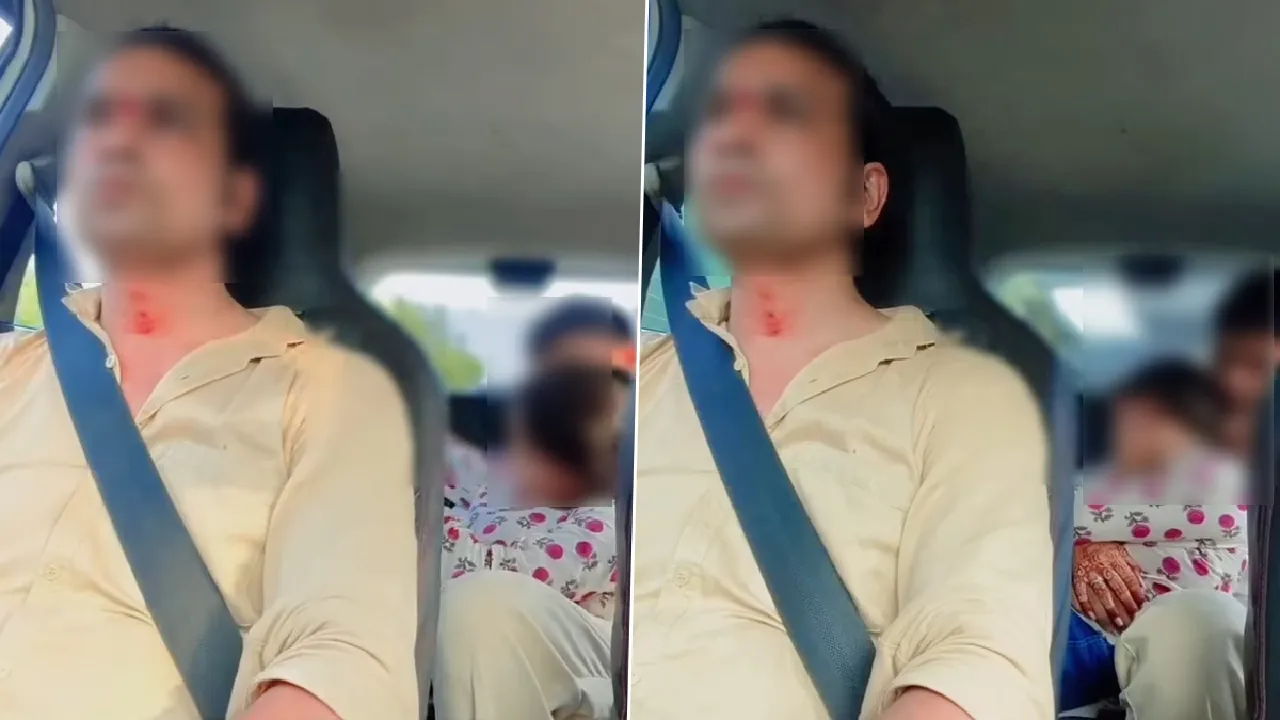
Some people watching it were quick to criticise the couple. Others immediately turned their attention to the driver, specifically, why he felt the need to post it publicly rather than simply addressing the situation in the moment.
And that question sits at the heart of what this debate is really about. Do passengers have any expectation of privacy inside a viral cab video situation, even when cameras are present for so-called security reasons? It's a conversation India keeps having, and it doesn't seem to be going away.

This latest video follows closely on the heels of another incident that made the rounds in July 2026.
In that one, a cab driver records couple getting intimate during a journey, and then pulls over entirely. He confronts them directly, telling them they should've booked a room if that's what they had in mind, and reminding them that his cab is where he works, not a private space for passengers to do as they please.
The couple apparently backed off once called out. The clip, predictably, went viral almost immediately. Social media did what social media does, memes, hot takes, genuine debate, the whole mix.
This isn't exactly new territory either.
A while back, drivers in cities like Hyderabad and Bengaluru started putting up handwritten or printed notices inside their cabs. Messages along the lines of:
"No Romance. This is a cab, not your private place or OYO."
Photos of those signs circulated widely. Some passengers found them funny. Others read them as a sign, pun intended, of just how uncomfortable many drivers have become with what they witness on the job.
From a driver's perspective, it's not complicated. A taxi is a workspace. What happens inside it should reflect that.
🚖 ⚠️ 😂
📸: @venkatesh_2204#Hyderabadpic.twitter.com/xwjel4VQiI— Hi Hyderabad (@HiHyderabad) October 20, 2024
Here's where things get genuinely complicated, because there are actually two separate problems tangled together here.
The first: should passengers be getting physically intimate inside a commercial cab, with a driver present and working? Most people would say no, that's not appropriate.
The second, and this is the one that moral policing debate tends to skip over, is whether recording someone without their knowledge and then uploading that footage for the world to see is any better. Installing a dashcam for security is one thing. Turning a passenger's private moment into content for likes and shares is something else entirely.
Privacy experts and legal voices have made this point repeatedly. Surveillance for safety and surveillance-as-entertainment are not the same thing, even if the camera doing the recording is identical.
As usual with viral cab video moments, the internet has landed in multiple camps at once.
Some users have defended the drivers, calling their actions a reasonable stand against behaviour that crosses a line in a professional setting.
Others have pushed back hard, arguing that uploading the footage, rather than simply addressing the situation, suggests the goal was views, not accountability. There's also a growing concern that social media platforms are quietly rewarding this kind of content, which only encourages more people to reach for their phones in similar situations.
So far, no major ride-hailing platform has put out any official statement on the latest round of videos tied to the Taxi vs OYO Viral Videos trend.
In earlier cases where driver recordings caused controversy, companies typically handled things on a case-by-case basis, looking at whether their own policies or any local laws had been broken.
What the Taxi vs OYO Viral Videos trend keeps revealing is a tension that isn't going to resolve itself easily. A cab is a driver's workplace and a passenger's temporary personal space at the same time. Those two things don't always sit comfortably together, and in the era of reels and instant virality, a single recording can explode into a national conversation within hours.
But this has grown into something bigger than couples and cabs. It's really a question about where passenger privacy ends, where public responsibility begins, and what responsible behaviour on social media actually looks like. Without clearer guidelines, from platforms, from ride-hailing companies, or from the law, these incidents are going to keep happening, and the debate is going to keep going in circles.
Disclaimer: This article is based on viral social media posts, publicly available videos, and media reports. We do not claim ownership of any third-party content used for informational and news reporting purposes. The authenticity of the videos has not been independently verified unless officially confirmed.