/
/
Most searched viral video terms explained: 19-minute video, Minahil Malik, Gungun Gupta and 39 names linked to privacy risks, fake links and scams online.
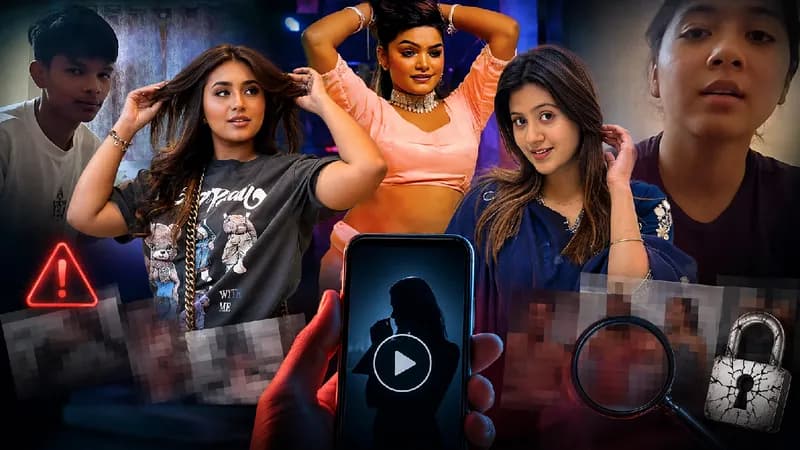
The internet’s latest “viral video” searches are increasingly driven by a mix of genuine news events, old controversies, misleading captions, AI-generated deepfakes and scam links. In many cases, a celebrity or influencer’s name is attached to a video without reliable evidence that the person actually appears in it.
The 19-minute video controversy involving Payal Gaming is one of the clearest recent examples. Maharashtra Cyber Police confirmed in December 2025 that a video falsely linked to gamer Payal Dhare was an AI-generated deepfake.
That makes verification especially important. A trending search term is not proof that a video is genuine, and users should never download or share alleged private footage simply because it is being widely discussed.
The “19-minute viral video” became a major online search trend in late 2025, with social media posts often describing an alleged intimate clip and attaching different influencers’ names to it. One of the most prominent names dragged into the controversy was gaming creator Payal Dhare, popularly known as Payal Gaming.
Maharashtra Cyber Police later confirmed that the video linked to Payal was tampered with and modified and was an AI-generated deepfake. Payal also said that the woman shown in the circulated material was not her.
The controversy demonstrated how a precise duration such as “19 minutes 34 seconds” can make a false claim appear authentic. Cyber-safety experts and police warnings also highlighted the danger of clicking links promising a “full video,” as such pages can be used for phishing, malware distribution and data theft.
Pakistani TikTok personality Minahil Malik became the subject of a viral-video controversy in October 2024 after an alleged intimate clip circulated online. Malik publicly denied that the footage was genuine and described it as fake. She also filed a complaint with Pakistan’s Federal Investigation Agency, according to contemporary reporting.
The important point is that the alleged footage was not independently established as authentic. The episode became another example of how social-media allegations can rapidly turn into harassment before the underlying claim has been verified.
The Agartala Eco Park viral-video search became associated with an alleged video involving a couple in Agartala, Tripura, in July 2026. However, much of the material appearing in search results comes from low-credibility websites and pages promoting supposed “links” or downloads rather than established news reporting.
Readers should therefore avoid treating the existence of numerous search results as confirmation of the allegation. There is also no reason to download or circulate alleged private footage merely because websites claim to have an “original link.”
Pakistani news anchor Mona Alam was targeted by an online viral-video claim in December 2024. A video was circulated under her name, prompting her to publicly reject the allegation and describe her character as being targeted by false claims.
The episode is best understood as an alleged-video and impersonation controversy rather than verified evidence of a genuine private recording involving the journalist. Users should be particularly cautious when a public figure’s name is used to attract clicks to an unverified video.
Ameesha Patel’s name has periodically appeared in viral-video searches, but a search for the keyword does not establish that she is involved in any leaked or private video.
There is no reliable evidence that should be used to present an alleged private video involving Ameesha Patel as genuine. Search-driven pages frequently recycle old entertainment clips, edited footage or sensational thumbnails under celebrity names. Such claims should not be treated as confirmed without a credible source.
The Priti Paswan viral-video controversy is one of the more recent cases where the claim was publicly rejected. In June 2026, an explicit clip described online as a “1 minute 48 second” video was circulated under the name of Bhojpuri stage performer Priti Paswan.
Paswan denied that she was the woman shown in the clip. She pointed to identifying features that did not match her and warned that those spreading the false claim could face legal action. Reports also warned that links associated with the trend were being used for phishing and potentially malicious activity.
Shruthi Narayanan’s name has appeared in viral-video searches online, but there is insufficient reliable evidence to establish that a private or leaked video attributed to her is genuine.
For responsible reporting, the search trend should not be presented as proof of a real incident. Where a video cannot be authenticated through credible reporting or an official statement, readers should treat the claim as unverified and avoid sharing it.
Gungun Gupta has previously been the subject of online searches involving alleged private-video claims. However, the circulation of a clip or the appearance of her name in search results does not independently establish that she appears in the material.
The broader pattern is important: influencer names can become attached to manipulated, edited or unrelated videos because the names themselves generate search traffic. Such claims should therefore be independently verified before being described as genuine.
Pakistani TikTok creator Imsha Rehman was among the social-media personalities whose name became associated with alleged private-video leaks in 2024. Her case followed the controversy involving Minahil Malik and became part of a wider discussion in Pakistan about privacy violations and the misuse of personal content. Contemporary reporting described the material as alleged rather than independently authenticated.
The incident illustrates how a private-video allegation can quickly become a mass-search phenomenon even when the authenticity and origin of the material remain uncertain.
Pakistani television personality Mathira Mohammad publicly responded in November 2024 after clips were circulated online using her name. She said people were misusing her photographs and adding “fake stuff” to them.
India Today reported that the authenticity of the alleged clips had not been confirmed. Mathira specifically objected to the use of her name and photos to create misleading material intended to damage her reputation.
Payal Gaming, whose real name is Payal Dhare, became one of the biggest names associated with the 19-minute viral-video controversy in late 2025.
The crucial fact is that Maharashtra Cyber Police subsequently confirmed that the video linked to her was AI-generated and a deepfake. The cyber department’s analysis found that the footage had been tampered with and modified. A criminal investigation was also initiated following her complaint.
Payal’s case is therefore not evidence of a genuine leaked private video. It is a documented example of how AI manipulation can falsely attach a real person’s identity to intimate content.
Bhojpuri actress and singer Akshara Singh was involved in a widely reported alleged-MMS controversy in September 2022. At the time, social media users claimed that a woman in a private video was Singh, but news reports stressed that there was no confirmation of the woman’s identity.
Singh later addressed the controversy publicly and described the episode as a cheap act. A separate older video of her crying was also circulated in connection with the controversy, but ABP Live reported that the emotional video itself was from an earlier dispute and was being misleadingly reused.
Anjali Arora was at the centre of a major alleged-MMS controversy in 2022. The video was widely claimed to feature her, but reports found that the woman shown was someone else who looked similar to Arora.
Aaj Tak reported that the alleged MMS was fake and that the woman in the video was not Anjali Arora.
The case remains a useful example of why visual resemblance is not enough to establish someone’s identity in an online video.
Nisha Guragain’s name became associated with an alleged MMS controversy during the TikTok era, particularly in 2020. Her name has subsequently continued to be used by websites and social-media accounts attempting to attract traffic to alleged “viral video” content.
The persistence of the search term years later does not mean a new or authentic private video exists. Users should distinguish between an old internet controversy and a newly verified event.
Searches for “Shilpa Gowda viral video” appear across low-quality viral-content pages, but there is not enough reliable reporting to establish a verified private-video incident involving her.
This is precisely the type of search query where readers should avoid clicking “full video,” “original video” or download links. A high number of pages repeating the same phrase is not independent confirmation.
Bhojpuri singer Shilpi Raj was previously linked to an alleged private-video controversy, with her name appearing alongside other Bhojpuri personalities in reports about MMS-related rumours.
However, the existence of online claims does not establish the authenticity of material attributed to her. Contemporary reporting on similar Bhojpuri controversies has repeatedly highlighted the uncertainty surrounding the identities of people shown in circulated clips.
Sofia Ansari’s name has frequently been used in online “viral MMS” and private-video searches. Much of the material found under these searches consists of reposts, sensational thumbnails and user-generated claims rather than reliable reporting establishing an authentic private recording.
Therefore, it is safer and more accurate to describe such searches as online rumours or unverified claims, rather than confirming that a leaked video exists.
There is insufficient reliable evidence to confirm a genuine private MMS involving Sonia Arora. Search results using the phrase are dominated by pages designed around viral-video keywords rather than established reporting that independently verifies the material.
Readers should not assume that a person named in a viral search is actually present in the video.
“Tango viral video” is an ambiguous search phrase and can refer to different videos, platforms or people depending on the context.
There is no sufficiently reliable evidence establishing one specific, verified private-video controversy that can responsibly be attributed to a person simply from the keyword “Tango.” This is another case where search-engine results alone should not be treated as evidence.
Bhojpuri actress Trisha Kar Madhu was involved in a widely reported private-video controversy in 2021. The incident became a major social-media story and was followed by interviews and public discussion from the actress.
Because the controversy involved intimate material, responsible coverage should focus on the privacy violation, the public response and the consequences rather than reproducing or directing readers to the footage.
“Banyuwangi viral video” can refer to several unrelated incidents in Banyuwangi, Indonesia. In January 2026, for example, a video from an Isra Mikraj event in Banyuwangi went viral after a stage performance attracted criticism because viewers considered the dancing inappropriate for a religious event. Organisers subsequently provided clarification.
Another Banyuwangi video involving two students at a café also generated online discussion in June 2026, demonstrating that the keyword does not necessarily refer to one specific incident.
The Chitrakoot case requires particular care because it involves a serious sexual-assault allegation and misleading videos.
In July 2026, a 20-year-old woman from Madhya Pradesh who was preparing for the NEET examination was allegedly gang-raped in Chitrakoot’s Devangana Valley by three men who allegedly posed as forest officials. Police began investigating the case and searching for the accused.
Separately, a video circulated online claiming to show footage connected with the Chitrakoot gang-rape case. Newschecker found that the videos being shared with that claim were not from the Chitrakoot incident. One portion was linked to an unrelated incident in Rudrapur, Uttarakhand, while Chitrakoot Police also called another circulating video false and misleading.
This distinction is extremely important: the underlying crime was reported by authorities and news organisations, but the viral videos attached to it were not necessarily authentic evidence of that crime.
There is insufficient credible evidence to confirm a specific current viral-video controversy involving television actress Kajal Pisal. Search results alone should not be used to establish that she is connected to any alleged private or leaked footage.
Readers should be cautious of pages using celebrity names alongside “full video” or “MMS” keywords without providing a credible source or official confirmation.
Rakhi Sawant frequently becomes the subject of viral entertainment clips because of her public appearances, interviews and social-media activity. However, a viral clip involving her should not automatically be described as a leaked or private video.
There is no reliable basis for presenting an alleged private-video claim as fact without independent verification. Many Rakhi Sawant viral searches relate to entertainment appearances, public statements or staged/social-media content rather than a confirmed privacy breach.
Sherlyn Chopra has frequently appeared in viral entertainment searches because of her outspoken public statements, social-media posts and controversies.
However, the existence of a “Sherlyn Chopra viral video” search does not establish a genuine leaked private recording. Any report about alleged intimate footage should be treated cautiously unless supported by credible reporting or a direct, verifiable statement.
Aashika Bhatia is a social-media creator and actress whose name has appeared in viral-content searches. However, there is insufficient reliable evidence to confirm a specific authentic private-video incident that should be presented as fact.
Search-driven claims involving influencers can be especially misleading because old clips, edited videos and unrelated content are frequently reposted with new captions.
Neha Singh Rathore has been the subject of several viral-video controversies, but one of the most notable recent examples was a false claim that she had been assaulted by police.
In August 2025, a video showing a woman being confronted and beaten by female police personnel was circulated with claims that the woman was Rathore. Fact-checkers found that the woman was actually another person involved in an animal-rights protest. Rathore herself rejected the claim.
This is a strong example of how a real video can be paired with the wrong identity to manufacture a viral story.
Sapna Choudhary regularly appears in viral-video searches because clips of her stage performances are widely shared across social platforms.
However, the phrase “Sapna Choudhary viral video” by itself does not establish a private-video leak. Readers should distinguish between publicly performed dance or entertainment footage and unverified claims involving private material.
There is insufficient reliable reporting to establish a specific verified viral-video controversy involving Riya Upreti.
Because search pages can create the impression of a major scandal simply by repeating a person’s name alongside “viral video,” the claim should remain unverified unless supported by a credible news report, fact-check or statement from the person concerned.
Anushka Sen’s name is often used in social-media searches for viral entertainment clips, but there is no reliable basis to describe an alleged private-video claim involving her as confirmed.
Celebrity and influencer names are frequently attached to unrelated videos through misleading thumbnails and captions, so readers should verify the source before believing or sharing such claims.
Avneet Kaur has a large online following and frequently appears in entertainment-related viral searches. That does not, however, establish the existence of an authentic private or leaked video.
Any claim involving alleged intimate footage should be treated as unverified unless confirmed by credible reporting or an authoritative statement.
Jannat Zubair’s name has also been used in misleading viral-video claims. A notable example discussed by Soch Fact Check involved a viral clip that was identified as footage of another woman but was circulated with claims identifying the woman as Jannat Zubair.
This demonstrates why identifying someone from a social-media caption or facial resemblance is unreliable. The original source of a video needs to be established before making an identity claim.
One of the clearest verified viral-video controversies involving Urfi Javed concerned a fake arrest video in November 2023.
The video appeared to show Urfi being arrested by Mumbai Police, but Mumbai Police said the arrest was not genuine and that police insignia and uniforms had been misused. A criminal case was registered over the misleading video.
The case shows that “viral video” does not necessarily mean “real video.” A fabricated video can become widely viewed before authorities have time to establish the facts.
Poonam Pandey has been the subject of several misleading viral images and videos over the years. In one notable fact-check, an image circulated as showing Pandey injured after an alleged assault was actually traced to an older 2018 video involving another woman.
The example highlights how old photographs and screenshots can be recycled years later with completely different captions.
There is insufficient reliable evidence to confirm a specific current viral-video controversy involving Muskan Kinnar.
Search results using a person’s name alongside “viral video” should not be treated as proof of an incident. If the original source cannot be independently established, the safest description is that the claim remains unverified.
There is insufficient credible evidence to establish a specific verified private-video controversy involving Monalisa Bhosle.
Readers should be particularly cautious with search pages that promise “full,” “original” or “uncut” footage. Such pages can be created primarily to attract clicks rather than to report a verified event.
Anjali Raghav’s name appears in online viral-content searches, but there is insufficient reliable evidence to confirm a specific private-video incident involving her.
A viral search phrase should therefore not be converted into a factual allegation without a credible source, direct confirmation or a documented fact-check.
Kajal Raghwani has previously been associated with an alleged MMS controversy in media reports. A 2022 report discussed claims that a purported MMS had circulated under her name, but such allegations should not be treated as verified evidence of her involvement.
More recently, Raghwani has been in the news for a completely different reason: she made allegations concerning a kissing scene during the filming of an older Bhojpuri movie, saying the scene was added without her consent. That current controversy should not be confused with old viral-video claims.
Viral-video searches are driven by curiosity, celebrity recognition, social-media algorithms and the promise of exclusive content. A particularly effective tactic is to attach a precise duration, such as “19 minutes 34 seconds” or “1 minute 48 seconds” — to make an alleged clip appear authentic.
The 19-minute controversy demonstrated how this tactic can be combined with AI-generated content. Maharashtra Cyber Police confirmed that the video falsely linked to Payal Gaming had been manipulated using AI.
Another reason these searches spread is repetition. A person may see the same claim on X, Instagram, Telegram, YouTube and several websites and assume that multiple sources have independently confirmed it. In reality, many of those posts may simply be copying the same unverified claim.
The biggest danger is often not the alleged video itself but the links surrounding it. Websites promising a “full viral video” may ask visitors to click through multiple pages, install an application, enable browser notifications, provide personal information or download an unknown file.
The Priti Paswan controversy provides a recent example of this pattern, with reporting warning that malicious actors were exploiting the trending search term through phishing and potentially harmful links.
Deepfakes create another serious problem. They can place a real person's face or identity into fabricated footage, making ordinary users believe that manipulated content is genuine. The Payal Gaming case was officially identified as an AI-generated deepfake by Maharashtra Cyber Police.
Do not click the link simply because it promises an exclusive or “original” video. Do not download unknown files, install unfamiliar applications or provide your phone number, email address, passwords or payment details.
If the message concerns an alleged private video, do not forward it. Sharing intimate material without consent can cause serious harm to the person involved and may also create legal consequences for the person distributing it.
Instead, verify the claim through established news organisations, official statements and reputable fact-checking organisations. If the story cannot be independently verified, treat it as unconfirmed.
If you have already clicked a suspicious link, close the page, avoid downloading anything and run a security check on your device. If you entered a password or financial information, change the affected credentials immediately and contact the relevant service provider.
The biggest lesson from these controversies is simple: viral does not mean verified.
The 19-minute video case, the Priti Paswan controversy, the false Neha Singh Rathore assault claim, the Jannat Zubair misidentification and the fake Urfi Javed arrest video all demonstrate different ways online content can be manipulated, miscaptioned or falsely attributed.
For news websites and readers alike, responsible reporting means separating a search trend from a confirmed event. A person’s name appearing next to “viral video,” “MMS” or “leak” is not evidence that the person appears in the material.
The safest approach is to verify before sharing, avoid links promising private footage, and remember that every click, repost and download can amplify misinformation, invade someone's privacy and potentially expose users to scams or malware.
Disclaimer: This article is based on publicly available reports and social media claims. The viral claims mentioned have not been independently verified, and readers are advised to treat them with caution.