/
/
Sunita Negi says her marriage to brothers Pradeep and Kapil was a love marriage. Here’s why the Himachal family follows the rare Jodidara tradition today.
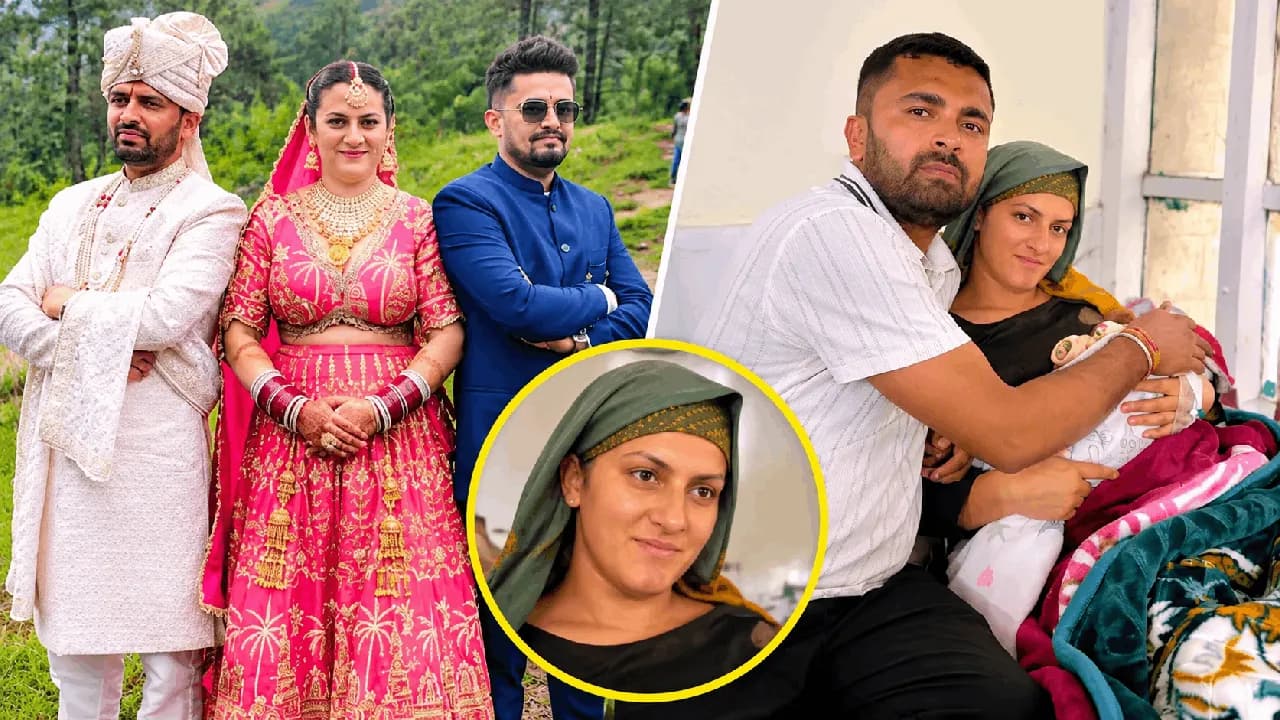
Imagine marrying two brothers and openly saying that you love both of them equally. That is exactly what Sunita Negi has spoken about in her latest interview, bringing a much-discussed marriage from Himachal Pradesh back into the spotlight.
Sunita married two real brothers, Pradeep Negi and Kapil Negi, in July 2025 under the traditional Jodidara practice followed in parts of Himachal Pradesh's Sirmaur district. Now, in an interview with content creator Nishu Tiwari, she has shared her side of the story, saying the marriage was her own decision and that she fell in love with both brothers.
Her comments have attracted fresh attention online, particularly because the unusual family arrangement challenges what many people consider a conventional marriage.
In the interview, Sunita made it clear that she knew about the Jodidara tradition before getting married. She said nobody forced her into the arrangement and that she agreed to it willingly.
When asked whether her marriage was arranged or a love marriage, Sunita replied that it was a love marriage.
The interviewer then asked whether she had fallen in love with two people at the same time. Sunita responded with a smile, saying that it is possible to fall in love with two people.
She was also asked which of her two husbands she loved more. Her answer was straightforward: she loves both equally because she married both of them.
Her statements have become a major talking point because the story is no longer being discussed only as an unusual traditional marriage. Sunita herself has now explained how she views the relationship.
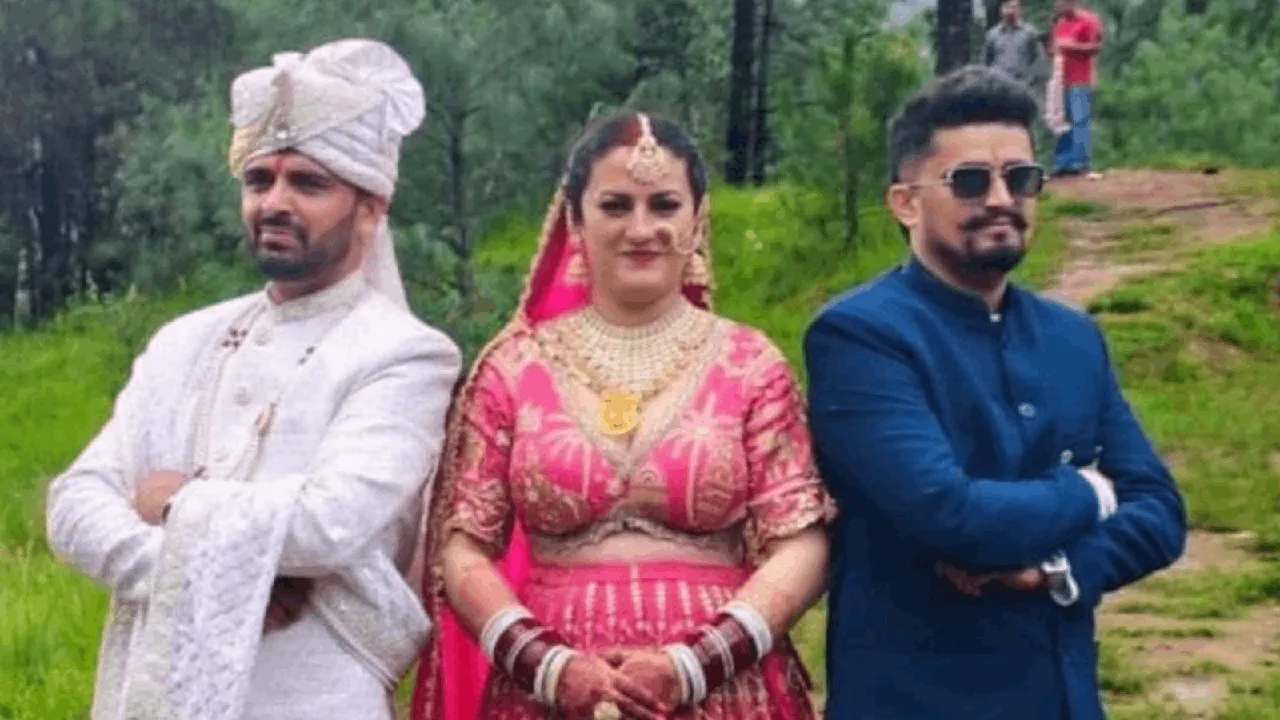
Sunita is married to brothers Pradeep Negi and Kapil Negi, who belong to the Hatti community of Himachal Pradesh.
According to reports, Pradeep is 35 years old and works in the Jal Shakti Department, while his younger brother Kapil is 28. Kapil previously worked abroad as a chef but has now returned to Himachal Pradesh.
The three live together as a family and have also become popular on social media following their wedding.
Their marriage took place in Shillai village in the Trans-Giri region of Sirmaur district. The ceremony began on July 12, 2025, and continued for three days, with local folk music, traditional dances and community celebrations.
The wedding attracted national attention because both brothers married the same woman under a traditional form of polyandry.
Pradeep also explained the thinking behind their decision during the interview.
According to him, the biggest reason was maintaining brotherhood and keeping the family together. He said that if two brothers married separately, they might end up managing two households, increasing their expenses.
He explained the idea through a simple example: if two brothers earn Rs 100 together, they could spend around Rs 50 and save the remaining Rs 50 by living as one family.
Pradeep also made an emotional statement, saying that his brother comes before everything else and that he loves him even more than his wife.
For the brothers, the arrangement is not simply about sharing a marriage. They see it as a way to maintain their relationship, manage household responsibilities together and avoid dividing family resources.
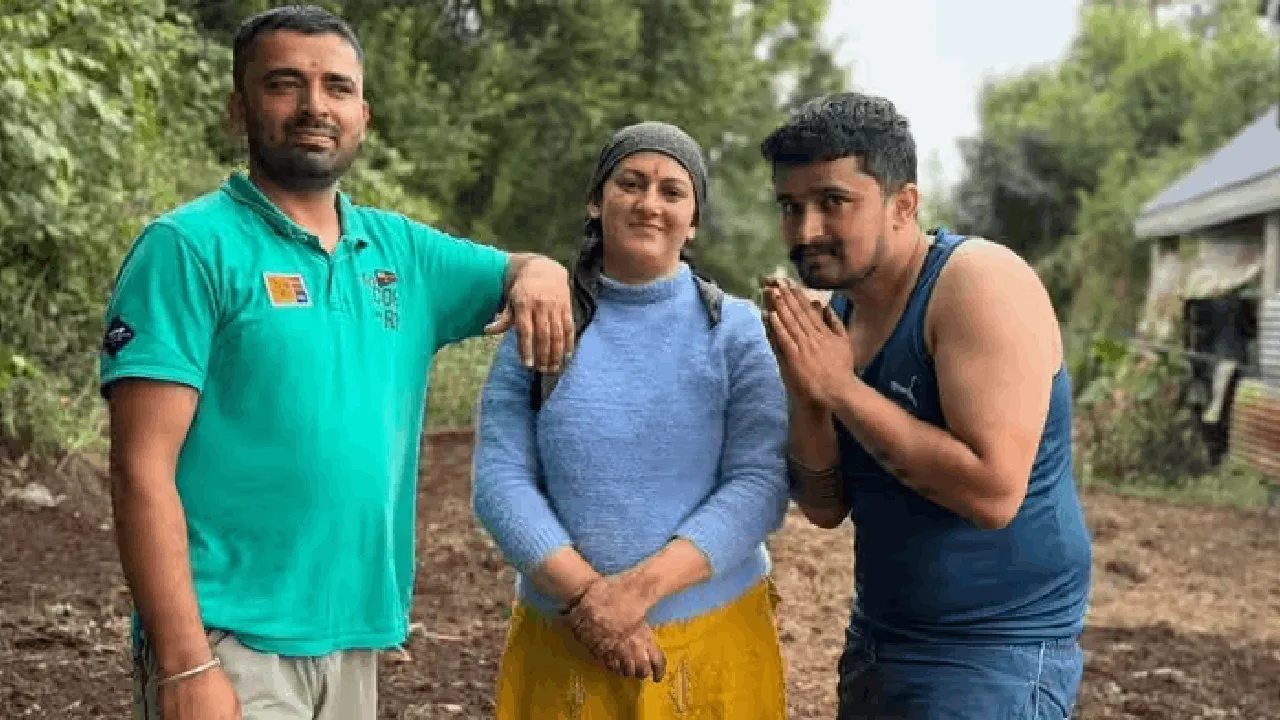
The marriage follows a traditional practice known as Jodidara, also referred to locally as Jajda. It is a form of polyandry, in which one woman has two or more husbands, traditionally brothers.
The practice has historical roots in parts of the Trans-Giri region of Sirmaur district, particularly among members of the Hatti community.
One of the main reasons behind this tradition was the need to prevent ancestral agricultural land from being divided among several brothers.
In mountainous areas, cultivable land is often limited. If every brother married separately and established a different household, family property could become divided into smaller portions over generations.
Under Jodidara, brothers share one wife and remain part of a joint family. This arrangement has traditionally been associated with:
Preventing the division of ancestral agricultural land.
Keeping brothers and their families together.
Sharing household expenses and responsibilities.
Managing agricultural land in difficult mountain regions.
Maintaining family unity and mutual support.
The practice has also existed in some other Himalayan communities, including parts of Uttarakhand and Himachal Pradesh.
However, it is important to understand that polyandry is rare today and is not practised by everyone belonging to the Hatti community.
The family has also entered a new phase since the wedding.
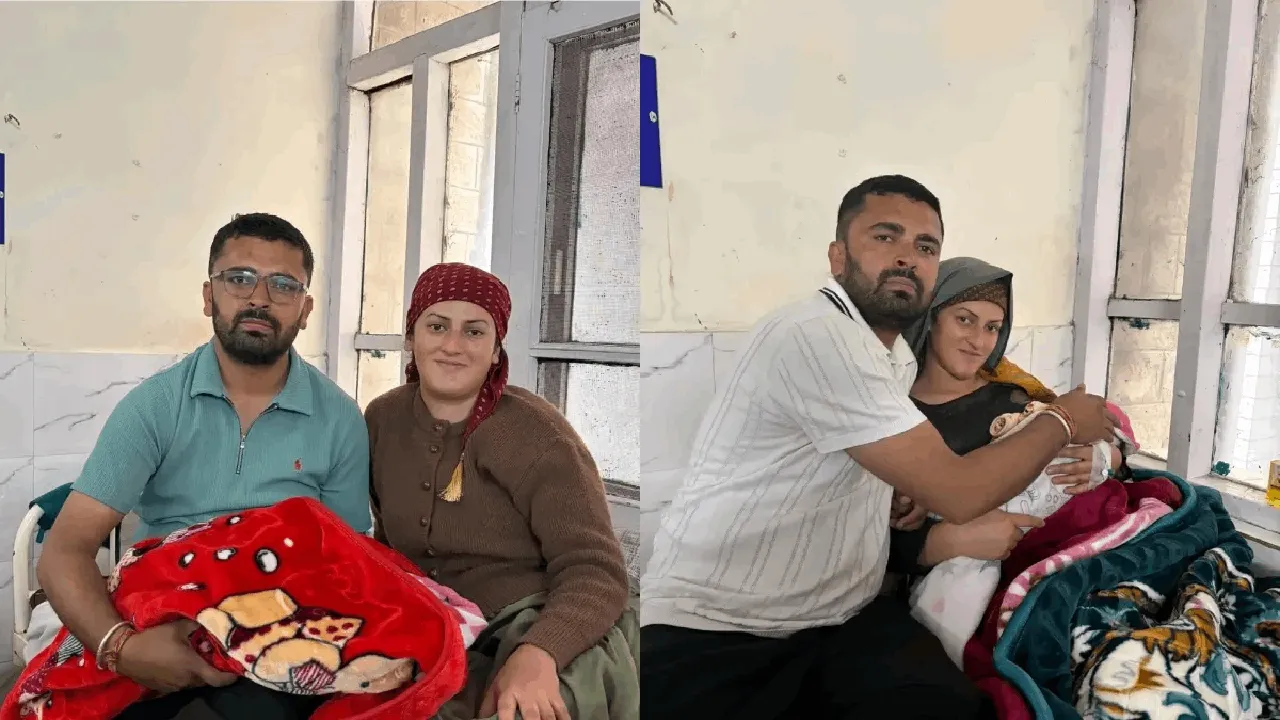
Sunita gave birth to a daughter in April 2026. During her interview, she was asked which husband's name would be recorded as the child's father's name.
She explained that the elder brother, Pradeep, would be recognised as the father initially. She also said that the younger brother's name could potentially be added later if required.
The discussion has brought attention to questions surrounding family identity, parentage and documentation in households that follow traditional polyandrous arrangements.
These matters can involve complex legal and administrative questions, particularly when it comes to official records and inheritance.
There is another major update in the family's life.
Kapil, who previously worked abroad as a chef, has returned to Himachal Pradesh and started a restaurant business with his brother.
The restaurant has been named Jodidara, reflecting the traditional practice that brought the family into the national spotlight.
Pradeep continues to work in the Jal Shakti Department, while the brothers are also involved in their new business in Shillai.
Their decision to start a business together has attracted further attention, with people following the family's journey beyond the viral wedding.
The Jodidara tradition has also raised questions about the legal status of marriages involving one woman and multiple husbands.
Under India's general marriage laws, including the Hindu Marriage Act, 1955, and the Special Marriage Act, marriage is based on monogamy. However, the application of these laws to members of Scheduled Tribes involves specific statutory exceptions and legal questions.
Customary practices can also raise separate issues relating to marriage recognition, inheritance, maintenance and children's legal rights.
Therefore, it would be misleading to assume that every traditional polyandrous marriage automatically receives the same legal recognition as a conventional registered marriage. The applicable legal position can depend on the community, the relevant law and the facts of an individual case.
The Jodidara practice has historically been recognised in discussions of local customary and revenue practices in the region, but that should not be confused with blanket recognition under every Indian marriage law.
Sunita's latest statements have once again divided social media users.
Some people have appreciated that she openly explained her decision and described the relationship as one based on mutual understanding. Others have questioned the arrangement, particularly regarding legal rights, inheritance and the future of the child.
There are also people who argue that outsiders should understand the cultural background before judging a tradition that has existed in certain Himalayan communities for generations.
The discussion reflects a wider question: how should traditional customs be understood in a society where family structures and marriage expectations are changing?
Sunita Negi's interview has added an important personal perspective to a marriage that first attracted attention because of its unusual arrangement.
For Sunita, the decision was about love and personal choice. For Pradeep and Kapil, it was also about brotherhood, shared responsibilities and keeping their family together.
The Jodidara tradition has its roots in the economic and social realities of mountain communities, particularly the need to protect limited ancestral land.
People may have different opinions about this marriage, but one thing is clear: understanding the people involved and the cultural background is more useful than judging the story only by how unusual it appears.
As the family raises its daughter and builds a new business together, public interest in their lives is likely to continue.