/
/
Toyota Innova Hycross facelift images leak ahead of launch, while its expected flex-fuel hybrid tech raises a big question: could it run on 100% bioethanol?
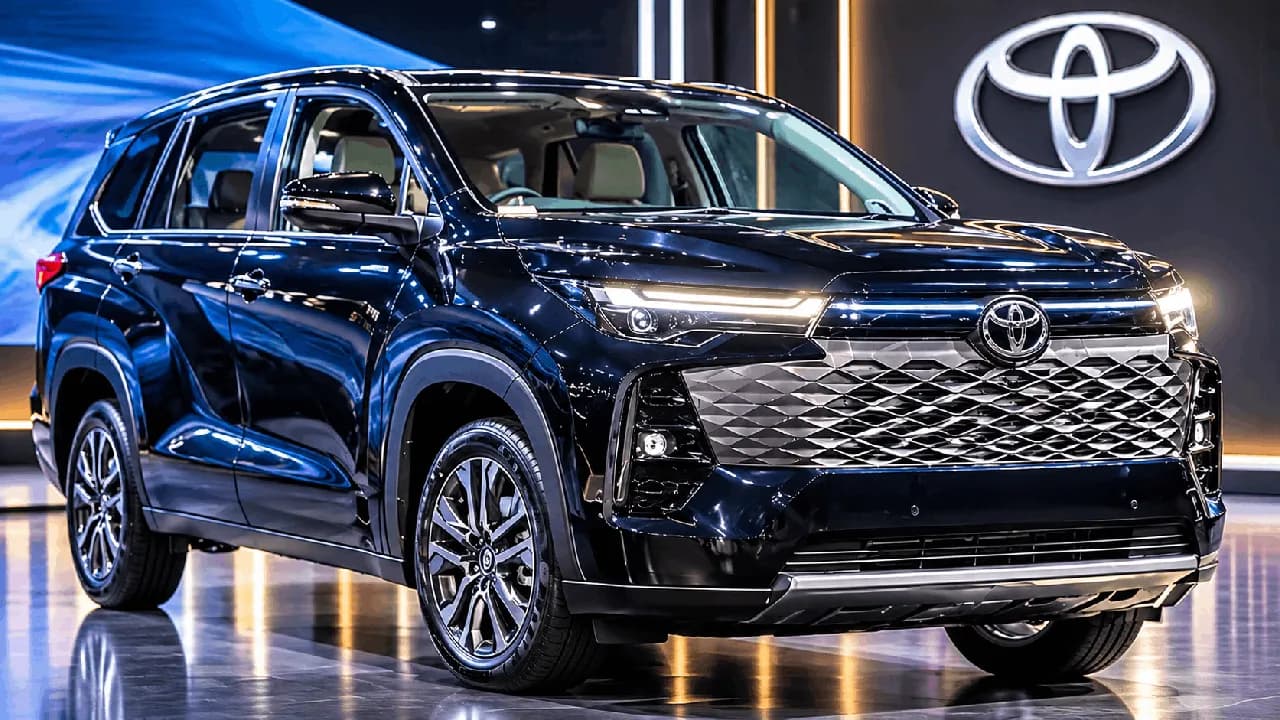
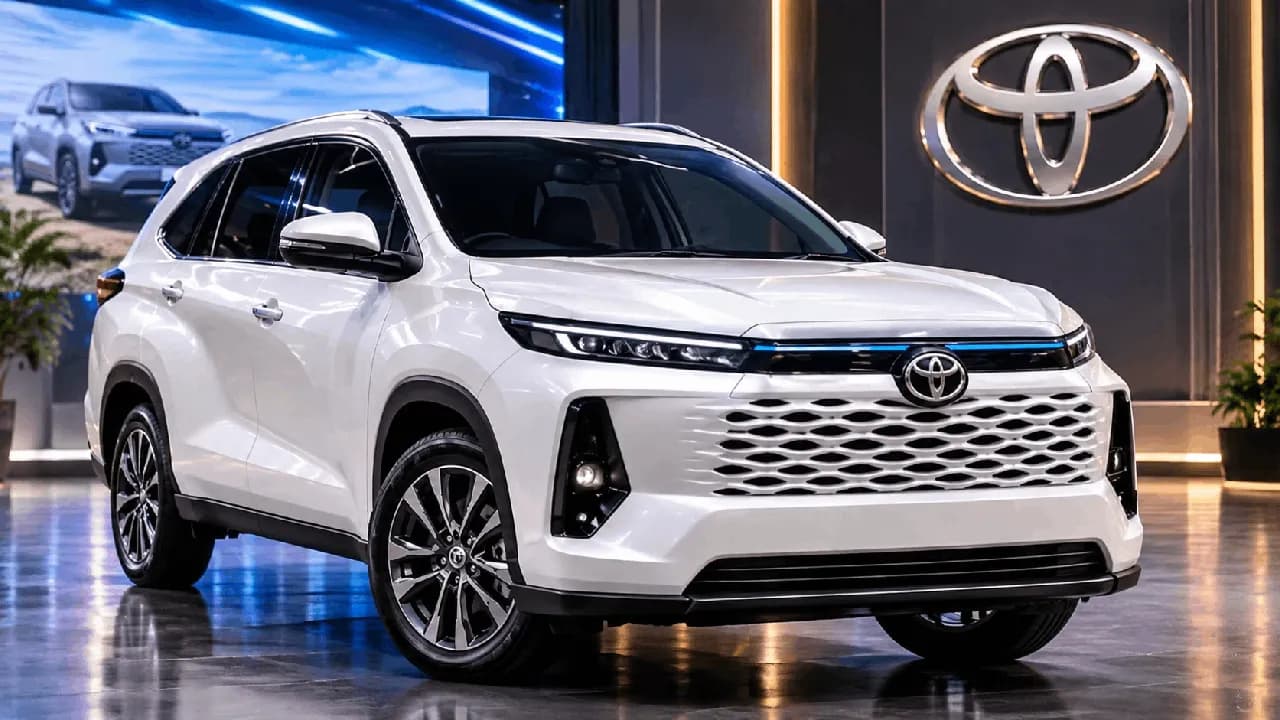
The Toyota Innova Hycross is preparing for a major update, and its biggest surprise may not be its new looks. Just hours before its scheduled India debut on November 25, 2026, exterior images of the Toyota Innova Hycross facelift have surfaced online, revealing noticeable changes to the front and rear.
But there is another development that could make this launch more important for India's automobile industry. Toyota is expected to introduce flex-fuel hybrid technology, potentially allowing the MPV to run on petrol as well as high-ethanol fuel. Union Minister Nitin Gadkari has also spoken about the launch of Toyota's 100% bioethanol-ready Innova.
If the technology reaches the production model as expected, the updated Hycross could become an important step towards reducing India's dependence on conventional petrol.
The leaked images suggest that Toyota has focused most of its design changes on the front and rear sections. The overall shape and proportions of the MPV remain familiar, so this is more of a mid-life refresh than a completely new-generation model.
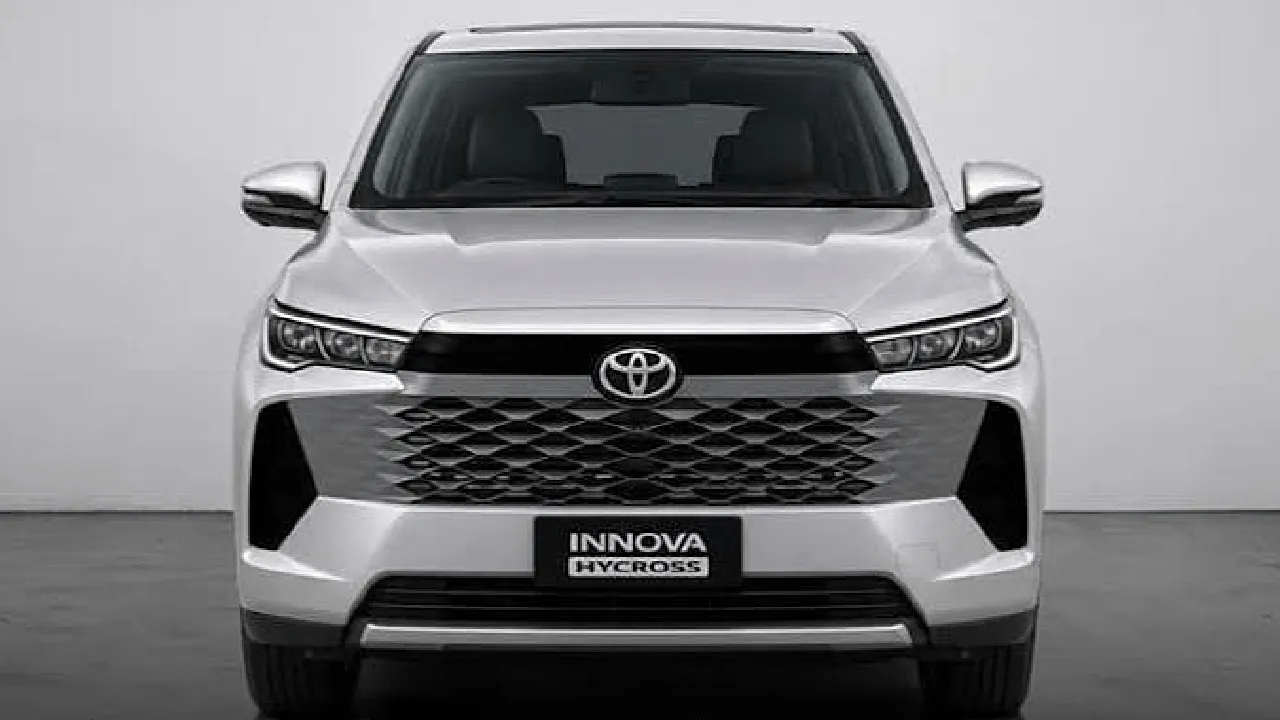
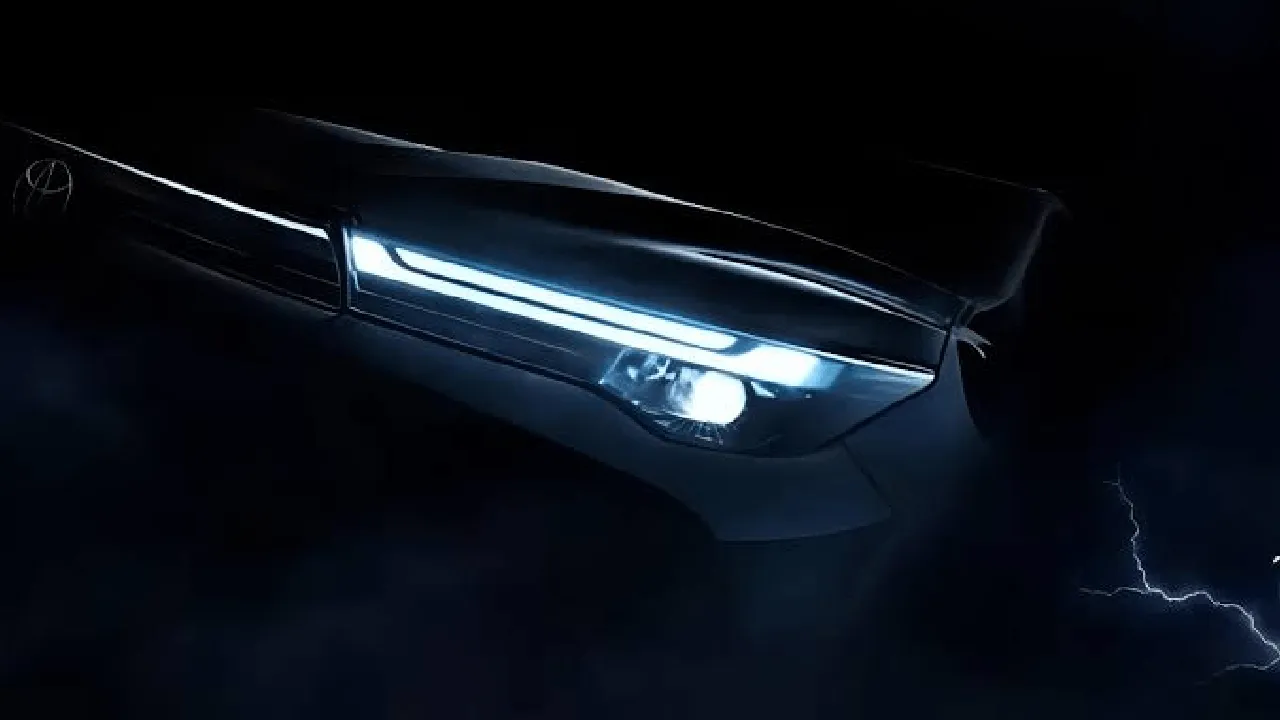
At the front, the facelift appears to get a new pair of LED projector headlamps with daytime running light signatures similar to those seen on the Toyota Taisor. The grille has also been redesigned with a squarer appearance and diamond-shaped air inlets, giving it a more muscular look inspired by the Toyota Hilux.
Other visible changes include repositioned fog lamps, a slimmer lower air intake and silver-finished trim on the front bumper.
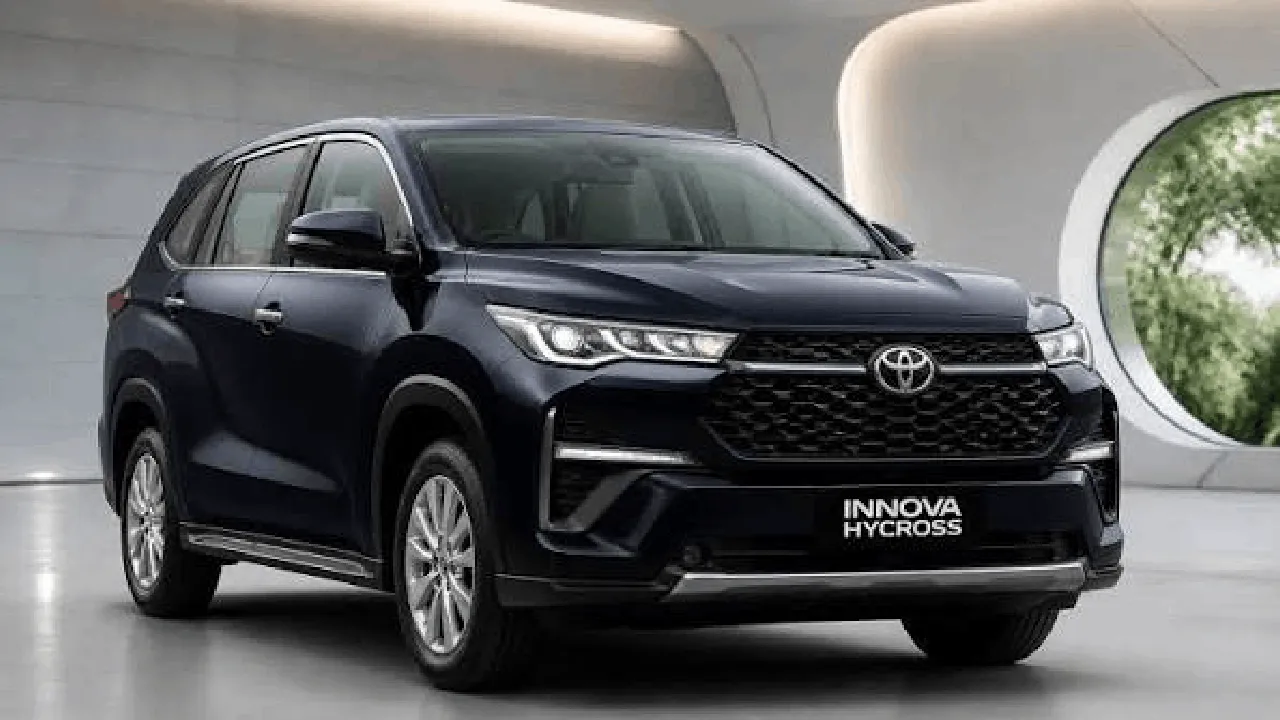
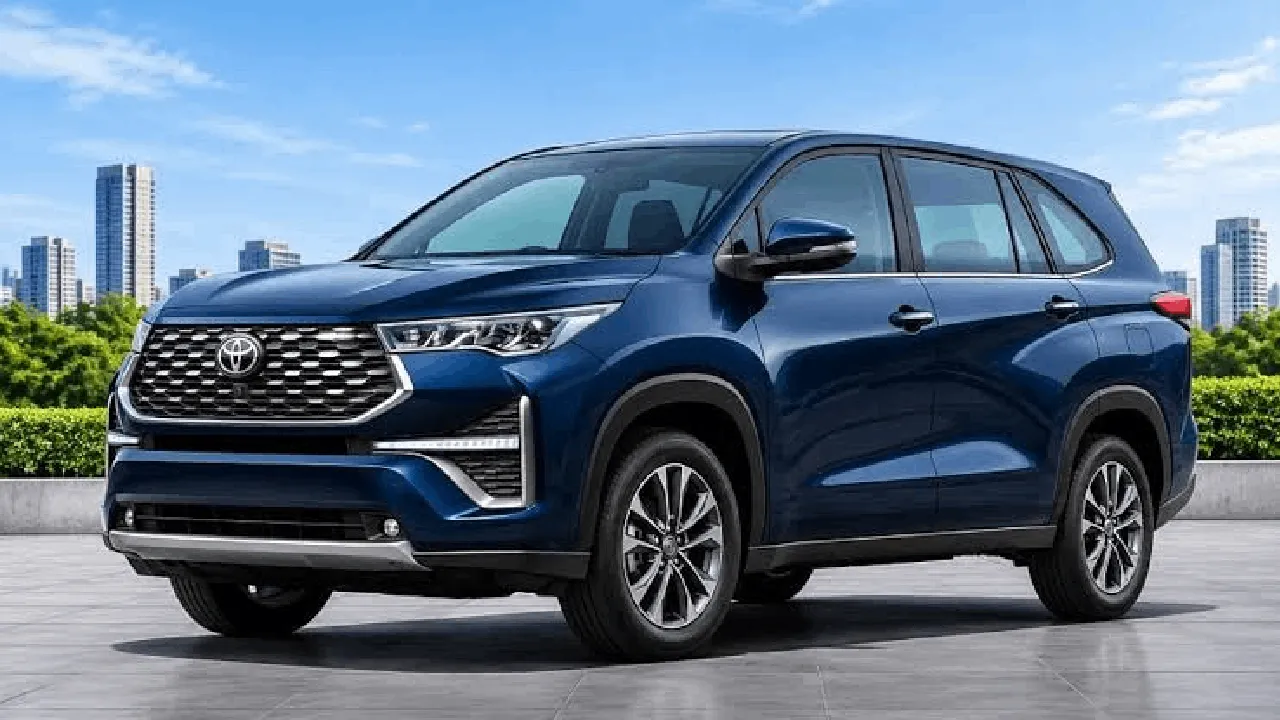
The side profile, meanwhile, appears largely unchanged. The large doors, glass area and alloy wheel design look similar to those of the outgoing model. This means Toyota has chosen to retain the familiar family-MPV appearance rather than make dramatic changes to its silhouette.
At the rear, the tail-lights appear to be the main area of change. Earlier reports have also pointed towards minor bumper and lighting revisions.
The leaked exterior pictures do not reveal the cabin, but the updated Indonesia-spec Innova Zenix offers a possible preview of what Indian buyers could receive.
The facelift is expected to get a larger 12.3-inch touchscreen infotainment system. Strong-hybrid variants could also receive a 12.3-inch fully digital instrument cluster, replacing the existing instrument setup.
Toyota may introduce new interior colour combinations, revised upholstery and updated trim materials to make the cabin feel fresher.
The MPV is expected to continue with both six- and seven-seat configurations. The six-seater version could retain its second-row captain seats, while the seven-seater layout will continue to appeal to larger families.
Other expected features include:
Ventilated front seats
Eight-way powered driver's seat
Panoramic sunroof
13-speaker JBL sound system
Dual-zone automatic climate control
Automatic headlights and rain-sensing wipers
360-degree camera
Level 2 ADAS safety features
Toyota could also consider adding more comfort features for second-row passengers. However, additions such as ventilated or massage seats have not been confirmed.
The most interesting development could be under the bonnet.
Union Road Transport and Highways Minister Nitin Gadkari is expected to unveil Toyota's Innova Flex-Fuel Strong Hybrid Electric Vehicle in Delhi on November 25. Reports around the launch describe a vehicle capable of running on petrol or 100% bioethanol.
However, there is an important distinction. Toyota has previously showcased an Innova Hycross-based flex-fuel prototype, and reports about the upcoming production model have also mentioned E85 compatibility. The final fuel compatibility of the India-spec vehicle should therefore be confirmed by Toyota at the launch.
A flex-fuel vehicle is designed to operate on petrol blended with different proportions of ethanol. E20 petrol, for example, contains 20% ethanol, while E85 contains up to 85% ethanol. E100 refers to fuel made up of nearly pure ethanol.
Toyota's approach combines this technology with a strong-hybrid system. That means the vehicle can use an electric motor alongside its petrol engine, potentially reducing the amount of fuel required during everyday driving.
The prototype previously showcased by Toyota used a modified 2.0-litre petrol engine paired with an electric motor. Its fuel system and engine components were adapted to handle higher ethanol concentrations.
Whether the production facelift will support E85, E100 or another ethanol blend is one of the biggest questions buyers will want Toyota to answer.
Fuel savings could become a major selling point if the flex-fuel hybrid technology is introduced.
Gadkari has previously discussed the potential cost advantage of the technology. According to his statements, bioethanol costs around Rs 75 per litre, compared with petrol at approximately Rs 120 per litre.
He has suggested that the hybrid vehicle's effective running cost could work out to around Rs 25–30 per litre of petrol on an equivalent basis. The claimed advantage comes from combining comparatively cheaper bioethanol with the hybrid system's ability to use electric power during driving.
Some reports have also quoted an estimate that the vehicle could generate around 60% of its energy through electricity while running.
These figures should be treated as estimates, not guaranteed savings for every owner. Actual running costs will depend on fuel prices, ethanol availability, driving conditions, mileage and the vehicle's final specifications.
Still, the idea is interesting: instead of depending entirely on petrol or moving directly to a fully electric vehicle, buyers could get a hybrid that uses a greater share of renewable fuel.
The flex-fuel project is not just about reducing fuel expenses for car owners. It could also create new opportunities for India's agricultural sector.
Bioethanol can be produced from several agricultural materials, including:
Sugarcane juice and molasses
Broken rice
Corn
Gadkari has argued that expanding biofuel production could help India reduce its dependence on imported petroleum. He has also highlighted the opportunities this could create for farmers, rural workers and the wider economy.
India imports fossil fuels worth a substantial amount every year. Reducing that dependence could help strengthen energy security while creating another market for agricultural produce.
The idea is to give farmers more opportunities beyond traditional food production, allowing them to contribute to the country's energy and fuel requirements as well.
However, the actual benefits will depend on ethanol production capacity, fuel distribution, pricing and the availability of suitable vehicles.
Apart from the possible flex-fuel option, the updated MPV is expected to retain its existing 2.0-litre petrol and strong-hybrid powertrains.
The current model's engine specifications are:
The petrol version uses a continuously variable transmission (CVT), while the strong-hybrid version gets an electronically controlled CVT (e-CVT).
If Toyota introduces a flex-fuel hybrid, it could be based on the existing strong-hybrid setup with modifications to support higher ethanol blends. Whether the regular petrol variants will also receive flex-fuel capability remains unclear.
The facelift is expected to cost slightly more than the outgoing model because of its design and feature updates.
Current reports suggest an expected starting price of around Rs 20 lakh (ex-showroom), while higher variants could approach the Rs 35 lakh mark. The final variant-wise prices will become clear once Toyota makes its official announcement.
The updated MPV will continue to compete with the Maruti Suzuki Invicto, its badge-engineered sibling. It will also remain a premium alternative to models such as the Kia Carens Clavis, Toyota Rumion, Maruti Ertiga, Maruti XL6 and Toyota Innova Crysta.
The facelift looks like a sensible update rather than a complete makeover. The revised grille, new lighting elements and expected larger screens should help keep the MPV competitive, but the design changes alone may not be enough to convince existing owners to upgrade.
The flex-fuel hybrid technology is a much bigger story. If Toyota brings a production-ready version with confirmed high-ethanol compatibility, it could offer Indian buyers a different approach to reducing petrol consumption without relying entirely on charging infrastructure.
However, buyers should wait for the official specifications before making a decision. The actual ethanol compatibility, fuel economy, variant availability and price will matter far more than early claims.
For now, the leaked images have given us a clear look at the design direction. The real question is whether Toyota can make its flex-fuel hybrid technology practical and affordable for everyday Indian families.