/
/
A viral beach video shows a toddler nearly swept away by waves as her parents film a reel. Learn child water safety and essential drowning first aid.
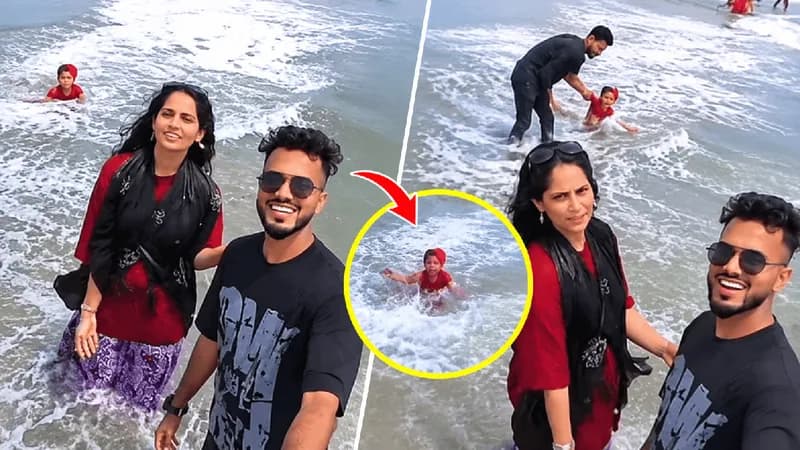
It only takes a few seconds of looking away for a day at the beach to go horribly wrong. A viral beach video making rounds online has left people deeply unsettled, and for good reason. In the footage, a toddler is nearly swept away by incoming sea waves while her parents stand nearby filming a social media reel, seemingly unaware of the danger right behind them. Thankfully, a bystander spotted what was happening and ran to pull the child to safety.
The clip has set off a wave of reactions online, with people expressing shock, anger and relief all at once. But beyond the debate playing out in comment sections, the video forces us to ask something more urgent: What do you actually do when a child is caught in the water? And what first aid steps matter most if a child is pulled from the sea?
According to a report published by Linda Ikeji on October 20, 2026, the video shows a couple at a beach with their toddler daughter. The parents are smiling and recording, their backs turned to the child.
The little girl is lying on her stomach in the sand, right at the shoreline. As waves roll in, water washes over her small body, but the adults remain distracted, focused on getting the shot.
Then someone else notices. A bystander rushes over, picks the child up and alerts the parents to what nearly happened.
The report doesn’t confirm the exact location of the incident or give verified details about the child’s condition afterward. But what the video does make clear, painfully so, is how fast things can go wrong near the sea, especially with toddlers who have no way to recognise danger, let alone protect themselves from it.
🚨SHOCKING | Child is nearly swept away by waves at a beach while the parents continue filming on their phone https://t.co/CV73k09BRl
— The Tatva (@thetatvaindia) October 21, 2026
The reaction online has been intense, and it’s not hard to understand why. Many people watching the clip have pointed out how differently this could have ended without that one person stepping in.
Here’s the thing about beaches: they look calm. Families are laughing, the water is sparkling, and it all feels manageable. But even a few inches of water can be enough to put a child in danger of being swept away by waves. A wave doesn’t have to be large to knock a toddler off balance, cover their face, and make it impossible for them to breathe.
Young children simply don’t have the strength, the coordination, or the awareness to handle unpredictable water. They depend entirely on the adults around them.
None of this means families shouldn’t take photos at the beach or enjoy themselves. But filming a reel or checking a phone cannot come at the cost of watching your child. If multiple adults are present, someone needs to be clearly responsible for the child at all times, not half-watching, not assuming someone else has it covered.
The lesson here isn’t complicated: child safety at the beach means keeping your eyes on your child, especially near the water.
If you ever find yourself in this situation, whether as a parent or a bystander, here’s what actually matters.
If the child is close enough to reach safely, help them out of the water and onto dry ground.
If they’re further out and the surf is rough, don’t rush in without the skills or equipment to do so safely. Strong currents can overwhelm even confident swimmers. Instead, call a lifeguard or emergency services immediately. If there’s a flotation device nearby, throw it toward the child.
Once they’re out of the water, check whether the child responds when you speak to them or gently stimulate them.
Look at their breathing. Gasping, irregular breaths, or occasional snorting are not the same as breathing normally.
If the child isn’t responding or isn’t breathing normally, have someone call emergency services right away and ask them to bring an AED if one is available nearby.
If the child is unresponsive and not breathing normally, start CPR immediately. Don’t wait.
For those trained in drowning first aid and paediatric CPR, use the age-appropriate technique. If you’re not trained, call emergency services, the dispatcher can walk you through what to do.
Rescue breaths matter here. In child water safety emergencies involving drowning, the body is often starved of oxygen first, which means breathing support is especially critical alongside chest compressions.
One thing to avoid: don’t try to drain water from the lungs by pressing on the stomach or holding the child upside down. It doesn’t help, and it delays CPR, which does.
If the child is breathing on their own, move them away from the water, remove wet clothing where possible, and wrap them in something dry to keep warmth in.
Keep watching their breathing and stay close until emergency help arrives. If they’re unconscious but breathing, maintain a clear airway and follow whatever instructions the emergency dispatcher gives you. If their breathing changes, restart CPR.
This part is important even when the child seems fine. Any child who has inhaled water or had trouble breathing needs to be seen by a medical professional.
Go to emergency care if you notice persistent coughing, fast or laboured breathing, unusual drowsiness, confusion, vomiting, or anything that doesn’t seem right.
Don’t assume a child is out of the woods just because they’re awake and appear calm. After a suspected drowning event, medical assessment isn’t optional, it’s essential.
The viral beach video is a stark reminder of how quickly a moment of distraction can become a crisis. A few practical habits can go a long way:
A toddler doesn’t need to be out in the deep water to be at risk. Danger can reach them right at the shoreline. Close supervision isn’t overprotective, it’s necessary.
Reels, photos, and family videos have become part of how we capture and share our lives. There’s nothing wrong with that. But the moment recording something takes your attention away from a child near the water, the risk becomes very real.
This viral beach video is a sharp reminder that a single moment, just a few seconds of distraction, can change everything. The bystander who stepped in appears to have made a critical difference, though the child’s condition afterward has not been independently confirmed.
The clip also raises something worth thinking about more broadly: when we’re in public spaces, we sometimes have a role to play in looking out for children who may be in danger. Alerting parents, calling a lifeguard, or contacting emergency services can matter.
But that responsibility starts with the adults who brought the child to the beach. Child safety at the beach isn’t something that can be outsourced to strangers or left to chance.
The reel can be filmed another day. The photo can happen later. A child’s safety has to come first, every single time.
Disclaimer: This article provides general water-safety and first-aid information, not a diagnosis or a substitute for professional medical care. In a drowning emergency, contact local emergency services immediately and follow the instructions of trained responders.