/
/
China’s humanoid robots are becoming eerily lifelike. New bionic machines shown in Beijing feature human-like faces, gestures and movements.
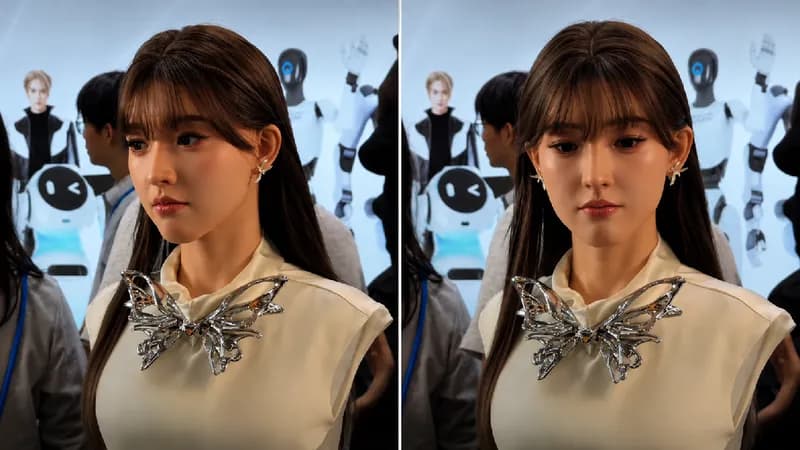
What if the person standing across from you wasn't actually a person?
That question is becoming less far-fetched as China’s humanoid robots continue to become more realistic. At the 2026 World Robot Conference in Beijing, Chinese robotics companies showcased a new generation of bionic machines with lifelike faces, expressive movements, natural gestures and increasingly human-like motion.
The five-day conference, held from August 19 to 23, brought together hundreds of exhibitors and thousands of robotic products. Organizers said more than 300 companies participated, with over 3,000 products on display and hundreds of new products unveiled.
Among the biggest attractions were humanoid robots designed not just to walk or perform mechanical tasks, but to interact with people in ways that look increasingly natural.
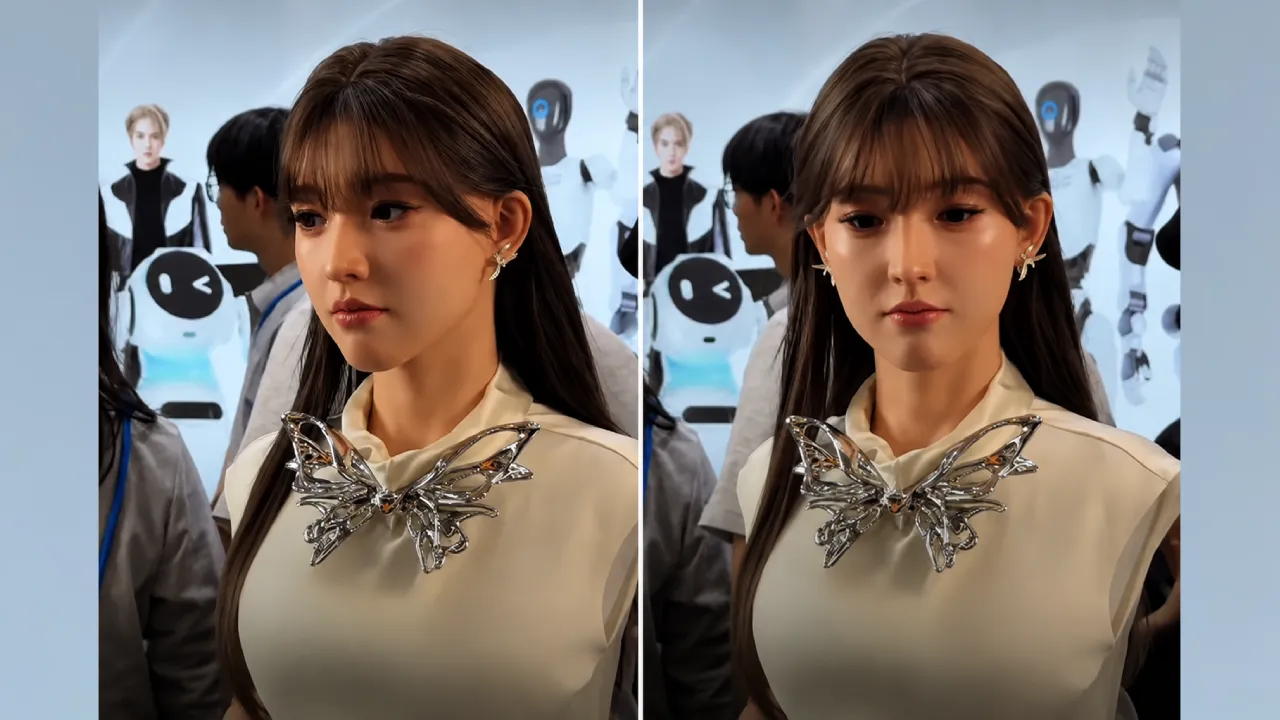
One ultra-realistic bionic humanoid displayed at the Beijing event reportedly carries a price of about 120,000 yuan, or roughly $17,000. Its lifelike appearance and human-style facial movements have attracted considerable attention online.
The price is significant because humanoid robotics has traditionally been associated with expensive research projects and highly specialized industrial machines. Lower-cost models could eventually make the technology more accessible to businesses and other organizations.
That does not mean these robots are ready to replace humans everywhere. The technology still faces major challenges involving autonomy, reliability, dexterity and the ability to handle unpredictable real-world situations.
The most interesting part of China's robotics push isn't simply how human these machines look. It's where companies want them to work.
At the World Robot Conference, humanoids were demonstrated sorting goods, moving boxes, packing products and assisting with logistics workflows. One demonstration showed multiple robots coordinating different steps of a smart logistics process.
Potential applications extend across areas such as:
China is increasingly trying to move humanoid robots beyond impressive demonstrations and toward commercially useful work. Reuters reported that companies at the conference were emphasizing productivity and practical applications rather than simply showcasing robots performing stunts.
The timing of the conference is important. Beijing is hosting not only the World Robot Conference but also the second World Humanoid Robot Games, where more than 2,000 humanoid robots are competing across events including running, soccer and table tennis.
The competition has produced some remarkable demonstrations. A humanoid robot developed by X-Humanoid reportedly ran 100 meters in 9.39 seconds, faster than Usain Bolt's human world record of 9.58 seconds. Another robot recorded a standing high jump of 2.88 meters.
These records are impressive, but they should not be confused with evidence that robots have surpassed humans in general intelligence. Running fast in a controlled competition is very different from independently understanding a messy household, workplace or public environment.
That distinction matters.
The next major test for humanoid robots isn't whether they can blink, dance, run or look realistic.
It's whether they can reliably do useful work without constant human intervention.
Industry leaders have acknowledged that humanoid robots still struggle with general-purpose tasks and interacting with unpredictable physical environments. Unitree CEO Wang Xingxing, for example, has suggested that a major breakthrough allowing robots to autonomously handle most unfamiliar tasks could still be several years away.
So, while the latest machines may look like something straight out of science fiction, the technology is still very much in development.
The bigger story is that China is building the manufacturing ecosystem needed to make these machines cheaper, faster and more capable.
That's perhaps the most fascinating question coming out of Beijing.
A robot that looks obviously mechanical feels like a machine. But when a humanoid begins to blink naturally, move its face, gesture like a person and respond to its surroundings, the psychological reaction changes.
China's latest humanoid robots show just how quickly that boundary is moving.
For now, these machines remain far from replacing humans across everyday life. But the combination of increasingly realistic designs, falling costs and expanding commercial applications suggests that humanoid robots are moving from science-fiction curiosity toward a serious technology industry.
And if a $17,000 robot can already look this convincing, the next few years could make that question much harder to answer: Would you actually know when the "person" in front of you wasn't human?