/
/
Jack Pearadin discovered a 6.03-carat yellow diamond at Arkansas' Crater of Diamonds State Park. Learn how he found the American Dream diamond and its estimated value.
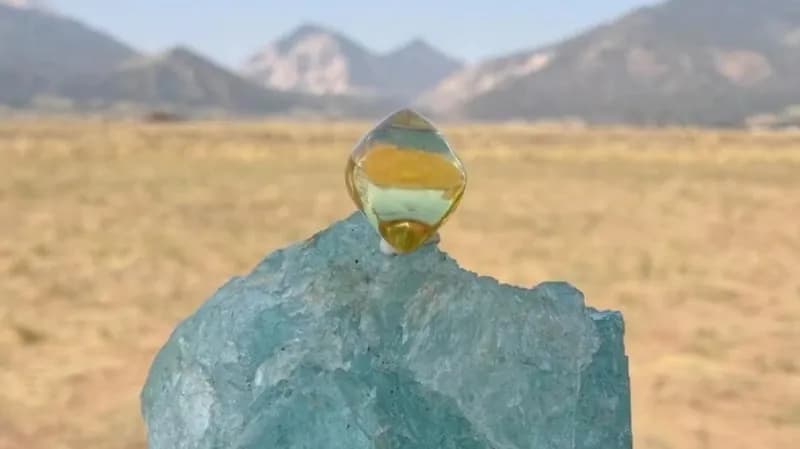
A long-running hobby has led to an extraordinary discovery for Jack Pearadin, a US Navy reservist and experienced gem hunter who uncovered a 6.03-carat yellow diamond at a public state park in Arkansas. The discovery, made while he was livestreaming his search, has attracted widespread attention because of the stone's size, distinctive crystal structure and potentially significant value.
Pearadin found the gem at Crater of Diamonds State Park, near Murfreesboro, where visitors can search for natural diamonds and keep the qualifying stones they discover. He had been visiting the site since 2013 and had collected more than 300 gems over the years, but this find was unlike anything he had encountered before.
The diamond, named the American Dream, was discovered on January 25, 2026, and confirmed by park staff in February. Its story returned to the spotlight in October after national media outlets reported on its possible market value and Pearadin's plans for the proceeds.
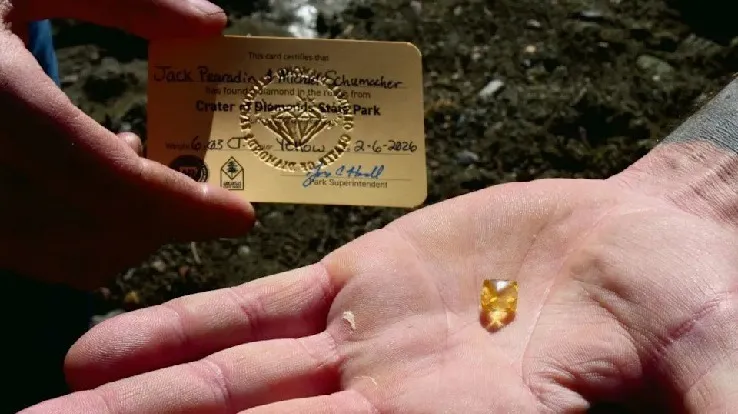
The discovery happened during an ordinary session of washing and sorting gravel collected from the park's diamond-search area.
On January 25, Pearadin was livestreaming the process on TikTok while working through material he and his friend, Michael Schumacher, had gathered during an earlier visit. The search had been made more difficult by freezing conditions following a winter storm.
After turning over several piles of gravel, Pearadin was walking away when something caught his attention. A golden glimmer was visible in the material, prompting him to return and investigate.
He initially tried to retrieve the stone with a small spoon but found that it was too large to lift easily from underneath. The moment of recognition was captured during the livestream, showing his surprise as he realised the size of the discovery.
Park officials later confirmed that the gem weighed 6.03 carats.
The find was especially meaningful because Pearadin had spent more than a decade searching the same area. What began as a pastime had produced hundreds of smaller discoveries before yielding a diamond that attracted international attention.
The American Dream is a natural yellow diamond weighing 6.03 carats. Its size, colour and unusual crystal formation distinguish it from the smaller diamonds commonly recovered by visitors at the Arkansas park.
According to People, the stone is approximately the size of a gumdrop and has a 48-faced hexoctahedron crystal structure, an uncommon formation among diamonds found at the site.
The diamond's name reflects its connection to the American experience and the song Sh-Boom by The Chords. Its discovery has also attracted attention because 2026 marks the 250th anniversary of American independence.
Although yellow diamonds are known in the gemstone market, the value of any individual stone depends on several factors, including colour intensity, clarity, crystal quality, cut potential and buyer interest. Carat weight alone does not determine its final selling price.
The American Dream's natural origin and unusual shape may interest collectors, but a confirmed market value would require a reliable assessment and, ultimately, evidence of an actual sale.
The American Dream's potential value has become one of the most widely discussed aspects of the discovery. However, estimates differ considerably.
Pearadin has said that collectors believe the stone could be worth as much as $1 million. A more conservative assessment reported by the Associated Press places its potential value closer to $250,000.
These figures should not be treated as a confirmed selling price. They represent different estimates, and the amount a buyer would ultimately pay could depend on professional grading, the stone's condition and the level of interest among collectors.
The distinction is important because an uncut natural diamond can be valued differently from a finished gemstone. Its shape, clarity, colour and suitability for cutting can influence the price.
Pearadin's discovery therefore represents a potentially valuable asset, but it would be premature to describe him as having earned $1 million unless a sale at that price is documented.
Crater of Diamonds State Park is located near Murfreesboro in southwest Arkansas, United States. It is among the unusual public destinations where visitors can search for diamonds in the ground and keep the qualifying gems they find.
The park's search area covers approximately 37 acres. It sits on a diamond-bearing volcanic formation that brought material from deep within the Earth towards the surface.
According to Arkansas State Parks, the first diamonds at the site were discovered in 1906. After several attempts at commercial mining, the property became a state park in 1972.
The site has since become a destination for amateur prospectors, families and mineral enthusiasts. Visitors search through soil and gravel using methods that include digging, sifting and washing.
The park's official information identifies it as the only diamond-producing site in the world where the public can search for diamonds and take home their discoveries.
The entry fee reported in coverage of Pearadin's discovery was $15 for an adult visitor. Fees and admission policies can change, so prospective visitors should check the official Crater of Diamonds State Park website before travelling.
Visitors can also find other minerals, including quartz, amethyst, jasper and agate. However, there is no guarantee that a search will produce a diamond, and most discoveries are far smaller than the American Dream.
A 6.03-carat diamond is a notable discovery at Crater of Diamonds State Park, where many of the stones found by visitors are considerably smaller.
The American Dream was reported as the largest diamond discovered at the park in 2026 at the time of its announcement. Its unusual crystal structure and golden-yellow appearance have added to its appeal.
The park has a long record of significant discoveries. Arkansas State Parks notes that more than 37,000 diamonds have been found there since the property became a state park in 1972.
Some discoveries have become particularly well known because of their size or quality. The 40.23-carat Uncle Sam diamond, found in 1924, remains the largest diamond discovered in the United States.
Other notable finds include the Star of Arkansas, the Amarillo Starlight and the Esperanza diamond. These discoveries demonstrate that the site has produced diamonds of a wide range of sizes and characteristics.
Although the American Dream is much smaller than the Uncle Sam diamond, it stands out among the park's more recent discoveries.
Jack Pearadin is a longtime gem-hunting enthusiast and US Navy reservist originally from Missouri. He began visiting Crater of Diamonds State Park in 2013 and spent years searching for natural stones before finding the American Dream.
Reports about his discovery say he had collected more than 300 gems over that period. His commitment to the hobby eventually brought him closer to the search site, allowing him to spend more time exploring the diamond-bearing ground.
The January discovery was made alongside a wider effort involving his friend Michael Schumacher, who helped collect the gravel that Pearadin was processing when the diamond appeared.
Their experience highlights the role of patience in recreational gem hunting. Repeated visits do not guarantee a valuable find, and even experienced searchers can spend years without discovering a stone of comparable size.
For Pearadin, the American Dream represents a significant moment in a hobby that had continued long before the discovery attracted public attention.
Pearadin has said he intends to sell the diamond and share the proceeds with Schumacher, recognising his friend's involvement in their gem-hunting efforts.
According to reporting by the Associated Press, he has also discussed using the potential proceeds to establish his own crystal mine.
Those plans remain dependent on the eventual sale and the amount the diamond can command. Until a transaction is confirmed, neither the final selling price nor the amount that either man might receive is known.
The discovery nevertheless creates opportunities that would have been difficult to anticipate during years of ordinary searching.
It also illustrates the unusual arrangement at Crater of Diamonds State Park: visitors pay an admission fee, search the designated area and can keep the diamonds they find, subject to the park's rules.
Yes. Visitors can continue searching for diamonds at the park, although discoveries of this size are exceptional and cannot be predicted.
The site's geology explains why diamonds can be found there. A volcanic formation transported diamond-bearing material towards the surface, leaving a deposit that visitors can explore using basic tools and traditional prospecting techniques.
Some visitors find small stones, while others leave without finding any diamonds. The American Dream should therefore be viewed as an unusually successful discovery rather than a typical result of a park visit.
For people interested in geology, the attraction offers an opportunity to learn about minerals and the natural processes that bring them to the surface. For Pearadin, it has also produced a discovery that could have substantial financial consequences if a sale is completed.
After years of searching, the 6.03-carat yellow diamond has turned a routine session of sifting gravel into a remarkable story of patience, chance and the enduring appeal of finding something extraordinary in an ordinary-looking patch of ground.