/
/
Mia Khalifa has opened up about the brief period she spent in the adult film industry, describing the decision as an episode of “poor judgment” and “poor foresight” that had consequences far beyond what she anticipated at the time.
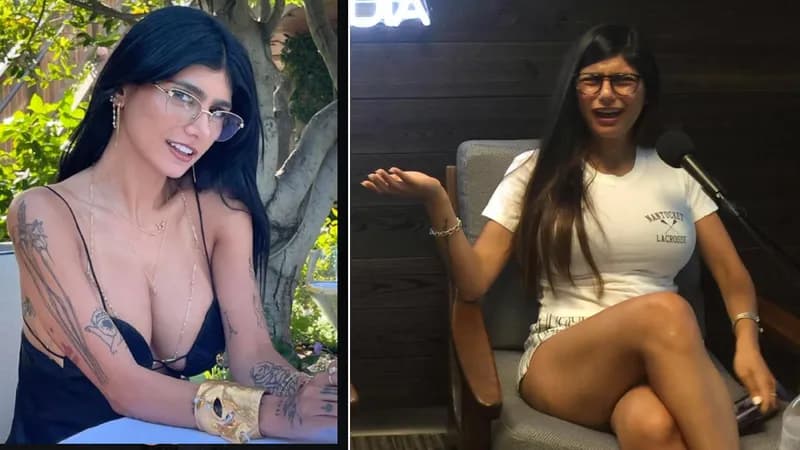
Mia Khalifa has opened up about the brief period she spent in the adult film industry, describing the decision as an episode of “poor judgment” and “poor foresight” that had consequences far beyond what she anticipated at the time.
Speaking on The Adam Friedland Show, Khalifa said she worked in the industry for roughly three months and earned about $11,000 in total. She stressed that she never entered the business with a plan to become famous or build a career from it.
The conversation focused less on the adult material itself and more on what happened after her sudden internet fame: threats, family estrangement, difficulty maintaining an ordinary working life and the emotional toll of being permanently associated with a short period of her early 20s.
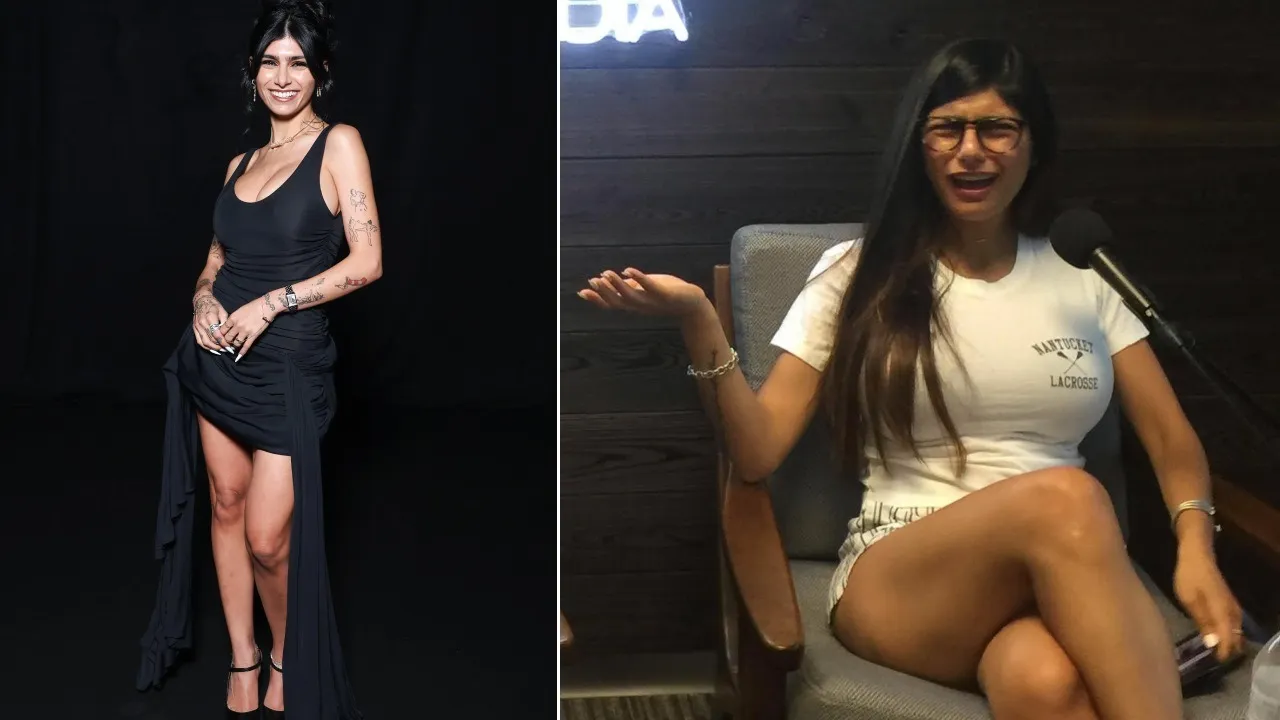
Khalifa told host Adam Friedland that her time in the industry lasted only a few months.
When asked whether she had viewed the work as a potential route to success, she said there had never been an intention for it to become a successful career.
She characterized the decision as a consequence of not thinking sufficiently far into the future while she was around 20 years old.
The interview's discussion of her career is consistent with the episode's published description, which identifies the adult-industry section as one of its central topics.
Khalifa said she made approximately $11,000 during the roughly three months she spent in the adult film industry.
The figure came up when Friedland asked how much she earned during that period. She also said there was no expectation at the time that the work would lead to significant fame or long-term success.
Her comments underscore the disparity between the relatively short period she spent in the industry and the much longer period during which that identity has remained part of her public image.
Mia Khalifa sat down on The Adam Friedland Show and went hard on her brief time in adult films..
— CINEMA ON SCREEN 🎬🍿 x 🔴⚪️ (@ChisomJuan89694) August 25, 2026
she laid out how a few months of “poor judgment” turned into lifelong consequences.
How only about three months in the industry and earning just $11,000 total, there was never any… pic.twitter.com/vJKCh48tSs
Khalifa said she initially believed that her participation would remain private.
That changed dramatically after a video in which she wore a hijab went viral. She described the explosion in attention as highly circumstantial, with wider events and conversations taking place around the same period contributing to the video's reach.
Rather than deliberately pursuing global fame, she said she believed that nobody would discover what she had done.
The result was the opposite: the video became internationally associated with her name, and her public profile changed almost overnight.
The sudden attention brought consequences Khalifa said she had not anticipated.
She has previously spoken publicly about receiving death threats and about the intense backlash surrounding the hijab video. During the Adam Friedland interview, she again discussed the threats and said she was unsure whether references to religious rulings against her constituted formally issued fatwas.
The backlash also affected her family relationships.
Khalifa said she became estranged from her family for a long period following the controversy.
Her comments illustrate how quickly an online event can move beyond the internet and affect relationships, employment and everyday life.
After leaving the adult industry, Khalifa said she took a conventional job as a bookkeeper at a construction firm.
That experience helped her understand how difficult ordinary employment had become.
She described feeling like a burden at the workplace because encounters with clients or visits to job sites could expose her to people who recognized her.
Eventually, she said she realized she could not work a normal job in the way she had expected.
Her account suggests that the lasting consequence of viral fame was not simply public recognition. It was the loss of anonymity in situations that most people take for granted.
Khalifa said recognition made routine activities such as going to a grocery store or laundromat difficult.
She described interactions with strangers that reminded her that her circumstances had fundamentally changed.
The episode's transcript also records her saying that she spent years struggling to process the experience before beginning therapy.
Rather than immediately understanding the psychological effect of the attention, she said she initially reacted by lashing out at people who crossed boundaries, even before she fully understood what those boundaries were.
A major part of the interview focused on the distinction between shame and regret.
Khalifa described shame as a particularly difficult emotion because it can become intertwined with guilt and regret. She said therapy had helped her work through those feelings over several years.
When Friedland asked how she now manages the shame and regret connected with her sudden fame, her answer was simple: “Therapy.”
She said she was still working through the experience but that the struggle was less intense than it had been years earlier.
Khalifa also described trying to remind herself that she does not have to carry the guilt indefinitely and that making a mistake as a young person does not have to define the rest of her life.
Khalifa also spoke about the impact of her public identity on intimacy and trust.
She said the experience affected her sex life and that she finds it difficult to believe someone could want a relationship with her without being motivated by the novelty of her public image.
According to the episode transcript, she said she would sometimes rather be alone than worry that a potential partner was interested primarily because of her fame.
She also said she has had two long-term relationships during the decade following her viral rise.
After leaving her construction-firm job, Khalifa eventually returned to social media and began building a career as an influencer and media personality.
She told Friedland that her Instagram account had previously been shut down after it was hacked and used to post extremist propaganda. She later reopened the account and moved to Austin, where she focused on developing her online career.
Her career subsequently expanded well beyond the short period that initially made her famous.
The Adam Friedland Show episode itself frames her as a media personality and cultural figure while revisiting the complicated relationship between her current public identity and her brief adult-industry career.
One of the more nuanced parts of the conversation involved Khalifa's concern about people who may be affected by the association with her name.
She distinguished between criticism from anonymous internet users and her concern about women who share her name or are mistakenly associated with her public persona.
That perspective adds another layer to her discussion of shame: for Khalifa, the issue is not simply regret about her own decision but also how an internet identity can affect other people.
Khalifa said she does not view regret and shame as exactly the same thing.
She gave ordinary examples of regretting mistakes without necessarily feeling ashamed of them, using traffic violations as an illustration.
Her broader point was that shame can become much more consuming because it becomes connected to a person's perception of themselves.
She said years of therapy have helped her manage those emotions rather than allowing them to dominate her life.
Khalifa's account highlights a defining feature of internet-era fame: a person's most widely recognized identity can emerge from a period that represents only a tiny part of their life.
In her case, roughly three months of work became a reference point that continued long after she left the industry.
Her comments on The Adam Friedland Show suggest that the most difficult part was not simply becoming famous. It was discovering that the internet could permanently change her relationship with privacy, work, family and personal relationships.
The interview therefore offers a broader lesson about viral fame. What appears to be a fleeting online moment can have consequences that last for years, particularly when the person involved never intended to become famous in the first place.