/
/
Vedanta shares came under selling pressure at the start of trading as weakness in the broader Indian equity market, rising crude oil prices and concerns over higher input costs weighed on metal stocks.
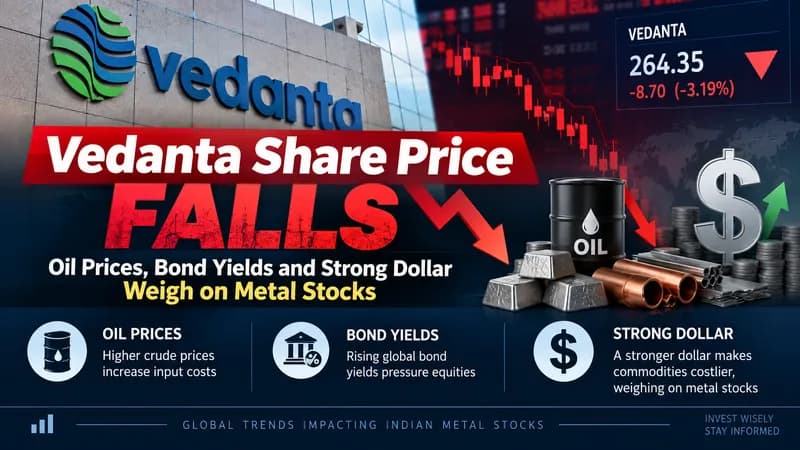
Vedanta Aluminium Share: Vedanta shares came under selling pressure at the start of trading as weakness in the broader Indian equity market, rising crude oil prices and concerns over higher input costs weighed on metal stocks.
The stock opened lower on the NSE at around ₹431.25 and slipped to an intraday low of ₹419.50, marking a fresh 52-week low, according to the market information provided.
The decline comes against a challenging global backdrop for commodities, with higher crude prices, rising bond yields and a stronger US dollar creating pressure across metal and mining stocks.
Market observers cited two key factors behind the selling pressure in Vedanta shares.
The first is the combination of a weak domestic equity market and rising crude oil prices. Higher energy costs can increase operating and transportation expenses for metal producers, potentially putting pressure on margins.
The second factor is the changing trend in international base-metal markets. Movements in global aluminium and other metal prices can have a direct impact on the earnings outlook and investor sentiment surrounding metal companies.
During the session, Vedanta shares were reported to be down more than 4%, while Vedanta Aluminium shares on the BSE were trading around ₹420 per share, according to the figures provided.
Global financial markets are also dealing with a sharp rise in US Treasury yields.
The yield on the US 10-year Treasury moved above 4.9%, reaching its highest level since 2023 amid renewed inflation concerns linked to higher oil prices and uncertainty surrounding the possibility of a prolonged conflict.
The rise in yields can affect equity valuations because higher bond returns make fixed-income assets relatively more attractive while increasing the cost of capital across financial markets.
The US 30-year Treasury yield also climbed to around 5.378%, its highest level since 2007, according to the market data cited.
Higher bond yields can create a difficult environment for cyclical sectors such as metals.
When yields rise, investors may become more cautious about companies whose earnings are closely linked to global economic growth and commodity prices. Higher interest rates can also weigh on economic activity, potentially affecting industrial demand for metals.
For companies such as Vedanta, this creates a combination of concerns involving commodity demand, financing conditions and operating costs.
Crude oil prices are another important factor for the metals industry.
Aluminium production and other mining and metal operations require substantial amounts of energy. Higher fuel and energy prices can therefore increase production, transportation and logistics expenses.
If selling prices do not rise sufficiently to offset those additional costs, operating margins can come under pressure.
This is why a sustained increase in crude prices can become a negative factor for metal producers even when the underlying demand for their products remains stable.
The US dollar is another key variable for global commodity markets.
Aluminium, copper, steel and several other internationally traded commodities are generally priced in US dollars. When the dollar strengthens, these commodities can become more expensive for buyers using other currencies.
That can potentially reduce demand and put pressure on international commodity prices.
For metal companies, the combination of a stronger dollar, elevated energy costs and uncertain global demand can therefore create a challenging operating environment.
The latest decline highlights the sensitivity of metal stocks to global macroeconomic factors.
Investors in Vedanta need to track several variables beyond the company's individual financial performance, including international aluminium and base-metal prices, crude oil, currency movements, interest rates and global industrial demand.
A single trading session does not necessarily determine the long-term direction of a stock. However, persistent pressure from higher input costs and weaker commodity demand can become important factors for earnings and valuations.
Investors should therefore assess the company's fundamentals, debt position, commodity-price outlook and broader market conditions before making any investment decision.
In the near term, market sentiment toward Vedanta could remain sensitive to movements in global commodities and interest rates.
A sustained rise in crude oil prices or US Treasury yields could keep pressure on cyclical stocks, while a recovery in industrial demand or stronger aluminium prices could provide support.
For now, the fresh 52-week low reported during the session reflects the cautious mood surrounding the stock amid broader weakness in both domestic equities and global markets.