/
/
The reported TVS Group family dispute has brought questions about family wealth, ownership rights and succession into focus at one of India's prominent business groups. The disagreement involves Venu Srinivasan, his wife Mallika Srinivasan, their daughter Lakshmi Venu and their son Sudarshan Venu, who hold leadership positions across different businesses associated with the wider TVS Group
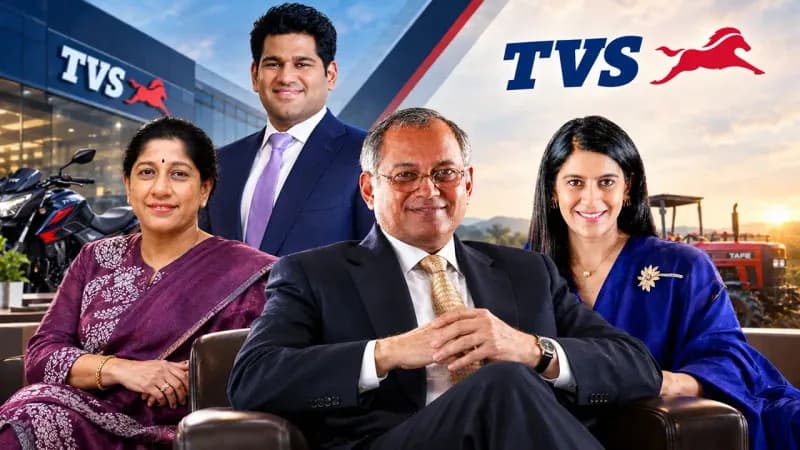
The reported TVS Group family dispute has brought questions about family wealth, ownership rights and succession into focus at one of India's prominent business groups. The disagreement involves Venu Srinivasan, his wife Mallika Srinivasan, their daughter Lakshmi Venu and their son Sudarshan Venu, who hold leadership positions across different businesses associated with the wider TVS Group.
At the heart of the dispute is a fundamental question: Does dividing business responsibilities among family members automatically settle the ownership and distribution of family wealth?
According to reports published in October 2026, Mallika Srinivasan and Lakshmi Venu maintain that a final, transparent settlement of the family's economic interests has not been reached. Venu Srinivasan and his son Sudarshan have been associated with a different understanding of the existing business arrangements.
The disagreement involves the interpretation of an earlier business division, a memorandum of understanding signed in March 2024, and shares held through the VS Trust. However, the precise legal rights of each family member and the final outcome of the dispute cannot be established from the reported claims alone.
The dispute concerns four members of the Srinivasan family, each associated with a significant business role.
Venu Srinivasan is a prominent industrialist associated with TVS Motor Company and TVS Holdings. He has played a major role in the development of the group's automotive businesses.
According to reports, the current disagreement concerns the interpretation of earlier family arrangements and the ownership and control of assets held directly or through trusts.
Mallika Srinivasan is the chairperson and managing director of TAFE, a major tractor manufacturer.
She is Venu Srinivasan's wife and has an independent leadership position in the agricultural machinery industry. Her reported position in the family dispute is that business responsibilities and family economic ownership should not be treated as interchangeable.
Lakshmi Venu, the couple's daughter, leads Sundaram-Clayton.
Her reported concerns relate to the valuation of family assets, the recognition of the economic interests of family members and whether previous agreements settled the family's ownership arrangements in full.
Sudarshan Venu, the couple's son, is associated with the leadership of TVS Motor Company.
His role is important because TVS Motor is one of the group's most prominent automotive businesses. The reported disagreement raises broader questions about how management responsibilities, ownership interests and succession arrangements relate to one another.
The central issue is the distinction between control of a business and ownership of family wealth.
A family may assign different companies to different members to establish clearer management responsibilities. However, such an arrangement does not necessarily determine how every family asset, investment or trust-held share should be distributed.
According to the reported position of Mallika Srinivasan and Lakshmi Venu, the family's economic interests still require a transparent and mutually acceptable settlement.
The disagreement also concerns the meaning and scope of previous arrangements. One side has been associated with the view that the business division already established the relevant separation, while Mallika and Lakshmi reportedly argue that the arrangements did not settle every question of ownership.
The legal effect of those agreements would depend on their actual wording, the assets covered and the applicable law.
Two dates are particularly important to understanding the reported dispute.
In 2020, arrangements were made to separate business interests among branches of the wider TVS family.
This restructuring is an important part of the group's corporate history. However, Mallika Srinivasan and Lakshmi Venu reportedly argue that the division among branches of the extended family should not automatically be treated as a final settlement of assets within Venu Srinivasan's immediate family.
The distinction matters because a corporate restructuring and a settlement of personal or trust-held assets can involve different legal and financial questions.
A memorandum of understanding, or MoU, was reportedly signed within the family in March 2024.
According to Mallika Srinivasan's reported interpretation, the document dealt with matters such as trademarks, brand usage and non-compete arrangements. She maintains that it did not amount to a final division of the family's economic ownership.
The disagreement therefore concerns the scope of the MoU: which rights it settled, which assets it covered and whether it was intended to resolve the family's financial interests comprehensively.
Without reviewing the complete agreement and any associated legal documents, its precise effect cannot be independently determined.
The VS Trust is a significant element of the reported dispute because trust-held shares can influence corporate voting power and control.
A report published by Mint on October 13, 2026, cited the following shareholding figures for the trust:
| Company | Reported VS Trust stake |
|---|---|
| Sundaram-Clayton | 46.83% |
| TVS Holdings | 66.55% |
TVS Holdings, in turn, reportedly holds approximately 56% of TVS Motor Company.
These figures illustrate why the trust's ownership and governance arrangements matter. Its shareholdings connect the questions of family wealth with control over major listed businesses.
However, a trust's shareholding should not automatically be equated with the personal ownership of its trustee or any individual beneficiary. The legal rights associated with trust assets depend on the trust deed, its beneficiaries, applicable law and the powers assigned to the trustee.
The reported figures should also be checked against the relevant companies' latest official shareholding disclosures before publication or financial analysis.
The two businesses represent different parts of the wider group's corporate interests.
TVS Motor Company manufactures two-wheelers, three-wheelers and related mobility products. It is a major player in India's automotive industry and has an international business presence.
Sundaram-Clayton is associated with automotive components and industrial manufacturing. Its leadership and ownership arrangements are therefore relevant to the group's broader business structure.
The reported disagreement has drawn attention to differences in the scale and market value of the businesses associated with the next generation of the family.
However, differences in company valuations do not, by themselves, establish that an individual is legally entitled to a particular share of another family member's assets. That determination depends on the applicable agreements, ownership records and legal rights.
It is also important to distinguish the leadership of a company from the ownership of its shares. A managing director's responsibilities do not automatically establish the extent of that person's entitlement to other family assets.
According to the supplied account of their joint statement dated October 12, 2026, Mallika Srinivasan and Lakshmi Venu argued that a final agreement on the distribution of economic assets within the immediate family had not been reached.
Their reported position emphasised three points:
They also reportedly argued that Mallika's leadership role at TAFE should not, by itself, be considered evidence that the family's assets have been divided equally.
The statement, as described in the supplied material, favoured resolving the disagreement through discussion and a fair settlement.
These are the reported positions of the parties, not an independently established legal conclusion about who owns which assets.
Legal action is one possible route if the parties cannot resolve the disagreement through negotiations.
An NDTV Profit report was cited in the supplied material as saying that Lakshmi Venu could consider legal options, potentially including proceedings before the Madras High Court concerning succession-related issues.
However, the possibility of legal action should not be confused with a confirmed lawsuit. A definitive account would require verification of any court filing, case number, parties and relief sought.
If proceedings are initiated, the relevant questions could include the interpretation of the 2024 MoU, the ownership of disputed assets, the rights of beneficiaries and the authority exercised over trust-held shares.
Until authoritative legal records or statements establish otherwise, the dispute should be described as a reported family disagreement rather than a court-determined ownership battle.
The supplied account also refers to developments at Sundaram-Clayton in April 2026 involving the removal and subsequent reinstatement of a company secretary.
Reports reportedly linked the episode to differences between Lakshmi Venu and Venu Srinivasan. The account further states that Venu Srinivasan subsequently resumed the company's chairperson and managing director responsibilities.
These developments have been discussed in the context of the wider family tensions. Nevertheless, boardroom decisions and the legal ownership of family assets are separate matters.
A corporate board's actions must be assessed using the company's official disclosures and governance records. They should not automatically be interpreted as proof of the merits of a separate family property dispute.
The disagreement highlights three broader issues relevant to family-owned enterprises.
Assigning leadership of different companies to family members can provide operational clarity. It does not necessarily settle the distribution of investments, trust assets or other property.
When a trust holds substantial stakes in listed companies, its governing documents and the powers of its trustees can have important implications for voting rights and succession planning.
Family arrangements can cover different subjects, including business separation, branding, competition restrictions and asset ownership. Whether a particular agreement settles all or only some of those matters depends on its terms and legal effect.
For business families, the dispute underscores the importance of clear documentation, independent asset valuation and transparent succession planning.
The reported TVS Group family dispute centres on the relationship between business control, family wealth and succession. Venu Srinivasan, Mallika Srinivasan, Lakshmi Venu and Sudarshan Venu occupy important positions in businesses associated with the wider group, but their corporate roles do not, on their own, resolve questions about the ownership of family assets.
The interpretation of the 2020 business division, the March 2024 MoU and the VS Trust's holdings remains central to the reported disagreement.
The final position will depend on the relevant agreements, verified ownership records and any subsequent settlement or judicial determination. Until those details are established, claims about the precise division of the family's wealth should be treated cautiously.
The reported dispute concerns the distribution of family wealth, the ownership of assets and the interpretation of earlier agreements. Mallika Srinivasan and Lakshmi Venu reportedly maintain that the family's economic interests have not been fully settled.
The four principal family members are Venu Srinivasan, Mallika Srinivasan, Lakshmi Venu and Sudarshan Venu. They are associated with different leadership roles across businesses linked to the wider TVS Group.
The memorandum of understanding reportedly addressed issues including trademarks, brand usage and non-compete arrangements. Mallika Srinivasan's reported position is that it did not constitute a final settlement of the family's economic ownership.
According to the Mint report cited in the supplied material, the VS Trust held 46.83% of Sundaram-Clayton and 66.55% of TVS Holdings. TVS Holdings reportedly held approximately 56% of TVS Motor Company. These figures should be cross-checked against current official filings.
Not necessarily. A disagreement over family assets or succession does not automatically mean that companies will be divided, sold or restructured. Any such development would need separate confirmation.
The supplied material refers to the possibility of legal action, including a potential succession-related case before the Madras High Court. It does not establish that a lawsuit has actually been filed. Official court records would be needed to confirm that.
Trust-held shares are governed by the relevant trust documents and applicable law. The trustee's powers, the beneficiaries' rights and the legal ownership arrangements must be examined before drawing conclusions about who is entitled to the assets.