/
/
Pawan Kalyan admitted feeling jealous of Vijay’s rapid political rise as TVK swept Tamil Nadu elections and ended decades of Dravidian rule.
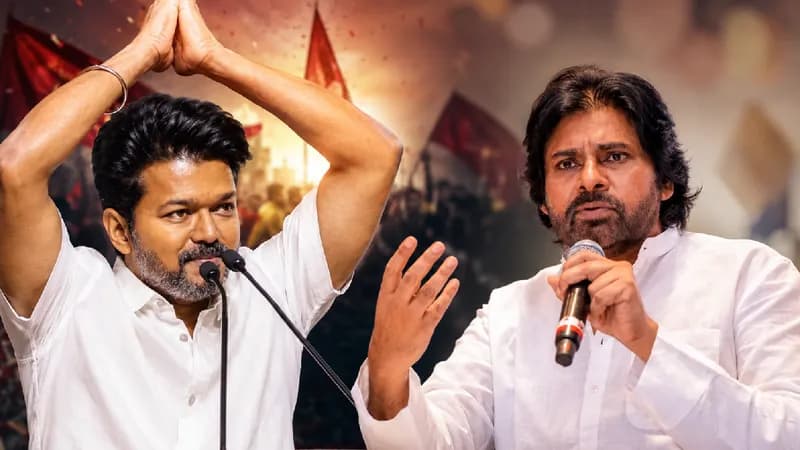
Actor-turned-politician Pawan Kalyan has made headlines again, but this time not because of a political attack or election strategy. The Andhra Pradesh Deputy Chief Minister surprised many with an unusually honest and emotional statement while talking about Vijay and his explosive rise in Tamil Nadu politics.
Speaking at a public gathering, Pawan Kalyan admitted he felt “jealous” watching Vijay become Chief Minister so quickly after entering politics. The comment was made jokingly, but there was also visible frustration and realism behind it.
And honestly, that is exactly why people are talking about it so much online. In an era where politicians carefully calculate every word, Pawan’s raw admission felt human.
Pawan Kalyan said Tamil Nadu politics looked “carefree” compared to the struggle he faced building the Jana Sena Party over the last 15 years.
“I look at Tamil politics these days; they’ve done it so carefree. I felt jealous. They won using cutouts and holograms happily,” he said while laughing. He then added, “I have been wandering on the streets for fifteen years.”
The remark quickly went viral across social media platforms, especially among fans of both actors. Some saw it as a humorous compliment to Vijay’s popularity, while others viewed it as a brutally honest reflection of how difficult politics can be outside the cinema world.
Pawan Kalyan also explained that building a political party is far more difficult than people imagine.
“Managing a political party means uniting lakhs of people. We can’t even get our own family members to agree on one thing,” he said during the interaction.
That line probably connected with many ordinary voters more than any scripted political speech could.
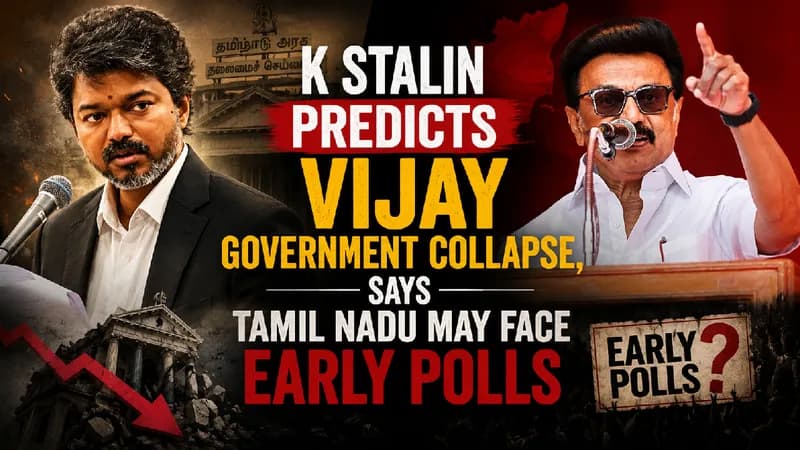
Tamilaga Vettri Kazhagam, popularly known as TVK, was launched by Vijay in 2024. In just two years, the party managed to pull off what many political experts thought was impossible.
TVK reportedly secured 108 seats in the 2026 Tamil Nadu Assembly elections and emerged as the single largest party, breaking the long-standing dominance of the DMK and AIADMK in the state.
That victory completely changed the political conversation in South India.
For decades, Tamil Nadu politics revolved around the Dravidian giants. Many believed no outsider or new party could realistically challenge that structure. But Vijay’s popularity, aggressive public outreach, and massive youth support changed the equation much faster than expected.
Whether one agrees with celebrity politics or not, it is impossible to deny that Vijay’s entry has shaken up the state politically.
Unlike Vijay’s rapid rise, Pawan Kalyan’s political career has been slow, difficult, and at times humiliating.
Jana Sena Party was founded by him in 2014. In the 2019 elections, the party managed to win only one seat, while Pawan himself lost both constituencies he contested from.
At that point, many political analysts dismissed Jana Sena as a temporary experiment built around star power.
But Pawan stayed in the game. Over the years, he slowly built grassroots support and eventually aligned with the BJP and the Telugu Desam Party. That strategy paid off massively in the 2024 Andhra Pradesh elections, where Jana Sena won all 21 Assembly seats it contested as part of the NDA alliance.
Today, Pawan Kalyan serves as Andhra Pradesh Deputy Chief Minister, a position that once seemed politically impossible for him.
That context makes his “jealous” comment even more interesting. It did not sound bitter. It sounded like someone acknowledging how unpredictable politics can be.
The rise of actors in politics is nothing new in South India. Legends like N. T. Rama Rao, M. G. Ramachandran and J. Jayalalithaa successfully transformed film popularity into political dominance.
Now, Vijay appears to be following that same path. What makes this moment fascinating is that even experienced politicians like Pawan Kalyan seem genuinely surprised by how fast TVK rose to power.
The internet is already turning this into a “Pawan vs Vijay” narrative, but the reality feels more layered than that. There seems to be admiration, competitiveness, and maybe even relief in Pawan’s words, relief that after years of struggle, someone else from the film industry finally managed to break through the political wall so dramatically.
And if one thing is clear after this week, it is this: South Indian politics is entering a completely new phase where cinema charisma, digital influence, and grassroots emotion are becoming more powerful than traditional political formulas.