/
/
Karnataka Chief Minister Siddaramaiah resigned after Congress leadership asked for a transition. DK Shivakumar is expected to become the next Chief Minister.
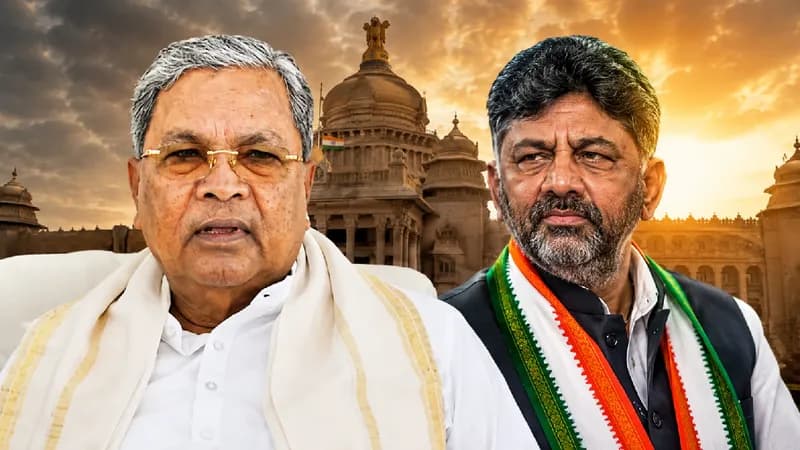
Siddaramaiah resignation: In a dramatic political development that had been building quietly for months, Karnataka Chief Minister Siddaramaiah officially resigned on Thursday, clearing the way for Deputy Chief Minister D. K. Shivakumar to take over the top post.
The resignation ends one of the longest-running power struggles inside the Congress party and confirms what many in Karnataka politics had already sensed, the leadership transition was no longer avoidable.
Siddaramaiah submitted his resignation letter to the Governor’s Special Secretary at Lok Bhavan in Bengaluru because Governor Thaawarchand Gehlot was out of the state at the time. The Governor is expected to formally accept the resignation after returning later in the evening.
Speaking to reporters after stepping down, Siddaramaiah said he resigned because the Congress high command asked him to do so. He added that once a chief minister submits a resignation, the Governor is constitutionally expected to make way for the next government leader.
For many Congress supporters, the moment felt emotional. Siddaramaiah did not sound bitter. Instead, he sounded reflective, almost like a leader closing a long political chapter.
“I came from a village and never imagined I would become MLA, minister or chief minister,” he said while thanking Sonia Gandhi, Rahul Gandhi and Mallikarjun Kharge for trusting him twice with Karnataka’s top job.
The Siddaramaiah resignation did not happen overnight. Ever since Congress returned to power in Karnataka in 2023 with a huge majority, questions remained over how long the power-sharing arrangement between Siddaramaiah and DK Shivakumar would last.
While the party never officially confirmed a rotational chief minister formula, political circles in Bengaluru treated it as an open secret.
Over the last few months, pressure reportedly increased from Shivakumar’s camp, with several Congress leaders pushing the central leadership to honour the understanding reached after the 2023 Assembly elections.
This week, the issue finally reached its conclusion after back-to-back meetings in New Delhi involving Rahul Gandhi, Mallikarjun Kharge, KC Venugopal and senior Karnataka leaders.
According to sources, Siddaramaiah agreed to step down after direct intervention from Rahul Gandhi. That detail matters politically.
For years, Rahul Gandhi has been criticised for delaying difficult organisational decisions. This time, however, Congress acted before the internal rivalry damaged the government publicly. Whether one supports Congress or not, the leadership transition was handled far more smoothly than many expected.
All signs now point toward DK Shivakumar becoming the next Karnataka CM.
A Congress Legislature Party meeting is expected soon, where Shivakumar will likely be formally elected leader. His swearing-in could happen within days.
Interestingly, photos released by the Karnataka Congress after a breakfast meeting on Thursday showed Shivakumar touching Siddaramaiah’s feet and seeking his blessings. The party also posted the message: “Unity is our strength.” That public display was not accidental.
Congress knows the BJP will closely watch every sign of division in Karnataka. The party wants to avoid the impression that Siddaramaiah was pushed out unfairly or that the transition happened because of factional warfare. Still, politics is rarely this simple.
Siddaramaiah remains one of Congress’ strongest mass leaders in the South, especially among backward classes and welfare-focused voters. Shivakumar, meanwhile, is seen as an aggressive organisational strategist who kept the Karnataka Congress machinery alive during difficult years. In reality, both leaders are politically important for Congress.
The bigger story here is not just about one resignation. It is about Congress preparing for the future.
Karnataka remains the party’s most important state in southern India. With the 2028 Karnataka elections and the 2029 Lok Sabha elections already on the political horizon, Congress appears eager to avoid prolonged uncertainty.
The leadership change also signals Rahul Gandhi’s growing influence over party decisions. Insiders say the message from Delhi was clear, the transition could not be delayed any longer.
Siddaramaiah, for his part, used his final remarks to defend his government’s welfare model. He said the Congress government fulfilled most promises made in the 2023 manifesto and spent more than ₹1.4 lakh crore on guarantee schemes despite criticism from opposition parties and sections of the media.
Whether voters agree with that claim will become clearer in the coming years. But one thing is certain, Karnataka politics has entered a completely new phase. And now, all eyes are on DK Shivakumar.