/
/
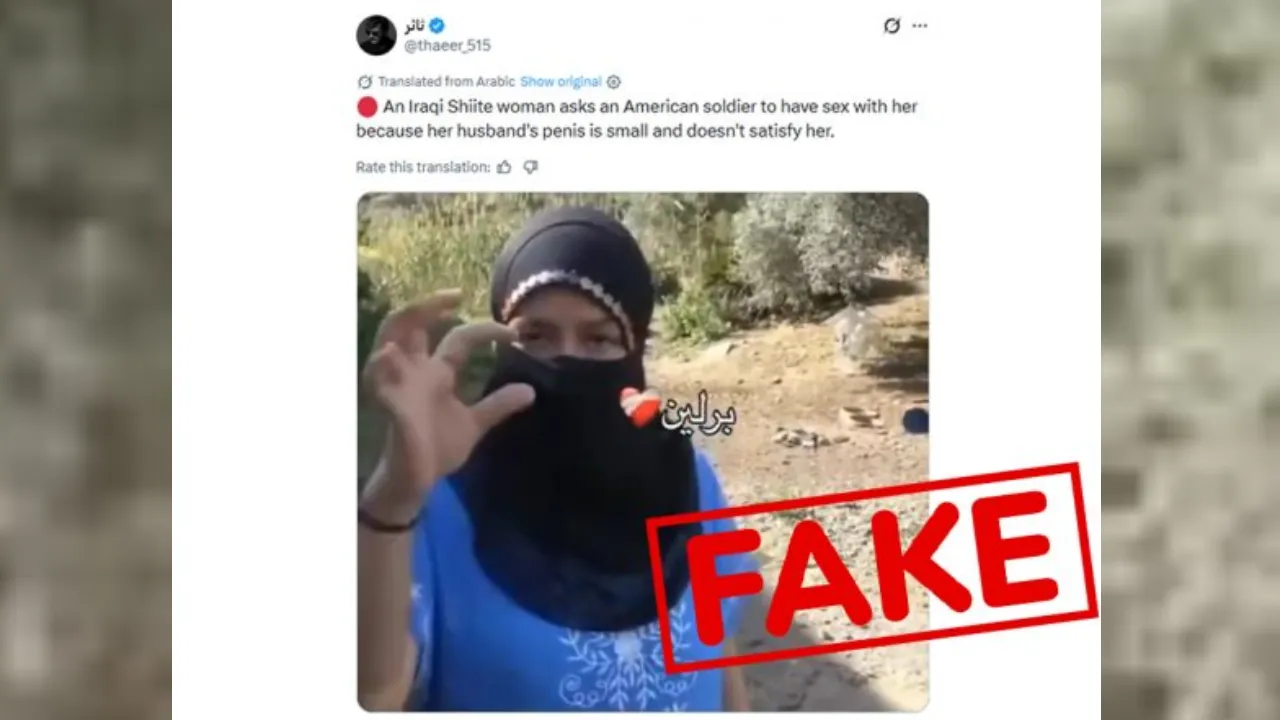
A viral video described online as showing an Iraqi woman asking a US soldier for sex is not evidence of a real-life encounter. Fact-checking cited in the supplied material found that the footage originated from a commercial adult website and was later circulated online with a fabricated story.

A viral video described online as showing an Iraqi woman asking a US soldier for sex is not evidence of a real-life encounter. Fact-checking cited in the supplied material found that the footage originated from a commercial adult website and was later circulated online with a fabricated story.
The claim became popular across social media, including X and messaging platforms, where users presented the explicit clip as a genuine incident involving an Iraqi woman and an American military personnel.
There is no credible evidence in the available information supporting that narrative.

No. The claim that an Iraqi Shiite woman approached an American soldier for sex because her husband allegedly did not satisfy her is false.
The footage was identified as a staged adult video rather than a recording of an authentic encounter. The misleading description appears to have been added after the original commercial content was published.
The case illustrates how existing adult material can be given an entirely different identity online. Once a sensational caption is attached, viewers may interpret the footage as a newsworthy event even though the video itself does not establish the claims being made about it.

According to the fact-checking information provided, researchers located the footage on a commercial adult-content website.
That discovery is significant because it provides context for the video's production. Rather than being a secretly recorded encounter in Iraq, the footage was produced as adult entertainment and subsequently repackaged with a fictional narrative.
The presence of commercially produced footage does not, by itself, establish anything about the identities or circumstances described in viral posts. In this case, however, the original source directly contradicts the claim that the clip documents the alleged real-world incident.
The Iraqi video is part of a broader pattern in which commercially produced adult clips are presented as private leaks, hidden-camera recordings or controversial real-life encounters.
Another example cited in the supplied material involved a supposed Pakistani “teacher-student MMS leak.” That footage was reportedly traced to a scripted adult roleplay production rather than an actual classroom incident or non-consensual recording.
These posts are designed to exploit curiosity and sensationalism. Terms such as “leak,” “MMS” and “exclusive video” can encourage users to share material before checking where it originated.
Social and messaging platforms can accelerate the process because a video may be repeatedly reposted without its original source or context.
Sensational captions can make ordinary or scripted footage appear to document an extraordinary event.
In many cases, the person sharing the video does not verify its source. Instead, the accompanying caption becomes the primary source of context for subsequent viewers.
This creates a cycle in which an unsupported claim can acquire the appearance of credibility simply because thousands of accounts have repeated it.
Traffic and engagement can also provide an incentive for publishers or anonymous accounts to attach provocative narratives to existing material. Posts may ultimately direct users toward external websites promising longer versions or additional footage.
Yes. Users should be particularly cautious with links accompanying claims about leaked or exclusive videos.
Some websites promoted through viral posts may use sensational content as a lure for phishing pages, intrusive advertising, unwanted downloads or other potentially harmful activity.
A user searching for a supposedly leaked video may therefore face two separate risks: helping spread false information and being exposed to an unsafe website.
The safest approach is not to click suspicious links simply because a post promises access to supposedly private or exclusive footage.
Before sharing a controversial video, check whether credible reporting or official sources independently confirm the event.
Look for clues about the original source of the footage. Commercial-platform watermarks, recurring scenes from known adult productions, or evidence that a clip existed online before the alleged incident can undermine claims that it is a newly leaked recording.
It is also important to separate what a video actually shows from what its caption claims. A recording may show people interacting, for example, without proving their identities, location, date or the circumstances described by the uploader.
Users should also avoid forwarding intimate material when its origin and consent status are unclear.
The viral claim is false.
The footage described as an encounter between an Iraqi woman and a US soldier was traced to commercial adult content and circulated online with a fabricated narrative. There is no credible evidence in the supplied fact-checking material establishing that the alleged incident occurred.
The episode is another example of how real-looking footage can be stripped of its original context and repackaged as a supposed “leak” or breaking-news event.