/
/
A viral ultrasound photo claims two snakes were found inside a pregnant woman’s womb. But doctors called the claim fake and explained what the image shows.
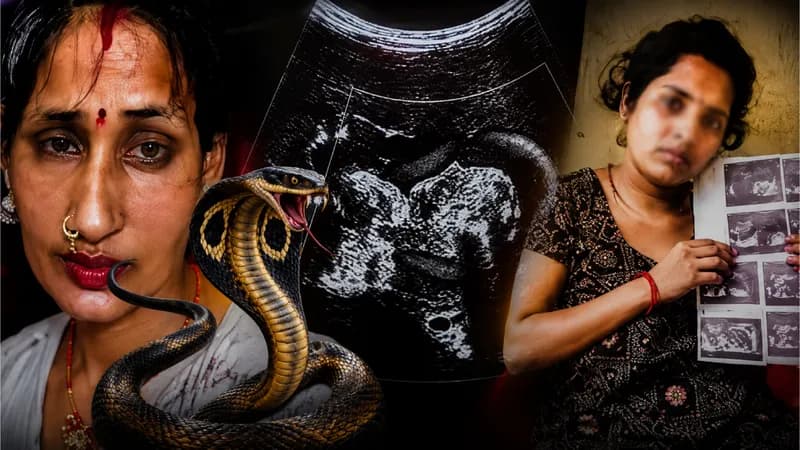
A shocking video claims that a snake in a pregnant woman’s womb was discovered through an ultrasound, leaving the woman allegedly in fear and doctors demanding a huge amount for surgery. But there is a major problem with the story: there is no credible evidence that two live snakes were found inside the woman’s womb.
The claim has circulated in different versions on social media, with some posts linking the alleged case to places including Deoria, Aligarh, Etah and Chapra. One version even says that an ultrasound conducted during the first three months of pregnancy was normal, while a later scan supposedly showed two snakes inside the abdomen.
However, reports published in June 2023 found no evidence supporting that extraordinary claim. In one case, an Etah-based doctor whose name was attached to the viral image directly rejected the story and said the image was being misrepresented.
The image at the centre of the controversy appears to show a curved structure that social media users interpreted as a snake or even a cobra.
But Dr. Shailendra Jain, whose name was circulated alongside the image, told Amar Ujala that the claim was fake. According to the report, he explained that what people were interpreting as a snake was actually a normal uterus viewed from a particular angle, not a cobra, snake or a baby's leg.
The report also found that the identity of the alleged pregnant woman could not be established. Although social media posts connected the image with Aligarh and Etah, there was no confirmed information identifying the woman or establishing that such an incident had actually occurred.
That is an important detail because viral posts often add a location, doctor's name and dramatic medical claim to an old or unrelated image, making the story appear authentic.
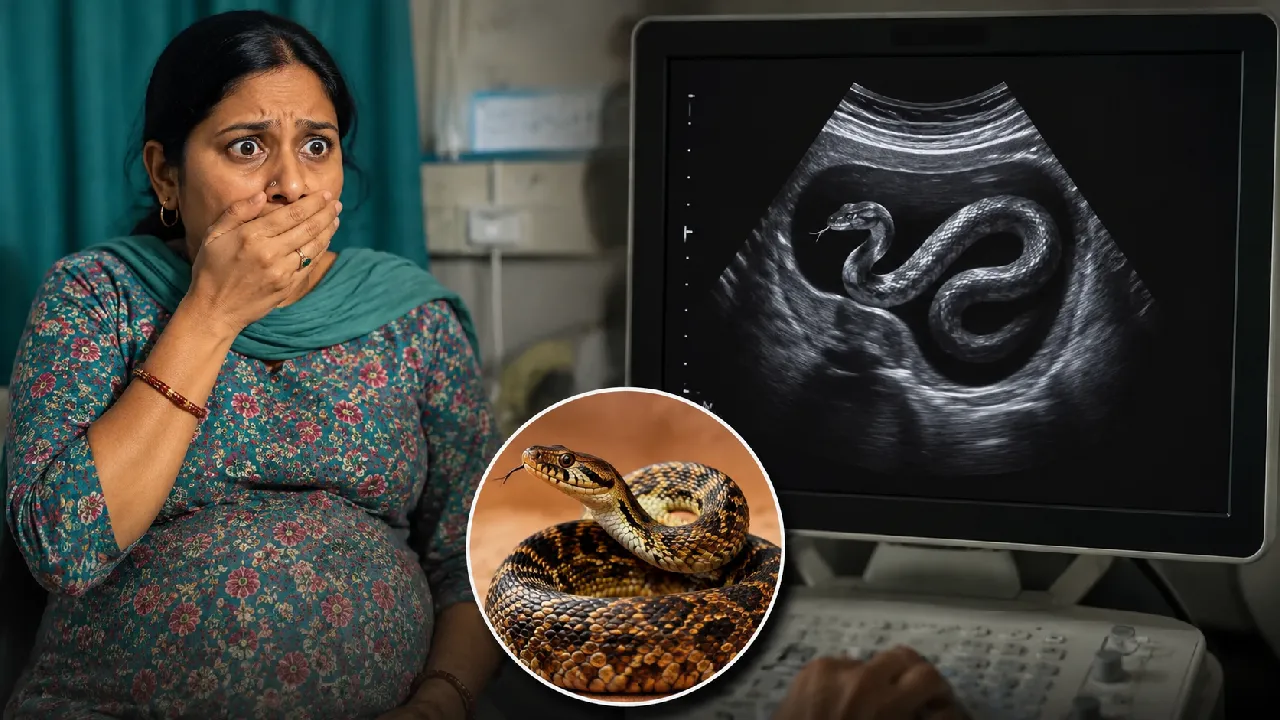
A similar claim surfaced in Bihar later in June 2023. A social media post claimed that a pregnant woman from the Ekma area had a snake inside her stomach and that the snake could even be seen hissing in the ultrasound image.
But Hindustan clearly stated that it could not verify the photograph or the claim. A doctor identified in the report said someone had approached him with a similar story, but the woman was never brought in for examination. He also said the possibility of a snake being inside a pregnant woman's abdomen was extraordinarily unlikely and questioned the authenticity of the supposedly clear snake-shaped ultrasound image.
So, rather than being evidence of a bizarre medical condition, the available reporting points toward a misleading viral image and an unverified social media story.
The basic anatomy of pregnancy also makes the viral story highly implausible.
During pregnancy, the fetus develops inside the uterus within the amniotic sac. The cervix, which connects the uterus to the vagina, normally remains closed during pregnancy and forms a mucus plug that helps protect the uterus.
The American College of Obstetricians and Gynecologists also describes the amniotic sac as the fluid-filled sac inside the uterus where the fetus develops.
This does not mean unusual abdominal medical conditions are impossible. But the specific social media claim that two live snakes were discovered inside a pregnant woman's womb through an ultrasound has not been established by credible medical evidence.
This is where the viral post becomes misleading.
Ultrasound images can look confusing to people who are not trained to interpret them. Structures may appear curved, elongated or shadowed depending on the imaging plane, position and other technical factors.
That appears to be what happened with the viral image discussed by Amar Ujala. The doctor associated with the image said the structure was a normal uterus being interpreted incorrectly because of the angle.
In other words, seeing something that resembles a snake in an ultrasound photograph does not mean there is actually a snake inside the body.
The accompanying video makes the story even more dramatic. It allegedly describes a woman whose initial pregnancy examination was normal, followed by severe abdominal pain and a later ultrasound supposedly revealing two snakes.
It then urges viewers to be careful while drinking water, covering containers at night and checking their surroundings.
Those safety suggestions may sound convincing because they are wrapped inside an emotional story. But they should not be treated as proof that the medical claim is genuine.
There is also no verified evidence in the material provided that a woman in Deoria underwent such an operation, that doctors demanded a specific large amount of money for removing two snakes, or that two live snakes were discovered through ultrasound.
The most important takeaway is simple: the viral image should not be presented as proof that a pregnant woman had two snakes inside her womb.
The strongest documented evidence available for the widely circulated image is actually the opposite. The doctor whose name was attached to the Etah version denied the case and identified the apparent snake-like shape as a normal uterine image.
A separate report from Bihar also found that the alleged case had not been verified and that the woman in question was never brought for the promised medical examination.
The snake in pregnant woman’s womb story is a viral claim, not a confirmed medical case. The ultrasound photograph being circulated as evidence was rejected by the doctor whose name was linked to it, while another similar claim was also left unverified.
So before forwarding such frightening medical videos, it is worth checking the original image, the doctor's statement and credible medical reporting. A strange-looking ultrasound image can be misleading, and a viral caption does not turn an unverified claim into a medical fact.
Disclaimer: This article is based on previously published reports and available medical information. The viral claims and photographs discussed here should not be treated as medical evidence. Anyone experiencing abdominal pain or concerns during pregnancy should consult a qualified obstetrician or healthcare professional rather than relying on social media posts.