/
/
A video allegedly showing Bollywood actress Shalini Pandey in an intimate situation has circulated widely across social media, prompting searches for the “Shalini Pandey viral video.” Pandey, however, has categorically denied that the footage is genuine and said the clip was fabricated using artificial intelligence.

A video allegedly showing Bollywood actress Shalini Pandey in an intimate situation has circulated widely across social media, prompting searches for the “Shalini Pandey viral video.” Pandey, however, has categorically denied that the footage is genuine and said the clip was fabricated using artificial intelligence.
The actress addressed the controversy on Instagram on August 31, 2026, describing the video as “completely fabricated” and making clear that the woman shown in the footage is not her.
Pandey also condemned the misuse of technology to create and circulate fabricated intimate material involving women. She appealed to social media users not to share, forward or download the video and instead report accounts distributing it.
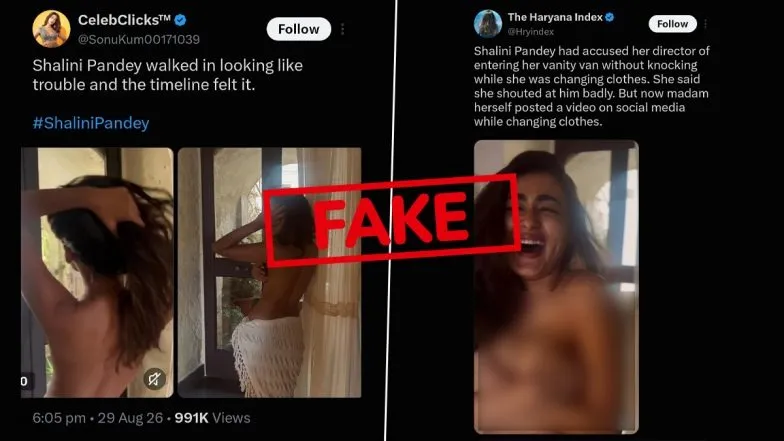
Based on Pandey's public statement, the alleged video does not depict the actress.
There is currently no independent evidence establishing the circulated footage as authentic. Instead, the available information points toward digitally manipulated or AI-generated material.
The incident is another example of how generative AI can be misused to create convincing synthetic videos involving real people without their consent.
Because the footage is alleged to be sexually explicit, this article does not reproduce, embed or link to the material.
INDIAN actress Shalini PANDEY: @grok is it a real video or ai ? pic.twitter.com/LGl1KDf0Ty
— Service Road (@Aserviceroad) August 27, 2026
Pandey directly addressed the allegations through an Instagram post on August 31.
She said the clip was “completely fabricated” and expressed concern about technology being used to target individuals, particularly women.
The actress urged people who encounter the material not to participate in its circulation. Her advice was straightforward: do not share, forward, download or engage with the video, and report it to the relevant social-media platform.
Her response also shifts attention away from whether a fabricated clip looks convincing and toward the broader issue of consent and online abuse.
Reports circulating alongside the controversy have pointed to similarities between the woman's appearance in the fabricated footage and photographs Pandey previously shared from an Italy vacation.
In those photographs, Pandey appeared in artistic and partially covered poses. Such publicly available images can potentially be used as source material for AI manipulation or face-replacement techniques.
However, the precise method used to create the alleged video has not been independently established. It is therefore more accurate to describe it as alleged AI-generated or manipulated content, rather than claim a specific generation technique without forensic confirmation.
AI-generated imagery and video have made it increasingly difficult for ordinary social-media users to distinguish authentic footage from manipulated material.
Public figures are particularly vulnerable because photographs and videos of them are widely available online. Those images can be repurposed to produce fabricated material that appears authentic at first glance.
For women targeted with fabricated intimate imagery, the consequences can extend beyond temporary online embarrassment. Such material can cause reputational damage, harassment, emotional distress and persistent digital abuse even when the underlying footage is entirely fake.
The Shalini Pandey controversy therefore highlights a wider problem involving non-consensual synthetic intimate imagery (NCII).
The safest response is not to interact with or distribute the material.
Users who encounter an alleged deepfake should avoid downloading or forwarding it. Instead, they can use the platform's reporting tools to flag the content, particularly where it appears to depict sexual or intimate material involving someone without consent.
Sharing a fabricated intimate video can amplify the harm to the person targeted and make the material more difficult to remove.
It is also important not to assume that apparently realistic footage is authentic. AI-generated videos can contain convincing facial features, body movements and expressions while depicting events that never happened.
Shalini Pandey became widely known after starring in the Telugu film Arjun Reddy in 2017.
She subsequently expanded her work into Hindi cinema and has maintained a public presence through social-media platforms, including Instagram.
Her online activity also means photographs and other publicly posted material can become targets for unauthorized manipulation—a risk increasingly faced by actors, influencers and other public figures.
The actress has publicly rejected the video's authenticity and identified it as fabricated.
No independent verification presented in the available information has established the footage as genuine. Claims about the precise technology or source images used to create it should likewise be treated cautiously unless supported by forensic analysis.
For now, the responsible approach is to treat the alleged video as fake or AI-manipulated based on the actress's direct denial and the reported indicators, while avoiding further circulation of the material.
The incident also serves as a reminder that realistic-looking online content should not automatically be treated as proof of a real event.
Disclaimer: This article is published for informational and public-awareness purposes. StackUmbrella does not host, distribute, embed, or provide links to sexually explicit content, alleged leaked videos, or non-consensual intimate imagery. Any search terms used in this article are included solely to explain the online trend and address misinformation. Readers are strongly advised not to download, share, forward, or redistribute such material. Content circulating online may be manipulated or AI-generated, and allegations should not be treated as verified facts without reliable evidence.