

/
/
OpenAI will show ads to ChatGPT free and Go users in the US soon, but partners are frustrated with slow rollout and high costs in ad testing phase
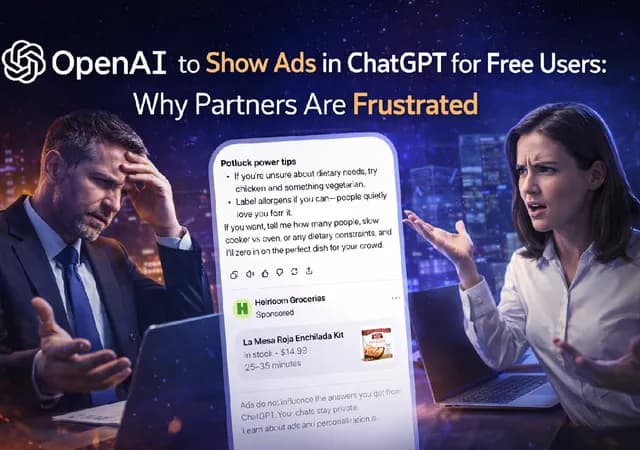
OpenAI is about to change how millions of people experience ChatGPT, and not everyone is happy about it.
In a move that signals a major shift in strategy, the company has confirmed that ads will soon appear for free and Go-tier users in the United States. This is not a small experiment anymore; it’s a clear step toward turning ChatGPT into a revenue-generating platform at scale.
The reason is simple: AI is expensive. And OpenAI needs money to keep up.
The ChatGPT ads rollout will impact users on the free and low-cost “Go” plans. If you’re using these versions, you’ll soon start seeing sponsored content inside your chats.
Here’s what we know so far:
OpenAI is trying to walk a fine line here, monetizing users without ruining the experience. Whether they succeed is a different story.
Let’s be honest: this was inevitable.
Running AI systems like ChatGPT costs billions. With rising competition from Google, Anthropic, and Meta, OpenAI can’t rely only on subscriptions anymore. The ChatGPT ads rollout is about survival and scale.
OpenAI is not only adding a new source of income by adding ads, but it is also making sure that the free version stays alive, which takes some of the pressure off of subscriptions and keeps OpenAI competitive in the quickly growing AI market.
This is the same playbook used by Google, Facebook, and YouTube, offering free access, monetize through ads.
OpenAI has partnered with Criteo, a major advertising technology company, to make this project happen. This helps brands buy ad space in ChatGPT, target users better, and improve the performance of their campaigns without any problems.
Advertisers are reportedly being asked to spend between $50,000 and $100,000 just to participate in the pilot. Some brands have even committed up to $250,000.
That’s not small money. And this is where things start getting messy.
Despite the hype, not everyone is impressed with how things are going.
Several major advertising partners, including big agency groups like WPP, Omnicom, and Dentsu, are part of the pilot. But behind the scenes, frustration is building.
The main complaints are here:
In simple terms, companies are paying big money but not seeing enough results yet. And their frustration makes sense. If you’re investing lakhs or even crores, you expect visibility, not delays.
OpenAI, however, is not backing down.
The company says the slow rollout is deliberate. According to its statement, this early testing phase is all about learning and refining the user experience.
Their argument is clear:
It is reasonable, yet in the modern high-paced tech world, it's hard to be patient.
Ads are not the only thing in ChatGPT ads rollout. It has to do with the future of AI business models.
Until now, AI tools felt different, cleaner, smarter, less commercial. But this move changes that perception.
We are entering a phase where free AI tools will come with ads, premium users will pay for a cleaner experience, and user attention itself will become the real product.
In short, AI is starting to look a lot like social media.
OpenAI is making the right move, but it’s walking on thin ice.
On one hand, ads are necessary. Without them, free AI tools might not last long. But trust is ChatGPT's biggest strength. Users might quickly lose interest if ads seem intrusive or not useful.
Right now, the company is saying all the right things, privacy protection, clear labeling, no influence on answers. But execution will decide everything. Because users don’t care about strategy. They care about experience.
The ChatGPT ads rollout is a big change for how AI platforms work. It's not just about coming up with new ideas anymore; it's also about making money.
For users, this means a trade-off: free access with ads, or paid access without them.
For OpenAI, this is a high-stakes gamble. And for the rest of the tech industry, one thing is clear, if this works, everyone will follow.










