/
/
The 2026 TVS Radeon has launched at ₹67,100 in India. Check variant-wise prices, LED lighting, new colours, engine specifications and key features.
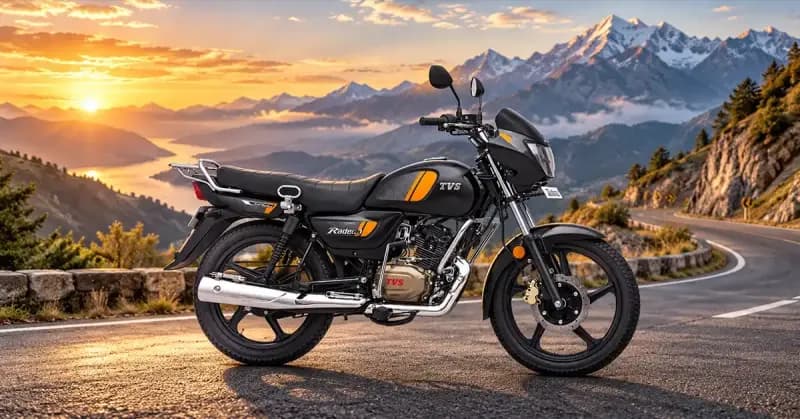
TVS Motor Company has launched the updated 2026 TVS Radeon in India ahead of the festive season, bringing new lighting elements, refreshed colour schemes and revised graphics to its commuter motorcycle. The updated model starts at ₹67,100 (ex-showroom, Delhi) and is available in three variants, with prices reaching ₹73,100 for the top-spec DIGI Disc version.
The latest update focuses primarily on styling and equipment rather than mechanical changes. The Radeon retains its familiar 109.7cc engine, four-speed gearbox and practical design, which are aimed at everyday commuting.
The biggest visual change is the new LED lighting package, comprising an LED headlight with daytime running lights (DRLs), an LED tail lamp and LED turn indicators at both ends. The two DIGI variants also feature a digital instrument console, while the top model gets a front disc brake.
Here is a closer look at the 2026 TVS Radeon price, variants, specifications and new features.
TVS has introduced the updated Radeon in three variants: BASE, DIGI Drum and DIGI Disc. The entry-level model is priced at ₹67,100, while the range-topping version costs ₹73,100.
The following prices are ex-showroom Delhi and do not include registration charges, insurance or other on-road expenses.
| Variant | Ex-showroom price |
|---|---|
| TVS Radeon BASE | ₹67,100 |
| TVS Radeon DIGI Drum | ₹70,100 |
| TVS Radeon DIGI Disc | ₹73,100 |
The price difference between the BASE and DIGI Drum variants is ₹3,000. Buyers moving from the DIGI Drum to the DIGI Disc will pay another ₹3,000 for the top variant.
The choice will largely depend on whether buyers prefer a straightforward analogue instrument setup or want the additional digital display and front disc brake available on the higher-spec model.
Prospective buyers should check with their local TVS dealership for the latest on-road price and availability.
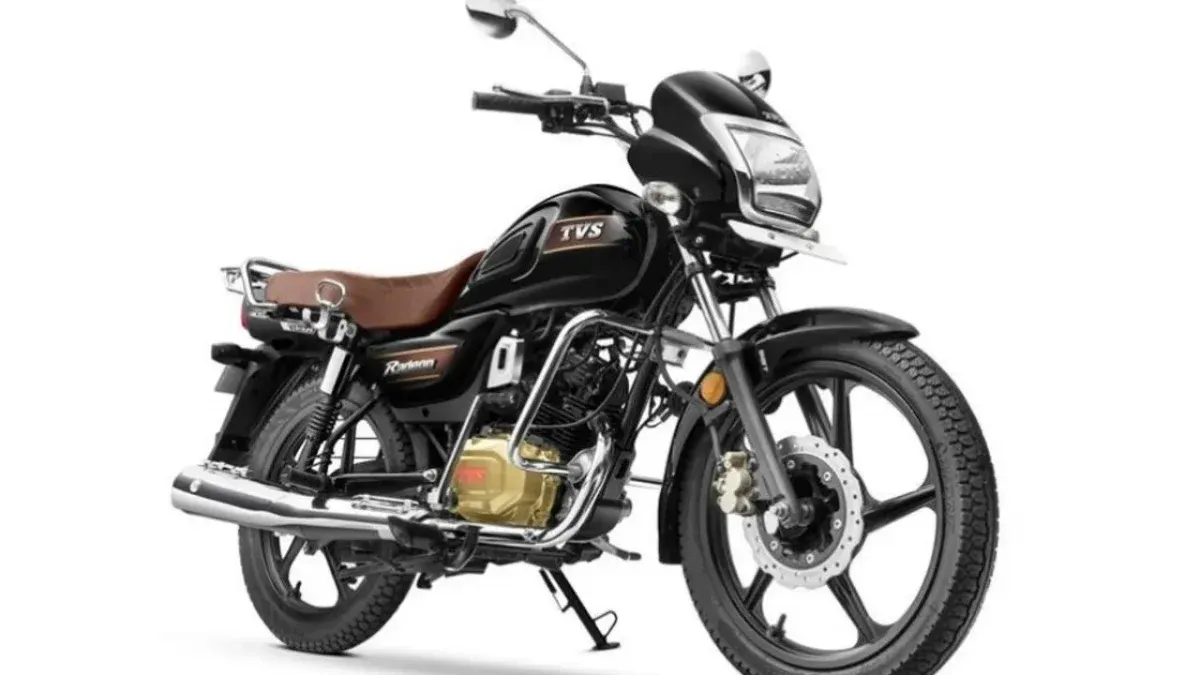
The 2026 update gives the Radeon a more contemporary appearance without changing its established commuter-bike silhouette.
The most noticeable change is at the front. The motorcycle now features a redesigned LED headlight with an integrated daytime running light.
The DRL has a distinctive, fang-like design that gives the front fascia a sportier appearance. This is a visual update rather than a change to the bike's overall body structure.
The motorcycle also receives an LED tail lamp and LED turn indicators at the front and rear. The updated lighting arrangement gives the Radeon a more modern look than the outgoing model.
TVS has introduced fresh dual-tone colour combinations and updated graphics on the fuel tank, side panels and other body sections.
The new finishes help distinguish the updated model while retaining its familiar commuter-bike proportions.
The BASE variant is offered in Black and Red, and Black and Blue. The DIGI Drum gets Black and Red and Black and Orange options, while the DIGI Disc is listed in Black and Orange. Some launch reports also list the existing Red and Black dual-tone finish for the two DIGI variants.
Colour availability may vary by variant and dealership, so buyers should confirm the available shades before booking.
Despite the cosmetic changes, the Radeon retains several features suited to daily use.
These include a single-piece seat, crash guards, a rear luggage rack and 18-inch alloy wheels. Its upright commuter-bike layout remains focused on everyday practicality rather than aggressive styling or high-performance riding.
The instrument setup differs between the BASE and DIGI variants.
The BASE model uses a simpler analogue instrument arrangement, while the DIGI Drum and DIGI Disc versions feature a digital console.
The digital display provides useful information for regular commuters, including riding data and indicators such as low fuel. The listed equipment also includes a real-time mileage indicator and service reminder.
For riders who want a more modern dashboard, the DIGI variants offer an additional convenience over the entry-level version.
The availability of these features makes the variant comparison important: buyers should evaluate the equipment they will actually use rather than selecting a model based on price alone.
TVS has retained the Radeon’s existing 109.7cc, single-cylinder, air-cooled petrol engine.
The motor produces approximately 8.08 bhp and 8.7 Nm of torque and is paired with a four-speed gearbox. These specifications remain unchanged in the 2026 update.
The Radeon is designed primarily for everyday commuting, including regular trips through city traffic. Its compact engine and conventional transmission are intended to deliver practical performance rather than outright speed.
Since the engine and mechanical package remain largely unchanged, buyers should not expect the new model to deliver a major performance increase over the previous version. The main improvements are concentrated in lighting, graphics and equipment.
The Radeon continues to feature TVS' Glide Through Technology, commonly known as GTT.
The system is designed to help the motorcycle move forward at low speeds with minimal throttle input under suitable conditions. This can be useful in slow-moving traffic, where riders frequently need to control their speed while manoeuvring through congested streets.
GTT may reduce the need for repeated throttle adjustments in certain low-speed situations. However, riders must still use the clutch and brakes appropriately and remain attentive to surrounding traffic.
The motorcycle also features a self-start system designed to work in any gear, subject to the required operating conditions. This can be convenient when restarting the bike in traffic.
The three variants differ in their braking equipment.
The BASE and DIGI Drum models use drum brakes, while the top-spec DIGI Disc gets a front disc brake. The disc option gives buyers an additional choice if they prefer that braking configuration.
The motorcycle also retains conventional suspension hardware, alloy wheels and its established commuter-focused chassis.
For everyday riders, the key consideration will be the balance between purchase price, comfort, braking preferences and the type of roads they use regularly.
A test ride is recommended before making a purchase decision, particularly for buyers comparing the Radeon with other 100cc and 110cc commuter motorcycles.
The BASE variant is the most affordable option, starting at ₹67,100. It may suit buyers who want a straightforward commuter motorcycle without paying extra for the digital console.
The DIGI Drum costs ₹70,100 and offers the digital instrument display while retaining drum brakes. It could appeal to riders who want additional dashboard information but do not specifically require a front disc brake.
The DIGI Disc costs ₹73,100 and combines the digital console with a front disc brake. It is the option to consider for buyers who prefer that braking setup and are comfortable paying the additional ₹3,000 over the DIGI Drum.
Ultimately, the best variant depends on individual preferences and budget. Buyers should also compare insurance costs, local on-road prices and the availability of the chosen colour before finalising a purchase.
TVS has not provided a newly verified real-world mileage figure in the launch information covered here.
Because the engine and mechanical package remain unchanged, the update is not primarily focused on fuel-efficiency improvements. Actual mileage will depend on factors such as traffic conditions, riding style, maintenance, tyre pressure and the load carried by the motorcycle.
Buyers looking for an economical daily commuter should ask the dealership about the manufacturer's current mileage information and consider real-world owner reports. Any claimed mileage figure should be treated carefully unless its testing method and source are clear.
The Radeon competes in India's commuter motorcycle segment, where affordability, fuel economy, ease of use and maintenance costs are major buying considerations.
Potential alternatives include the Hero Splendor Plus, Honda Shine 100 and Bajaj Platina 110. These motorcycles occupy overlapping commuter categories, although their engine capacities, features, prices and riding characteristics differ.
The updated Radeon stands out through its all-LED lighting package and the availability of digital instrumentation on the higher variants.
Buyers comparing these motorcycles should consider more than the initial price. Service availability, comfort, braking equipment, fuel efficiency and local dealer support can all influence the long-term ownership experience.
The 2026 TVS Radeon introduces a series of visual and equipment changes while preserving the familiar mechanical package.
The new LED headlight, DRLs, LED tail lamp, LED indicators and refreshed graphics make the motorcycle look more modern. The DIGI variants also provide a digital instrument console, and the DIGI Disc adds a front disc brake.
However, the engine, gearbox and basic commuter-focused layout remain unchanged. Buyers should therefore view the updated Radeon as a styling and equipment refresh rather than a major mechanical upgrade.
With prices starting at ₹67,100, the motorcycle remains an option for buyers seeking a practical everyday commuter. Whether it is the right choice will depend on the final on-road price, the variant selected and how its features compare with competing motorcycles.