

/
/
Vivo OriginOS 7 based on Android 17 is entering beta testing. Check expected Vivo and iQOO phones, new features and the possible global rollout timeline.
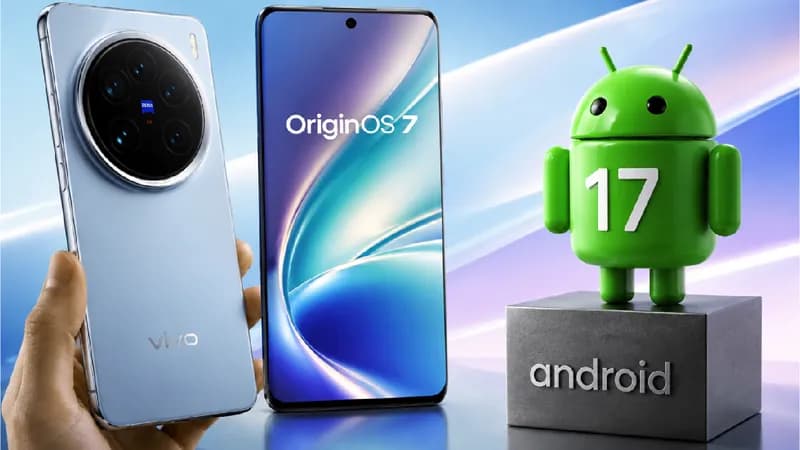
Vivo OriginOS 7 is shaping up to be one of the company’s biggest software changes yet. The Android 17-based update is already being tested in China, and early beta information points to a redesigned interface built around dynamic light and shadow, smoother animations and deeper customisation.
Vivo has officially begun an OriginOS 7 beta programme in China, although the current test is limited to selected devices and is not a stable consumer release. The official beta recruitment included the vivo X Fold6, X300 Pro, vivo Pad6 Pro, iQOO 15 and iQOO Pad6 Pro.
For users outside China, however, the bigger question is simple: Will your Vivo or iQOO phone get OriginOS 7, and when will the update arrive?
Here is what we know so far.
The biggest change in OriginOS 7 is visual. Vivo is introducing a new “light and shadow” design language that makes lighting, shadows and other visual effects respond more naturally to what is happening on the screen.
The company’s design concept revolves around four ideas: Perceptive, Intelligent, Interactive and Emotionally Aware.
Under the Perceptive approach, lighting effects can react to the visual content behind interface elements. The Intelligent aspect is connected with Vivo’s Blue V assistant, while the Interactive concept aims to make taps and swipes produce more responsive visual feedback.
The Emotionally Aware element focuses on personalisation, allowing users to adjust visual effects and create different moods.
That makes OriginOS 7 more than a routine Android version upgrade. Vivo appears to be trying to make the interface itself feel more responsive to the user's actions.
Early beta reports also point to a glass-inspired interface with highlights, transparency, blur, shadows, refraction and dynamic lighting.
Some test builds reportedly provide multiple glass-style options, including liquid glass, regular glass and frosted glass treatments. There are also reports that users may be able to turn off the glass effects if they prefer a simpler interface.
A redesigned translucent dock, background blur and spring-like animations have also been reported in beta builds.
These features should still be treated as beta information rather than a guaranteed final feature list. Vivo can change or remove individual elements before the stable version arrives.
OriginOS 7 is also expected to make the interface feel more fluid.
Early testers have reported longer and smoother app-opening animations, along with bouncy or spring-like movement during navigation. The goal appears to be making interactions feel less mechanical and more natural.
The Control Centre could also become more customisable. Reports suggest users may be able to rearrange or remove certain modules, including connectivity controls, media controls, volume and brightness sliders and other shortcuts.
Again, these details are based on test builds and reports, so they should not be confused with Vivo's final global feature list.
Vivo has not yet published a complete official global compatibility list. The following models are therefore best treated as an expected list based on reported update eligibility and existing software-support patterns.
The list above is not an official global confirmation. Vivo's current official Android 17 developer programme, for example, specifically lists the X300 Pro and iQOO 15 for developer testing, while the separate OriginOS 7 China beta recruitment covers a limited set of devices.
The iQOO models expected to receive the Android 17-based software include:
Just like the Vivo list, these models should currently be considered expected rather than officially confirmed for every region.
This is where Vivo users should keep expectations in check.
Vivo has started the OriginOS 7 beta process in China, but there is no officially confirmed global stable release date yet. The current Chinese beta recruitment began in late July, with the beta software scheduled to reach selected testers in August.
Based on the earlier start of this year's testing compared with OriginOS 6, reports have pointed towards a global beta around early September, followed potentially by a wider stable rollout around October.
But these dates remain estimates. Vivo could change the schedule depending on beta feedback, bugs and regional software certification.
So, if you own a Vivo or iQOO phone, October is better viewed as a possible timeframe rather than a confirmed launch date.
One thing that is confirmed is the Android 17 connection.
Vivo's official Android 17 developer programme allows developers to test applications on the vivo X300 Pro and iQOO 15. Vivo also warns that the developer build is not intended for ordinary end users and can contain bugs or cause data-loss issues.
The Android 17-based OriginOS 7 consumer beta is a separate software-testing programme. That distinction matters because installing an Android developer preview does not mean that a phone has received the final OriginOS 7 update.
The most important point is that OriginOS 7 is still being tested.
Vivo's own Chinese beta announcement describes the software as a non-final version and warns testers about possible instability, bugs, unusual battery consumption and compatibility problems.
For most users, that means there is little reason to rush into unofficial firmware or developer builds. Waiting for the official stable update will be the safer option.
Vivo's India support site also continues to list current software information separately for individual models, so users should rely on their regional Vivo support page when the final rollout begins.
Vivo OriginOS 7 is shaping up to be a significant visual upgrade rather than just another Android version bump. The Android 17 foundation, light-and-shadow interface, glass-inspired effects, smoother animations and expanded controls could give Vivo and iQOO phones a noticeably different feel.
The catch is that the global rollout schedule and complete supported-device list are still not officially confirmed.
For now, the Chinese beta is the clearest sign of what's coming. If Vivo maintains its current pace, a global beta could arrive around September, with the stable rollout potentially following in October. But until Vivo publishes the official regional schedule, those dates, and the broader eligible-device list, should be treated as expectations, not promises.










