Every year, millions of devotees take part in the Kanwar Yatra, one of India's largest annual religious pilgrimages dedicated to Lord Shiva. While the spiritual essence of the journey remains unchanged, Kanwar Yatra 2026 is showcasing a new trend—modern technology is becoming an essential companion for both pilgrims and authorities.
From colorful Kanwars and chants of "Bol Bam" to LED-lit decorations and devotional music, the pilgrimage continues to reflect deep religious devotion. This year, however, many young devotees are also carrying power banks, smartwatches, GPS trackers, portable fans, charging bags, and mini massage devices, highlighting how technology is enhancing convenience and safety during the long journey.
At the same time, local authorities are relying on AI-powered surveillance, CCTV cameras, drones, and digital control rooms to improve crowd management and public safety.
Why Technology Is Becoming Essential During Kanwar Yatra 2026
The Kanwar Yatra often involves walking hundreds of kilometers over several days. Mobile phones have become much more than communication devices during the pilgrimage. They are used for navigation, digital payments, weather updates, emergency assistance, photography, and staying connected with family members.
As a result, keeping devices charged and connected has become a priority, leading many devotees to carry multiple electronic accessories throughout the journey.
Smartwatches and Live Location Help Devotees Stay Connected
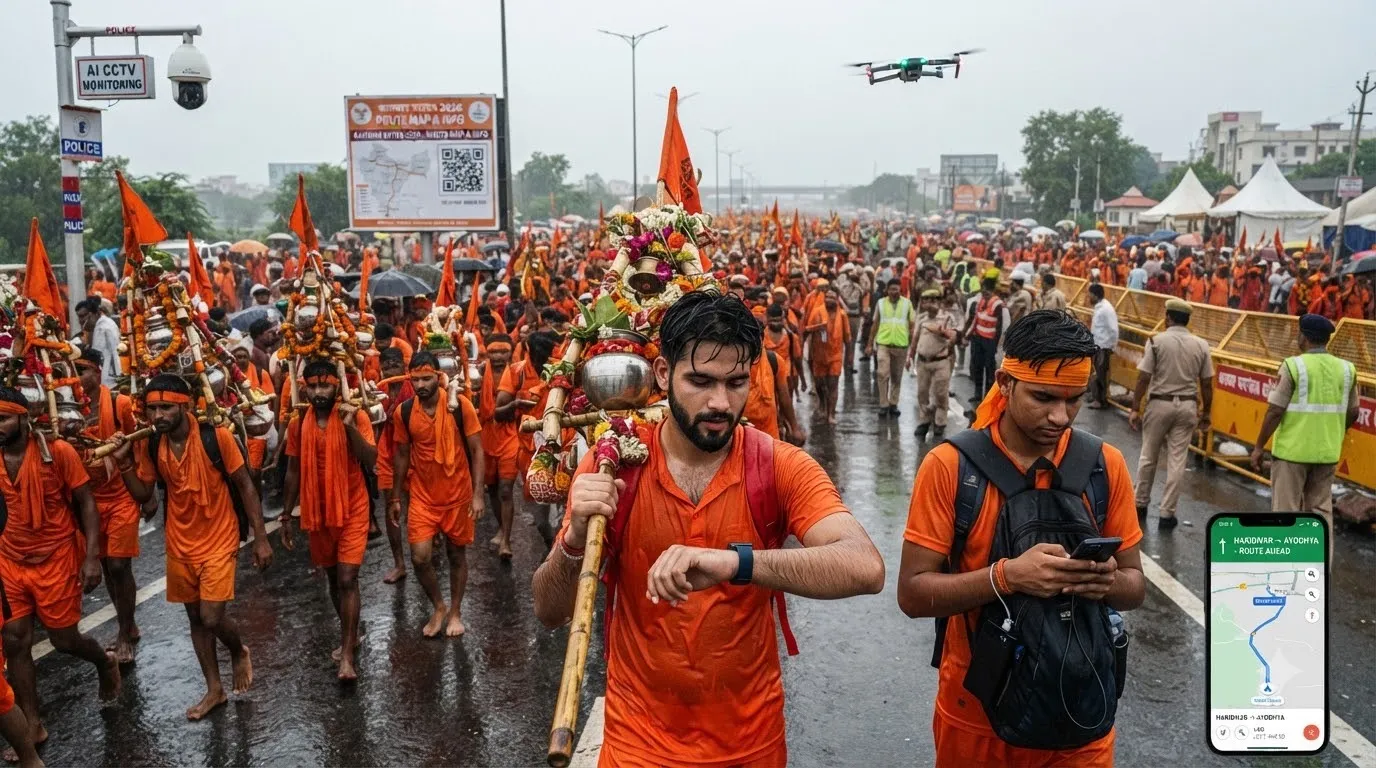
One of the biggest challenges during the pilgrimage is staying together in massive crowds. Many groups now use live location sharing through smartphones and GPS-enabled applications to keep track of fellow pilgrims.
Smartwatches have also become increasingly popular. Besides displaying notifications, they allow users to monitor their daily step count, walking distance, heart rate, and estimated calorie burn. GPS-enabled models can also record travel routes and activity logs.
However, these features depend on active internet connectivity, battery life, and location services. Experts recommend that devotees should not rely solely on digital tools for personal safety.
GPS Trackers Offer Additional Security for Belongings
Some Kanwar groups are attaching portable GPS or Bluetooth trackers to their bags, vehicles, or Kanwars. These devices can help locate belongings if they become separated from the group in crowded areas.
Bluetooth trackers generally work within a limited range, while GPS trackers capable of real-time tracking require a mobile network, SIM card, and data connection.
Power Banks Become One of the Most Important Travel Essentials
Continuous use of GPS, camera, live location sharing, Bluetooth, and mobile internet drains smartphone batteries quickly. Since charging points may not always be easily accessible along the pilgrimage route, power banks have become one of the most important accessories.
Many devotees are carrying power banks ranging from 10,000mAh to 50,000mAh, allowing multiple people within a group to charge smartphones, smartwatches, Bluetooth speakers, and other rechargeable devices.
Because the pilgrimage takes place during the monsoon season, many participants are also storing electronic devices inside waterproof pouches to reduce the risk of water damage and electrical hazards.
Charging Bags and Portable Solar Panels Gain Attention
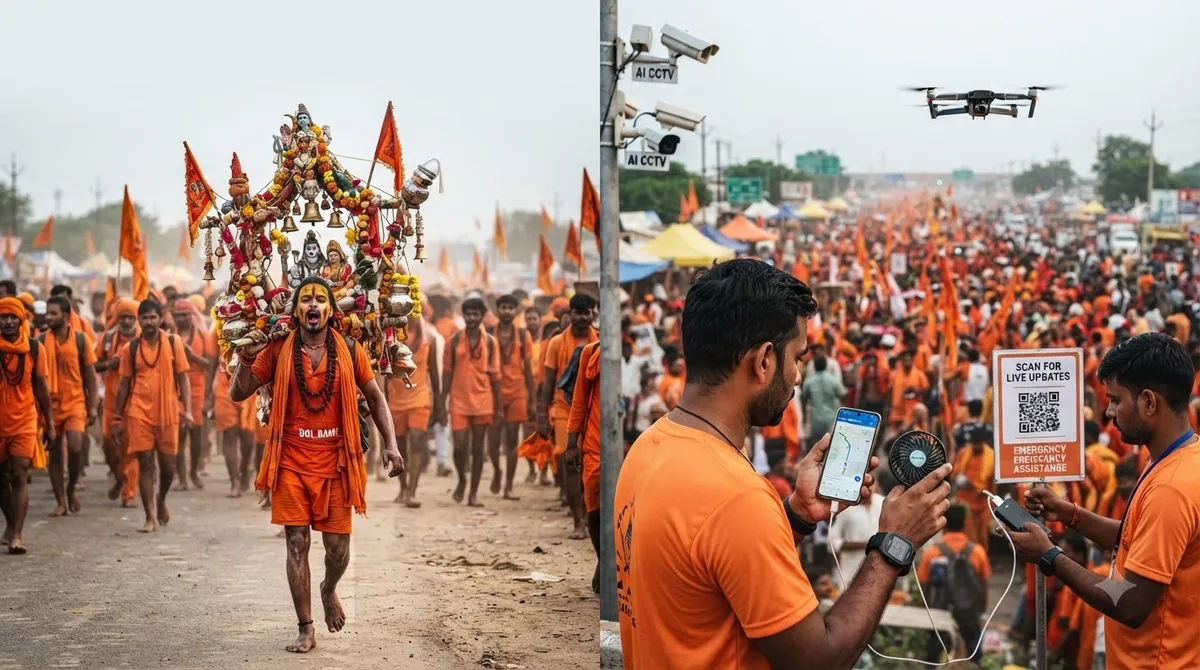
In addition to standard power banks, some devotees are carrying charging bags equipped with multiple cables and battery backups for group use.
Portable solar panels have also attracted attention. Mounted on Kanwars or handcarts, these lightweight panels can generate limited power to recharge power banks or small electronic devices.
However, their performance depends heavily on sunlight availability, weather conditions, and panel size. During cloudy or rainy conditions, they should be viewed as backup charging options rather than primary power sources.
Portable Massage Devices and Neck Fans Help Reduce Fatigue
Walking long distances places significant strain on muscles and joints. Some younger pilgrims are using compact massage guns and portable body massagers during rest breaks to help relax tired muscles.
Rechargeable neck fans and handheld USB fans have also become popular for providing airflow during humid weather.
Medical experts caution that these devices should not replace professional medical care. Anyone experiencing severe pain, swelling, dizziness, dehydration, or heat-related illness should seek immediate medical assistance.
Comfortable Footwear and Smart Insoles
Continuous walking can lead to foot pain and fatigue. While many devotees walk barefoot as part of their religious vows, others choose cushioned footwear or orthopedic gel insoles to reduce pressure on their feet.
A small number of technologyenthusiasts are also using smart shoes equipped with step counters and pressure sensors that sync with mobile applications to track walking activity.
Although such products remain relatively uncommon, they reflect the increasing integration of wearable technology into everyday life.
QR Codes Provide Digital Assistance
Several locations along the Kanwar route have introduced QR code-based information systems. By scanning official QR codes, devotees can access route maps, police assistance, medical facilities, emergency contacts, and other essential information.
Authorities advise pilgrims to scan only official QR codes and avoid entering sensitive information such as banking credentials, OTPs, or UPI PINs on unknown websites.
AI Cameras, CCTV and Drones Strengthen Security
The technological transformation is not limited to devotees. Authorities have also upgraded surveillance systems to improve crowd management and public safety.
According to official reports, the Kanwar route inNoida, covering nearly 334 kilometers, is being monitored using more than 3,000 CCTV cameras, 30 tethered drones, and AI-enabled surveillance cameras, alongside approximately 2,500 police personnel.
The AI-based systems are designed to estimate crowd density, detect unusual activity, and alert control rooms when necessary. These technologies are intended to support traffic management, emergency response, and overall security during the pilgrimage.
Tradition Remains at the Heart of the Journey
Despite the growing presence of digital tools, the Kanwar Yatra remains a deeply spiritual journey centered on devotion, discipline, and faith in Lord Shiva.
Technology is not replacing tradition—it is simply making the pilgrimage safer and more convenient. Power banks help keep communication open, GPS assists groups in staying connected, smartwatches monitor physical activity, and AI-powered surveillance supports public safety.
The image of a devotee carrying a Kanwar on one shoulder while wearing a smartwatch perfectly reflects modern India, where tradition and technology continue to move forward together.
What smart gadgets are being used during Kanwar Yatra 2026?
Many devotees are carrying smartwatches, power banks, GPS trackers, portable neck fans, charging bags, mini massage devices, and, in some cases, portable solar panels.
Why are power banks important during Kanwar Yatra?
Continuous use of GPS, live location sharing, mobile internet, cameras, and calls drains smartphone batteries quickly. Power banks help keep devices operational throughout the journey.
Can smartwatches share live location?
Some GPS-enabled smartwatches can support location sharing when connected to compatible smartphones with active internet and location services.
Why are AI cameras being used during Kanwar Yatra?
Authorities are using AI cameras to assist with crowd monitoring, identify unusual activities, improve traffic management, and support emergency response efforts.
What are QR codes used for during the pilgrimage?
Official QR codes can provide access to route information, police assistance, medical services, emergency contacts, and other important update












