

/
/
India will block Hikvision, Dahua and TP-Link CCTV sales from April 1 due to strict STQC rules. What it means for buyers, security, and Indian brands.
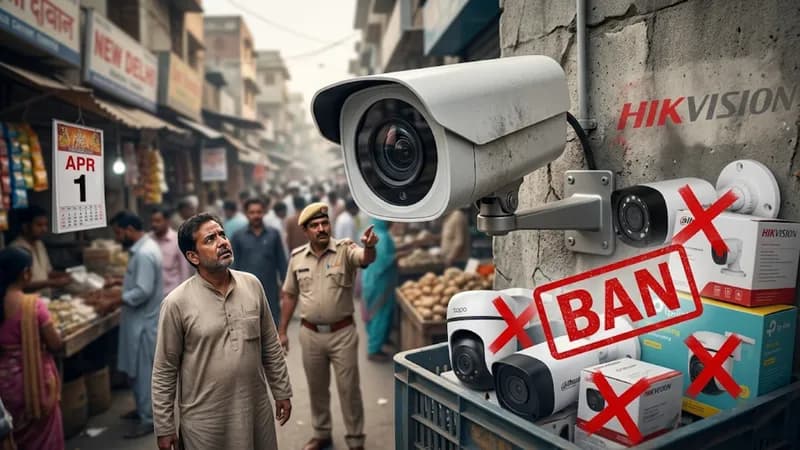
From April 1, the India CCTV ban will change the entire surveillance market overnight.
And honestly, this isn’t just another policy update, it’s a clear message on security and control.
The Indian government is set to block companies like Hikvision, Dahua Technology, and TP-Link from selling internet-connected CCTV cameras in the country.
This move comes as new STQC certification rules become mandatory, and without approval, no device can legally be sold.
Starting April 1, all CCTV devices must pass strict testing under the government’s STQC framework. This falls under rules introduced by the Ministry of Electronics and Information Technology (MeitY).
Here’s the simple reality, if there’s no STQC certification, the product simply cannot be sold in India. Devices that use Chinese chipsets are unlikely to get approval, and even existing stock without certification will face restrictions. This isn’t a gradual or flexible rule, it’s a complete and immediate stop.
And reports suggest that Chinese brands are simply not getting certified, effectively pushing them out of the Indian market.
Let’s be clear, this decision is not random.
The government is tightening control over internet-connected devices, especially those that can access sensitive data. CCTV cameras today are not just recording devices; they are connected systems that can be hacked or remotely accessed.
Under the new rules:
The concern? Unauthorized access and potential data leaks.
In my view, this move was overdue. When millions of cameras are connected to the internet, even a small security gap can become a national issue.
Here’s where things get interesting.
The India CCTV ban is not creating a vacuum, Indian companies are already stepping in. Brands like CP Plus, Qubo, Prama India, Matrix Comsec, and Sparsh CCTV have expanded aggressively.
According to industry data:
This is a classic example of “policy meets opportunity.” And frankly, Indian companies are benefiting big time.
Yes, and this is the part consumers might not like.
Experts say prices could go up by 15–20%, mainly because manufacturers are switching to alternative (non-Chinese) components, compliance testing is adding extra costs, and supply chains are being rebuilt, so while security improves, your wallet might feel the pinch.
If you’re planning to buy a CCTV camera after April 1, don’t ignore this.
Here’s what you must check:
Buying a non-certified device could mean legal or security risks.
This isn't just about CCTV cameras; it's part of a bigger change in India where the country is slowly becoming less reliant on foreign technology, pushing "Make in India," and putting more effort into improving its cybersecurity infrastructure.
Globally, similar steps have already been taken. Countries like the US and UK have also restricted Chinese surveillance equipment. So India is not alone, it’s actually catching up.
Let’s be honest, cheap devices were convenient. But they came with hidden risks.
The India CCTV ban might feel strict, but it prioritizes something far more important: data security and national safety.
Yes, prices may rise. Yes, choices may reduce temporarily. But in the long run, this shift could make India’s surveillance ecosystem far more secure and reliable. And in today’s connected world, that trade-off actually makes sense.










