

/
/
HyperOS 3 update brings Android 16, AI features, and smoother UI to Xiaomi & POCO phones. Check eligible devices, rollout timeline, and key upgrades.
The HyperOS 3 update is finally here, and it appears that Xiaomi is trying to address all the issues that users have been dissatisfied with over the years. From smoother animations to smarter AI tools and better connectivity, this update isn’t just another version bump, it’s a serious upgrade.
Unveiled earlier this year and now rolling out widely, HyperOS 3 is based on Android 16 and is already reaching a large number of Xiaomi and POCO devices. But like every Xiaomi rollout, it’s happening in phases, so if you haven’t received it yet, don’t panic.
The HyperOS 3 update brings Xiaomi’s refined vision of Android with a stronger focus on performance, AI, and ecosystem connectivity. And yes, this time, it actually feels noticeable.
Xiaomi has clearly worked on three key areas:
This is Xiaomi’s most polished software attempt so far. It finally feels like a premium experience, not just on flagship phones, but even on mid-range devices.
Xiaomi has released this update for phones in all price ranges, from high-end to low-end. These are some of the most important devices that will get the update:
Updates are being rolled out slowly, even if your device is eligible. So availability depends on your region and device batch.
Updating is simple, and Xiaomi hasn’t complicated things (thankfully).
Pro tip: Always back up your data before updating. It usually doesn’t wipe anything, but better safe than sorry.
Now let’s talk about what actually matters, the features. And this is where things get interesting.
1. HyperIsland (Dynamic UI Feature)
This is Xiaomi’s take on dynamic notifications. A pill-shaped bar shows live updates like music playback, timers, and delivery status. It’s clearly inspired, but surprisingly useful.
2. AI Features That Actually Help
The HyperOS 3 update brings some genuinely useful AI upgrades, like AI Writing tools that can rewrite, summarize, or tweak your text tone, a dynamic AI lockscreen that turns wallpapers into motion visuals, and a handy glare removal feature that cleans up reflections in photos.
Unlike gimmicky AI features, these are actually usable in daily life.
3. Cross-Device Connectivity (Even with Apple)
Yes, you read that right. Xiaomi devices can now connect better with iPhones, iPads and MacBooks.
File sharing and universal search across devices make the ecosystem feel much stronger.
4. Improved UI and Animations
This is where users will feel the biggest difference, smoother transitions, a more refined control centre, and icons that are cleaner and easier to read.
Honestly, it feels faster, even if the hardware hasn’t changed.
5. Performance Boost
Xiaomi says its performance is up to 30% better, and while that might be slightly exaggerated, the experience in the real world is definitely smoother.
Apps open faster, switching between them feels smooth, and lag is reduced, especially on newer devices.
Even though HyperOS 3 is still being released, Xiaomi has already started rolling out HyperOS 3.1 around the world, starting with Europe.
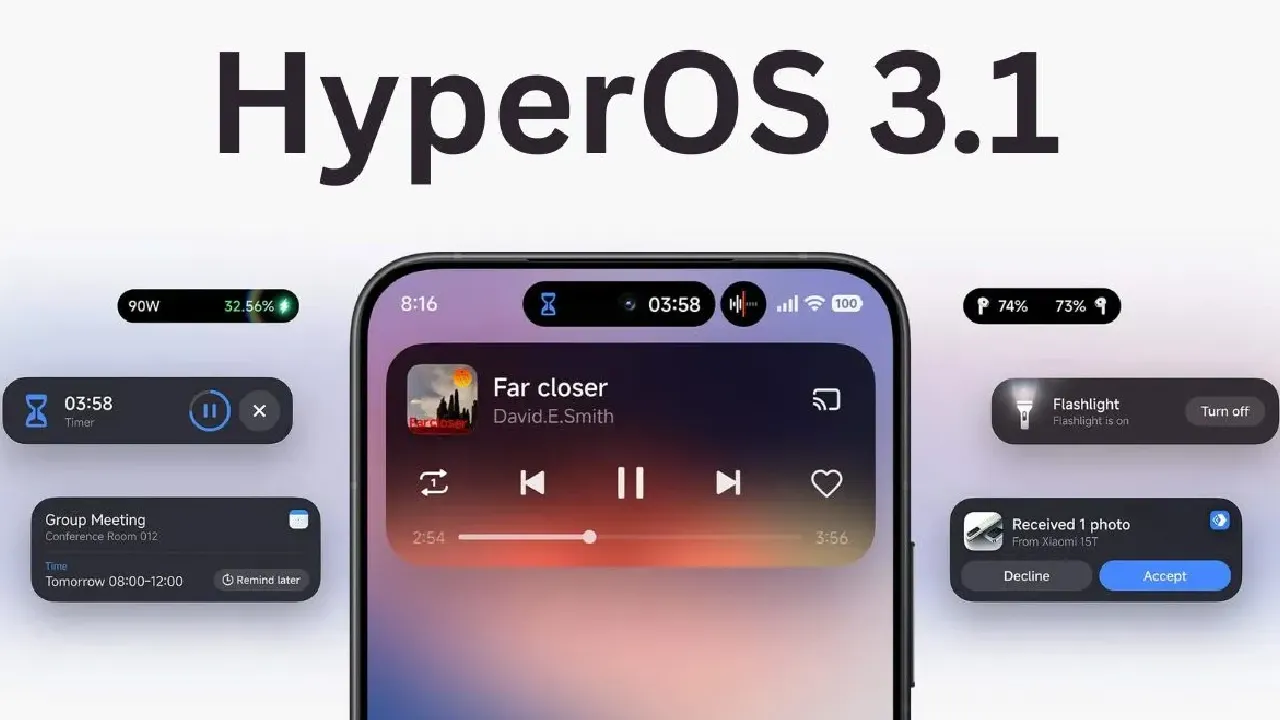
New additions are listed here:
This shows Xiaomi isn’t slowing down, they’re iterating quickly.
Let’s be honest, HyperOS 3 still isn’t flawless, there are no lockscreen widgets (and competitors are clearly ahead here), customization in quick settings still feels limited, and budget devices miss out on some features.
Also, after updating, your phone may lag or heat for a couple of days. That’s normal.
Absolutely, yes.
The HyperOS 3 update finally gives Xiaomi users what they’ve been asking for, a smoother, more modern, and feature-packed experience. It’s still not perfect, but it’s clearly a solid step forward.
If your device supports it, updating is a no-brainer. And if Xiaomi keeps this momentum going, HyperOS might actually become one of the best Android skins out there, not just in India, but globally.










