

/
/
A reported investigation into the person or group behind the latest GTA 6 leaks claims to have assembled evidence pointing toward a suspected individual and submitted the material to the legal teams of Rockstar Games and parent company Take-Two Interactive.

A reported investigation into the person or group behind the latest GTA 6 leaks claims to have assembled evidence pointing toward a suspected individual and submitted the material to the legal teams of Rockstar Games and parent company Take-Two Interactive.
The investigator says the work is now complete and that personal information has deliberately been withheld to avoid doxxing. The claims have not been independently verified by Rockstar, Take-Two or law enforcement.
That distinction is important. The latest GTA 6 leak saga has generated a large amount of speculation, with social-media users attempting to connect usernames, cryptocurrency activity and alleged hacking histories to the CyberLeek account. Some of those claims are unsupported.
The reported investigation therefore provides another theory about the source of the leak rather than a confirmed identification.

According to the investigator's account, the suspected individual is referred to as "Leeker" and is allegedly associated with previous malicious online activity conducted under another alias.
The investigator says the conclusion was reached through a combination of open-source intelligence and information supplied by people who claimed familiarity with the individual through Telegram.
Some of those sources are reportedly peers or acquaintances who contacted the investigator after earlier posts about the leak.
One of the stronger alleged links involves financial information that appears to connect the suspected person to a European bank account. However, even the investigator acknowledges that the account could theoretically have been compromised or belong to somebody else.
For that reason, the financial trail should not be treated as proof of identity.
The investigator instead argues that the bank-related information is only one part of a wider collection of correlations.
No personal banking information or other identifying details are being reproduced here.
No.
Rockstar Games and Take-Two Interactive have not publicly confirmed that the investigator has correctly identified CyberLeek or the person responsible for obtaining the leaked material.
They also have not publicly confirmed receiving the investigator's evidence, according to the information currently available.
The companies have, however, been pursuing copies of the leaked material through copyright enforcement. Multiple reports have documented takedowns involving purported GTA 6 footage, although copyright action alone does not establish who obtained the material or how it was originally stolen.
The distinction between removing leaked material and identifying the person responsible for the breach is significant.
A copyright claim can help a rights holder control unauthorized distribution without revealing anything publicly about the underlying cybersecurity investigation.
The reported investigation does not establish a single definitive method by which the GTA 6 material was obtained.
Two different explanations were reportedly supplied by sources familiar with the alleged leaker.
One theory claims the individual purchased access to a backdoor. Another connects the material to an earlier internal Rockstar security incident.
Neither explanation has been independently established.
The investigator also cautions that claims circulating within some online communities can be exaggerated, particularly when people are trying to gain attention or establish themselves as insiders.
That makes the precise origin of the leaked build one of the biggest unanswered questions.
The investigator reportedly believes the footage comes from a development build that may be approximately a year old.
The alleged theft itself may have happened in April 2026, with the material potentially being retained and prepared for release afterward.
This would help explain why footage that appears to show a relatively advanced version of GTA 6 can still contain unfinished or outdated elements.
Other reporting has likewise suggested that at least some of the newly leaked material could come from an older development build. At the same time, more recent clips have led observers to conclude that the leaker may have had access to a playable build rather than merely possessing old prerecorded videos.
Those two observations are not necessarily contradictory. A person could possess an older development build and still record new footage from it.
The investigation reportedly does not conclude that CyberLeek currently possesses the latest live development version of GTA 6.
Instead, the investigator believes many of the circulating clips were prerecorded.
That remains difficult to establish independently.
A later clip in which the player appears to deliberately spell "LEEK" by shooting a wall has been widely interpreted as evidence that the account had direct access to a playable build. Several gaming publications have reported on the footage and its implications.
Even so, direct access to one development build would not necessarily mean access to the current production build or the complete game.
There is currently no credible public evidence establishing that Rockstar India was responsible for, or was the source of, the latest GTA 6 leak.
Rockstar has a substantial development operation in Bengaluru, making India an important part of the company's international production network. But that fact should not be confused with evidence of an India-based breach.
The latest leak has prompted speculation about employees, contractors and development environments in different countries. None of those theories should be presented as established fact without supporting evidence from Rockstar, Take-Two or law enforcement.
The broader issue is that modern AAA games are developed across large international teams. That creates a complex security environment involving development builds, testing systems, employee accounts and external collaborators.
A distributed development model does not indicate that any particular studio or employee was responsible for a breach.
The reported investigation says it found no evidence linking the latest GTA 6 leak activity to Mafia 808.
That claim remains part of the investigator's findings rather than an independently confirmed attribution.
Attribution is particularly difficult in cybercrime cases because online identities can be deliberately misleading, accounts can be compromised and unrelated actors can claim responsibility for the same incident.
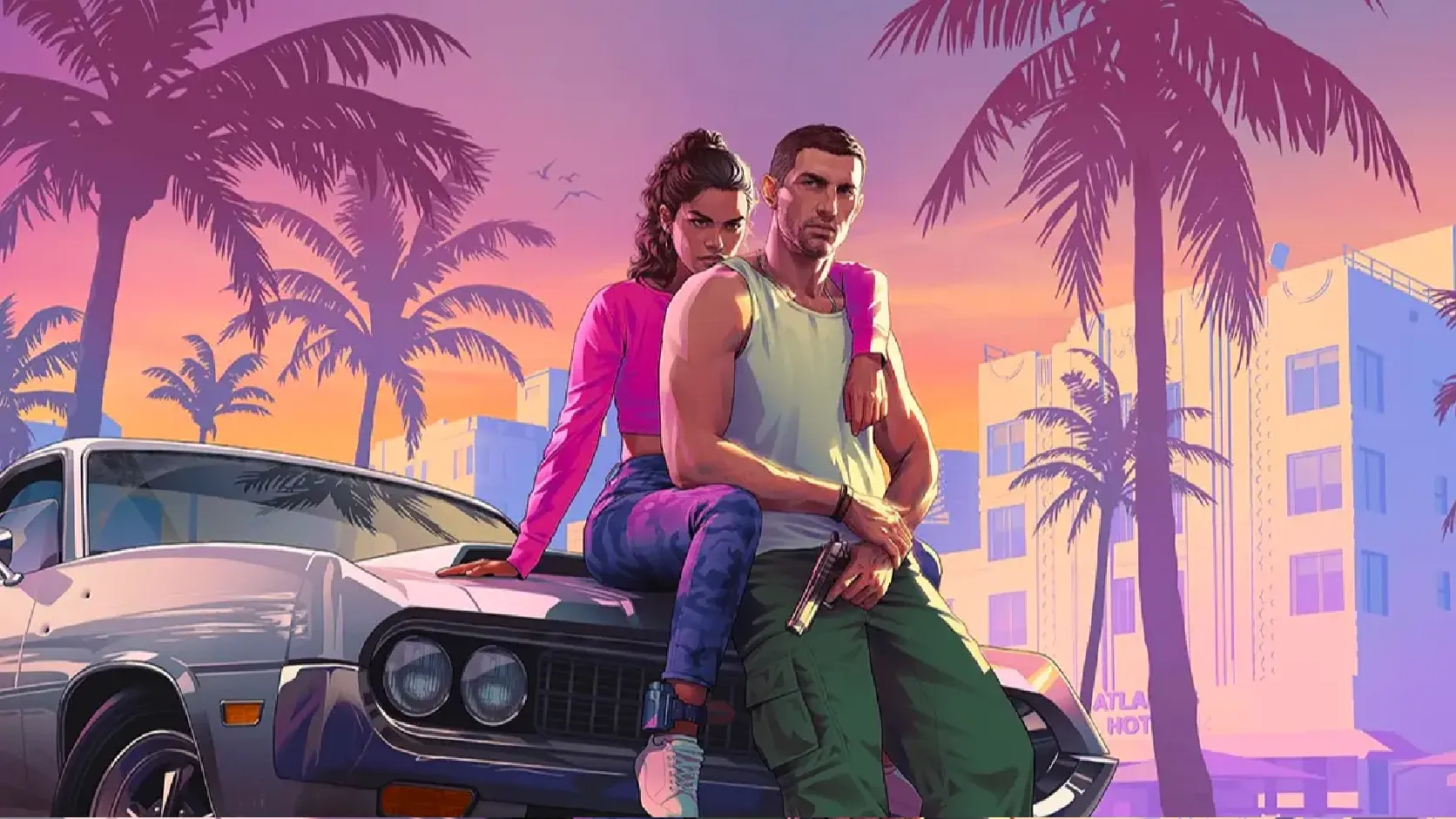
The cryptocurrency promoted alongside the GTA 6 leaks has attracted considerable skepticism.
CyberLeek has presented its activities as a protest against issues including digital pre-orders, downloadable content and restrictions on game ownership. The account has simultaneously promoted a cryptocurrency associated with the campaign.
That combination has raised questions about whether the leak is partly being used to generate attention and trading activity around the token.
The investigator cited in this report reportedly goes further, characterizing the cryptocurrency promotion as a pump-and-dump operation.
That is an allegation, not an established finding.
There is no sound basis for treating the token as a legitimate investment simply because it is associated with a viral GTA 6 story.
Cryptocurrency prices can be extremely volatile, particularly when a token is driven by a social-media event rather than an established business or product. Trading volume, market capitalization and promotional claims should not be confused with guaranteed profits.
The safest conclusion from the available information is that readers should exercise extreme caution rather than assume the token has any connection to Rockstar Games or Take-Two Interactive.
The latest incident is significant because it comes only days before Rockstar's planned extended presentation of GTA 6.
Reports have described gameplay clips showing Jason Duval in various activities, along with material purporting to show the game's Leonida map. Rockstar and Take-Two have not publicly authenticated the footage, although their copyright enforcement has contributed to widespread assessments that at least some of the material is genuine.
The timing also matters.
Rockstar is scheduled to present an extended look at GTA 6 on August 27, 2026, while the game is currently scheduled for release on November 19, 2026.
The leak therefore interferes with a carefully controlled marketing campaign at a particularly sensitive point in the game's development.
Take-Two's share price did fall sharply after the latest leaks began circulating, with some analyses estimating a temporary market-capitalization decline of roughly $2.8 billion.
However, describing that figure as money the hacker "cost" Take-Two would be misleading.
Market capitalization is calculated from a company's share price and outstanding shares. It can rise or fall without an equivalent amount of cash entering or leaving the company.
Recent market reports have linked the decline in Take-Two's shares to the GTA 6 leak, but the entire movement cannot automatically be attributed to one event
The more tangible consequences for Rockstar could instead involve incident response, security audits, legal enforcement and the need to investigate how confidential development material escaped.
The latest incident is not the first major GTA 6 security breach.
In 2022, a hacker associated with the Lapsus$ group obtained access to Rockstar's systems and leaked around 90 videos from an early GTA 6 development build. That incident became one of the most significant pre-release video-game leaks in history.
The current episode differs because GTA 6 is now much closer to launch and the leaked material appears considerably more recent than the footage released in 2022.
It also combines alleged game theft with a public cryptocurrency campaign and an ideological manifesto, creating a different set of questions around motivation.
The most important development would be independent confirmation from Rockstar, Take-Two or law enforcement.
Until that happens, the reported identification should be treated as an unverified attribution rather than a confirmed identification of the GTA 6 leaker.
If the evidence has genuinely been submitted to the companies' legal teams, the next stage would likely take place privately. Any investigation into unauthorized access could involve digital-forensics work, account records, access logs, financial information and cooperation with relevant authorities.
That process can take substantially longer than online investigations conducted through publicly available information.
For now, the central questions remain unanswered: who obtained the GTA 6 material, exactly how it was accessed, how much data was taken and whether the person operating CyberLeek is the same individual described by the investigator.
The Bengaluru connection also remains unproven as a source of the breach.
What is established is that GTA 6 has suffered another major leak shortly before its next official presentation. The identity claims circulating online may eventually provide investigators with useful leads, but they should not be treated as fact until independently verified.










