

/
/
Chef Robotics launches Conveyor Connect, enabling AI food robots to communicate with conveyors, improving speed control and efficiency in food manufacturing lines.
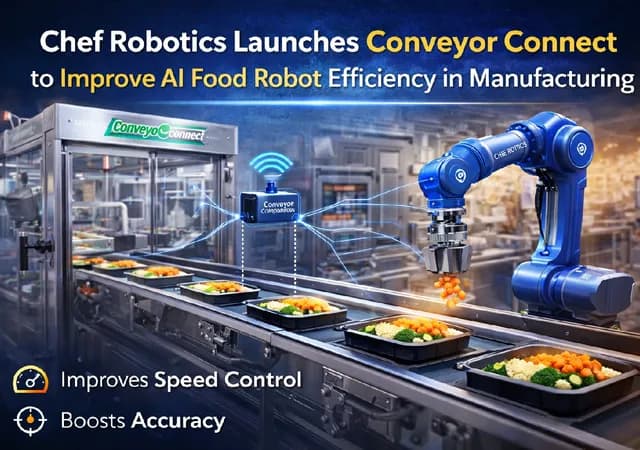
Automation in food manufacturing has been growing fast, but one stubborn problem has remained for years: machines from different vendors often struggle to communicate with each other. Now, Chef Robotics believes it has finally solved that headache.
On March 3, 2026, the San Francisco–based robotics company announced a new capability called Chef Robotics Conveyor Connect, a system that allows its AI-powered robots to communicate directly with multiple types of conveyor systems used in food factories.
In simple terms, robots and conveyors can now “talk” to each other in real time. And honestly, this might sound like a small upgrade, but for large-scale food production, it’s a major step forward.
Food manufacturing lines are often chaotic environments where speed, accuracy and coordination must work perfectly together. When robots cannot properly sync with conveyor belts, trays get missed, ingredients spill and production slows down. That’s exactly the problem Chef Robotics is targeting.
Most modern food production facilities operate with equipment purchased from different suppliers over many years. That means robots, conveyor belts, sensors and packaging systems are rarely built to work seamlessly together.
Chef Robotics’ AI meal assembly robots already use computer vision to track trays, read conveyor speeds and place ingredients accurately. But certain conveyor systems, especially indexing conveyors that stop and start quickly, create a serious challenge.
These systems allow only a very short window for robots to drop ingredients before the conveyor moves again. If the robot detects the stop even a fraction of a second too late, the opportunity is lost.
That’s where the new integration becomes important.
With Chef Robotics Conveyor Connect, robots can communicate directly with conveyor systems rather than relying only on camera-based estimation.
The technology uses wireless radio communication, the same system Chef robots already use to coordinate with each other on fast production lines.
A small device called a Conveyor Companion Box is installed on the conveyor’s control system. This waterproof wireless module connects the conveyor to the robots instantly.
Once connected, several improvements become possible:
This direct communication removes the guesswork that usually exists in automated food assembly.
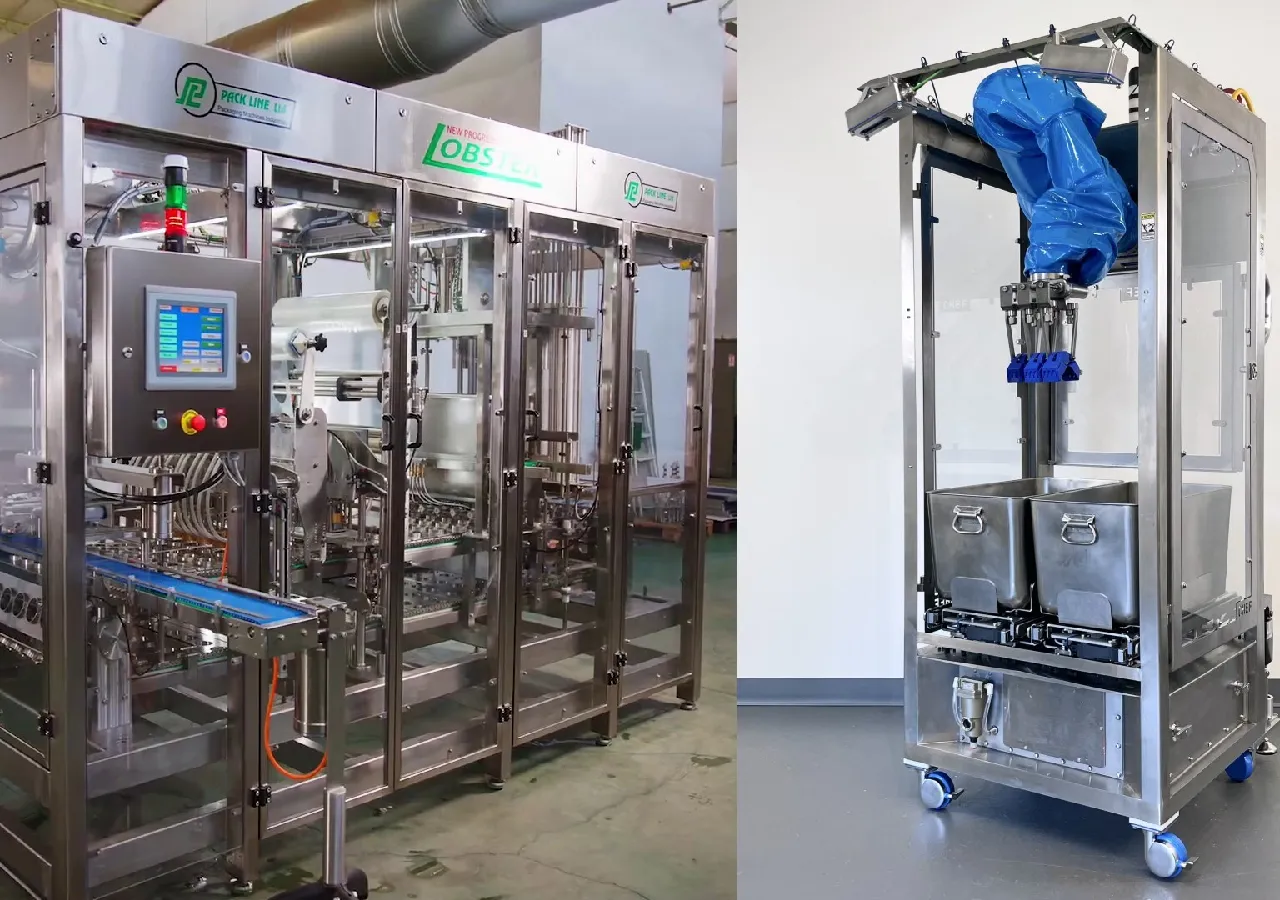
One of the most impressive aspects of the system is its ability to coordinate with stop-and-go indexing conveyors.
Here’s how the process works:
This split-second coordination is critical for products like salads, snack boxes and ready-to-eat meal trays, where ingredients must land in small compartments without spilling.
In real-world terms, that means fewer missed trays, less waste and faster production speeds.
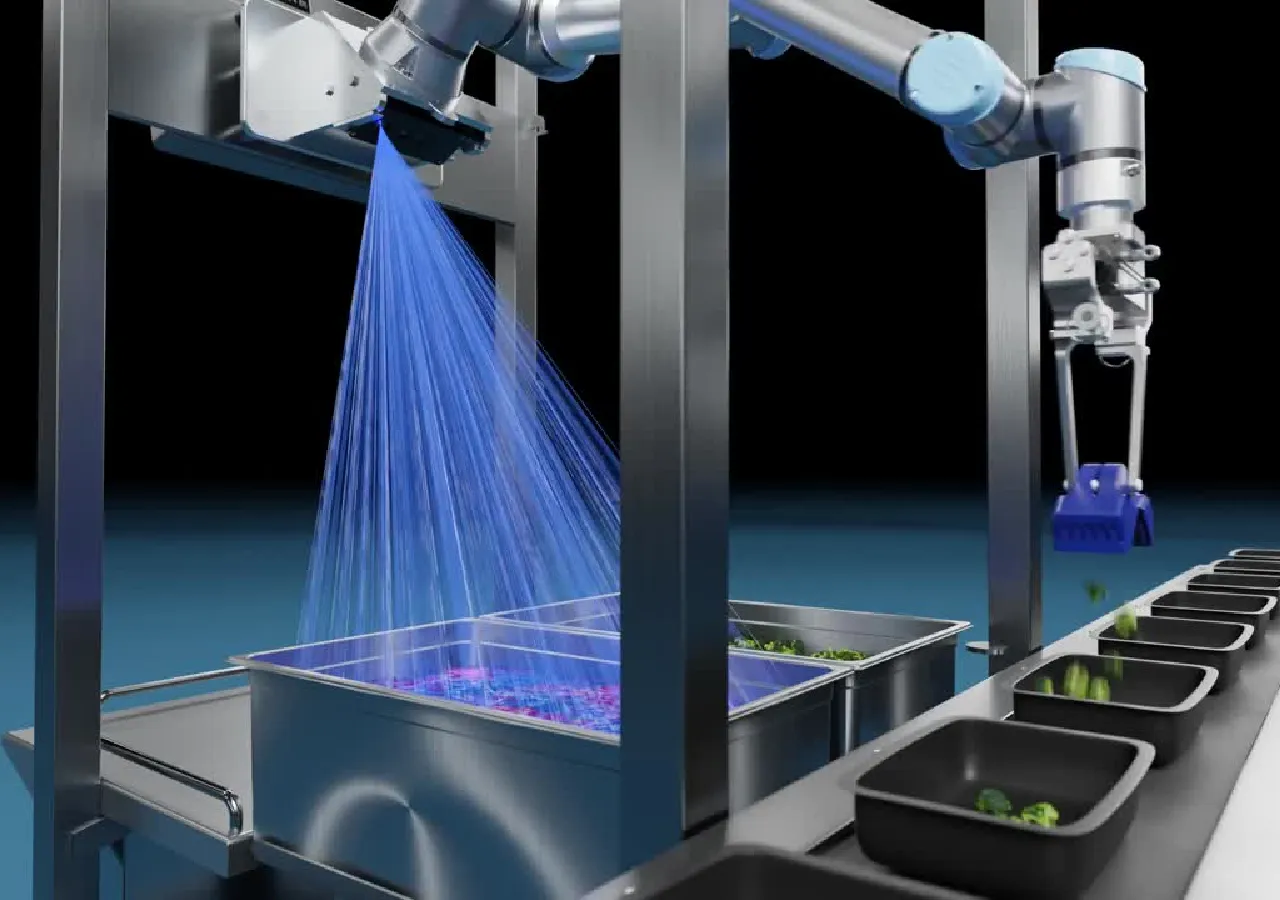
Chef Robotics says the system is already deployed in multiple food manufacturing plants, including Cafe Spice, a prepared-meal producer.
At that facility, robots operate within extremely tight conveyor stop windows. The direct wireless communication allows robots to detect stops instantly and perform ingredient placement before the conveyor restarts.
Without this system, the company admits perception-based detection alone would not be fast enough.
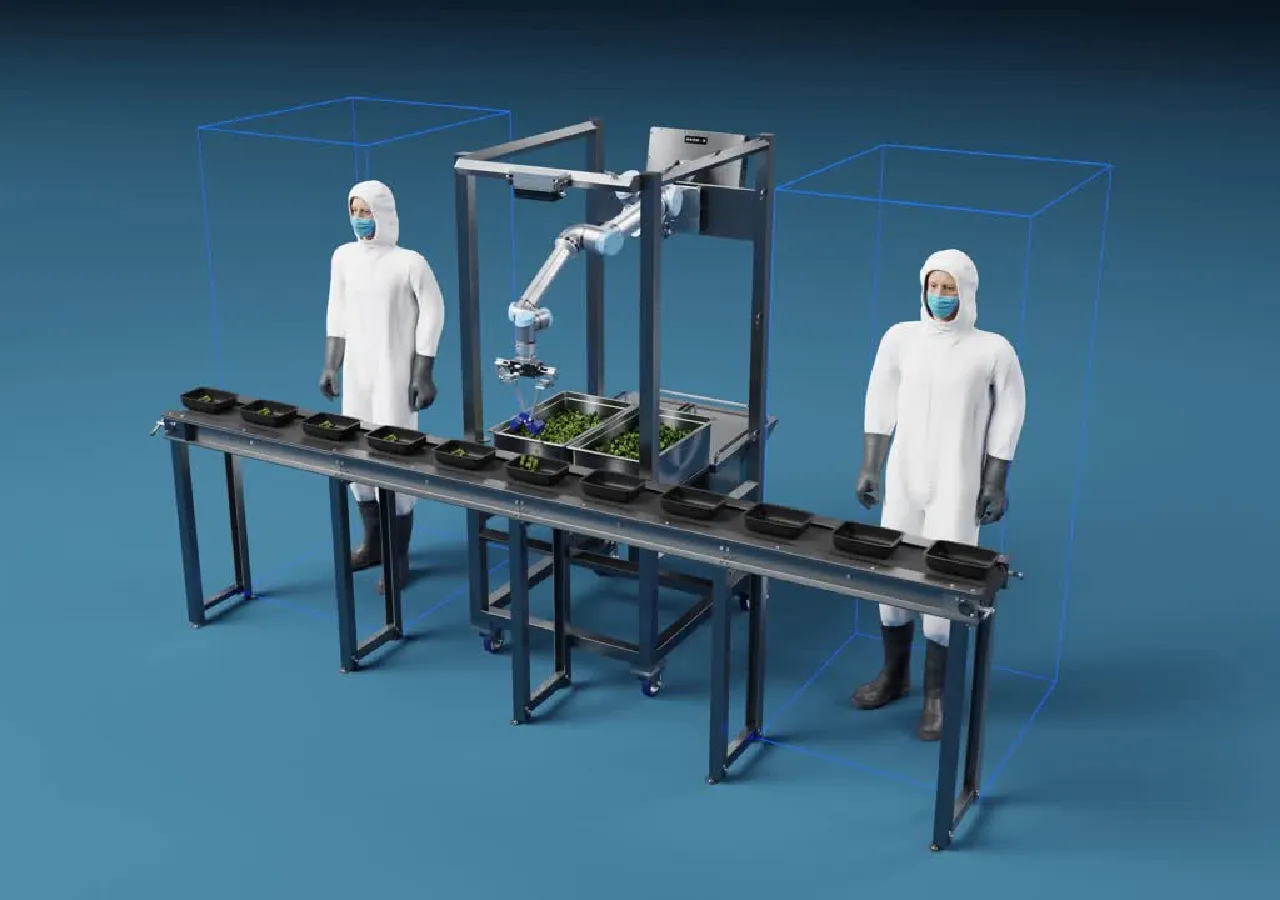
Chef Robotics has already produced over 94 million servings using its AI-powered robotic systems, making it one of the first companies to successfully scale robotic meal assembly.
The company’s broader platform, ChefOS, powers these robots and is offered through a Robotics-as-a-Service (RaaS) model, allowing manufacturers to adopt automation without massive upfront costs.
With Chef Robotics Conveyor Connect, the company is sending a clear message: the future of food manufacturing will rely heavily on intelligent machines that can adapt to existing factory infrastructure.
And that approach makes sense. Instead of forcing factories to rebuild their production lines, technologies like this integrate with what companies already use.
That flexibility could be the real reason this innovation gains traction across the industry.










