/
/
Pakistani singer Rabi Pirzada became the subject of intense online attention in 2019 after private and intimate material allegedly linked to her was circulated on social media.
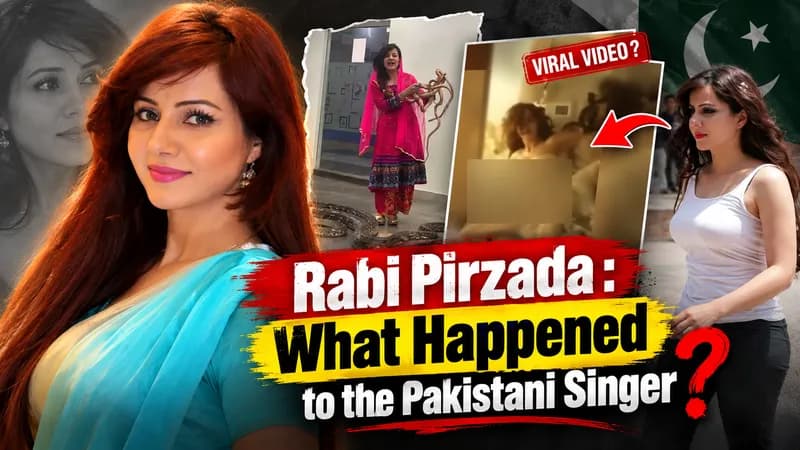
Pakistani singer Rabi Pirzada became the subject of intense online attention in 2019 after private and intimate material allegedly linked to her was circulated on social media.
The controversy quickly became a major talking point online, with the singer facing widespread scrutiny and trolling. At the same time, supporters and other commentators condemned the circulation of private material without consent and questioned how it had entered the public domain.
Because the origin and authenticity of material circulating online can be difficult to independently establish, claims about alleged leaked content should be treated cautiously. The focus should remain on the documented public controversy rather than reproducing or distributing intimate material.
In 2019, intimate videos and photographs allegedly associated with Rabi Pirzada began circulating across social media platforms.
The material generated considerable attention in Pakistan and beyond, turning what had reportedly been private content into a highly public controversy. Pirzada subsequently faced intense online criticism and scrutiny.
The episode also prompted a broader conversation about digital privacy, consent and the consequences of sharing intimate material without a person's permission.
There has not been a reliable basis for treating every piece of material attributed to Pirzada online as authentic. Content circulating under a celebrity's name can be altered, misattributed or shared without sufficient evidence of its origin.
Pirzada had already been a recognisable public figure in Pakistan and was known for outspoken posts on social and political issues.
Her public comments had periodically generated controversy, meaning the alleged private-content scandal quickly became intertwined with existing online debates about her public persona.
However, her previous statements or political views do not establish anything about the authenticity or provenance of private material attributed to her.
The incident instead highlighted a wider problem faced by public figures: private photographs and videos can spread rapidly once uploaded or shared, often making it difficult for the person involved to regain control over the material.
Yes. Various Pakistani and South Asian public figures have, at different times, been associated on social media with alleged private photographs or videos.
Names including Hareem Shah andHania Aamir, among others, have appeared in online discussions involving alleged or falsely attributed intimate content. In many cases, however, the authenticity, source and identity of material circulating online have not been independently established.
That distinction is important. A social-media post or viral claim does not by itself establish that a person appears in a particular photograph or video.
Manipulated media, misleading captions, impersonation and falsely attributed material can all contribute to online controversies involving celebrities.
The MMS controversy came after Pirzada had already attracted international attention for her political comments concerning Kashmir.
Following India's 2019 decision to revoke the special constitutional status of Jammu and Kashmir under Article 370, Pirzada criticised Indian Prime Minister Narendra Modi on social media.
In one widely reported post, she shared an image of herself wearing what appeared to be a suicide vest and referenced Modi and Kashmir in the accompanying caption.
The post generated significant criticism and attention because of its imagery and political message.
It is important to distinguish this earlier political controversy from the later allegations involving private material. The two episodes occurred within the same period of heightened public scrutiny of Pirzada but concerned very different issues.
The controversy brought an intense wave of attention to Pirzada's personal life.
Rather than focusing solely on whether particular files were authentic, much of the subsequent discussion also concerned the ethics and legality of distributing intimate material without consent.
The episode demonstrated how quickly private content can become a public spectacle when it involves a well-known personality. Once material begins circulating across multiple platforms, removing every copy can be extremely difficult.
For celebrities and ordinary social-media users alike, the incident remains an example of the potential consequences of compromised digital privacy.
The authenticity and origin of every item circulated online under Pirzada's name cannot be independently established.
For that reason, claims that a particular video is genuine should not be presented as established fact without reliable evidence. Nor should unverified intimate material be reproduced or linked.
The distinction between reported allegations and verified facts is particularly important in stories involving private or intimate content.
The controversy surrounding Rabi Pirzada was not simply a celebrity scandal. It also raised questions about consent, online harassment, privacy and the responsibilities of social-media users.
The rapid circulation of intimate material demonstrated how digital platforms can amplify personal violations on a scale that was difficult to control once the content became viral.
For readers, the central lesson is straightforward: intimate material shared without consent should not be downloaded, reposted or circulated, regardless of whether the person involved is a celebrity.