/
/
Saudi Arabia reportedly executed two Bangladeshis over alleged misconduct at a Mecca mosque. Bangladesh sought answers as key details remain undisclosed.
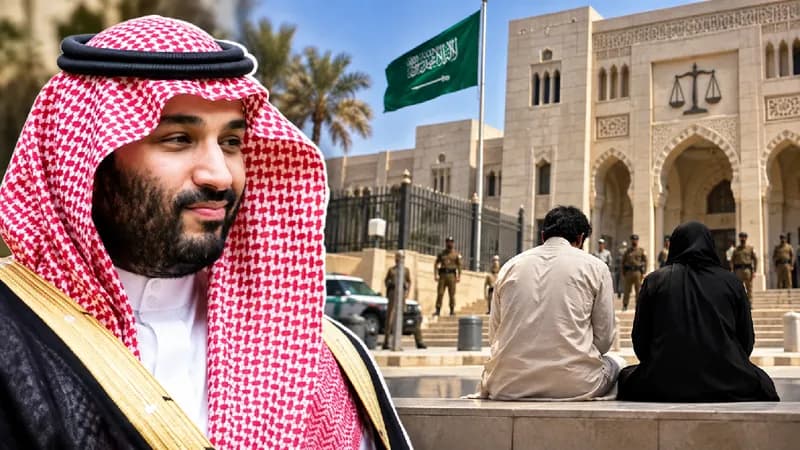
The case of the Bangladesh couple executed in Saudi Arabia has unsettled a lot of people, and not just in Bangladesh. It raises questions that go well beyond the individual tragedy: questions about transparency in the courtroom, the reach of the Saudi Arabia death penalty, and whether foreign nationals are getting a fair shot at justice when they face the most severe charges possible in a country far from home.
Saudi authorities announced that Nazrul Islam Abdul Bashir and Siti Akhtar were executed on October 14, 2026, after being convicted of what the Interior Ministry described as an indecent act at a mosque in Mecca. The Bangladesh couple death sentence was carried out following judicial proceedings and a royal order, officials said.
What makes the Mecca mosque case so difficult to assess, and so troubling to many observers, is how little has actually been made public. No detailed account of what allegedly happened. No timeline of the incident. No explanation of the evidence. And critically, Bangladesh’s consulate in Jeddah reportedly said it wasn’t told about the executions in advance.
A report from BBC News Hindi on October 16 helped bring the story to wider attention. Here’s what the reporting establishes, what it doesn’t, and why the gaps matter.
According to reports citing Saudi Arabia’s official news agency, Nazrul Islam Abdul Bashir and Siti Akhtar were arrested by security officials following an alleged incident at a mosque in Mecca. They were brought before a court, convicted, and their death sentences were upheld through the appeals process, including by Saudi Arabia’s Supreme Court, before a royal order was issued.
The Bangladesh couple death sentence was carried out on October 14, the reports say.
Saudi authorities described the alleged conduct as an indecent act but released no further detail. The Mecca mosque case record, as it stands publicly, does not name the mosque, does not specify when the alleged incident occurred, and does not explain what evidence was used to establish guilt.
One version of events has spread widely on social media, suggesting the couple kissed each other on the forehead while thanking God. That specific claim has not been confirmed by any official source cited in the available reporting, and it should not be treated as the established reason for the executions.
This is where the diplomatic dimension of the Bangladesh couple executed in Saudi Arabia case comes in, and it’s significant.
Bangladesh’s consulate in Jeddah reportedly told BBC News Hindi that the mission had not received advance notification before the executions took place. In response, a formal diplomatic communication was sent to Saudi Arabia’s Foreign Ministry seeking confirmation and clarification.
That’s not a minor procedural complaint. Consular notification matters enormously when a foreign national is facing a potential death sentence. It gives the person’s home country an opportunity to provide legal support, ensure the individual understands their rights, and keep families informed throughout what can be an opaque and frightening process.
The full picture of what communications did or didn’t take place hasn’t been independently established. The reported lack of advance notice comes from Bangladeshi consular officials, and their account should be understood in that context, it’s their statement, not a fully documented reconstruction of every step in the proceedings.
The reported use of tazir law in Saudi Arabia has become one of the more discussed aspects of this case, particularly for people unfamiliar with Islamic jurisprudence.
Saudi authorities reportedly said the Bangladesh couple death sentence was carried out under tazir. No specific written statutory provision was publicly identified in the available reports.
In Islamic criminal law, different categories of punishment apply to different categories of offence. Tazir refers broadly to discretionary penalties, it covers conduct that falls outside the scope of prescribed punishments in other categories, and the penalty is determined by the court’s interpretation and the applicable legal framework. Tazir law in Saudi Arabia has historically been interpreted and applied through the courts, with Saudi judges drawing on interpretations of Islamic law alongside written statutes.
Depending on the circumstances and the applicable rules, tazir penalties can range from imprisonment to other sanctions. Capital punishment has also been applied in certain cases under Saudi Arabia’s judicial system.
Knowing that tazir was invoked doesn’t, by itself, explain why these particular sentences were handed down. For that, you’d need access to the charges, the evidence, the court’s reasoning, and the legal basis for the final decision. None of that has been made publicly available in the Mecca mosque case.
The silence around this case is, for many observers, the most troubling part.
When a court imposes the death penalty, the consequences are final and irreversible. That’s precisely why the details matter, not as a formality, but as a basic requirement of accountability. In the Bangladesh couple executed in Saudi Arabia situation, independent observers have no way to assess whether the proceedings were fair because the proceedings haven’t been explained.
What evidence was presented? Did the defendants have legal representation throughout? What arguments were made during the appeals? What was the court’s reasoning for concluding that the death penalty was the appropriate sentence? None of these questions have been answered publicly.
Organisations like Amnesty International have long raised concerns about transparency and fair-trial protections in cases involving the Saudi Arabia death penalty. Those concerns don’t determine the outcome of any specific case, they don’t prove the court was wrong here. But they do underscore why detailed information about criminal proceedings, especially those with irreversible outcomes, is so important.
Saudi Arabia is among the countries that still carry out capital punishment, and it does so with some frequency.
Amnesty International has documented extensive use of the Saudi Arabia death penalty, including in cases involving migrant workers and other foreign nationals. Human rights groups have raised consistent concerns about the transparency of some proceedings, access to legal assistance for defendants who don’t speak Arabic or understand local legal procedures, and the overall treatment of foreign workers within the system.
Foreign nationals face a specific set of challenges. Language barriers, unfamiliarity with local law, limited access to consular support, and distance from home all compound the difficulties of navigating a criminal justice system under serious charges.
The Bangladesh couple death sentence case has drawn attention not only because of what happened to these two individuals, but because it touches on all of those broader concerns at once.
Viral posts have described Nazrul Islam Abdul Bashir and Siti Akhtar as a newly married couple who were visiting Mecca on their honeymoon. That framing has made the story even more emotionally charged as it spreads online.
However, the official information cited in the available reports does not confirm their marital status, the purpose of their visit, or the precise nature of their relationship. The specific claim about a forehead kiss has similarly not been verified by any authoritative or official source.
In cases as serious as this Mecca mosque case, the distinction between documented fact and social media speculation really matters. Sharing unverified details as though they’re confirmed only muddies an already unclear picture, and in a case involving executions, that muddying has real consequences for how people understand what happened.
Bangladesh’s formal request for clarification is the most concrete next step currently on record. If Saudi Arabia responds, it could fill in some of the critical gaps, the exact charges, the evidence, the legal reasoning, and the notification process.
Whether that response comes, and how detailed it might be, remains to be seen.
Until more is known, the Mecca mosque case warrants careful, measured coverage. The reported executions are serious. The questions they raise are legitimate. But the absence of publicly available detail means that a complete, independent assessment of the proceedings simply isn’t possible right now.
The reported executions of Nazrul Islam Abdul Bashir and Siti Akhtar have put a spotlight on judicial transparency, the Saudi Arabia death penalty, consular rights, and the broader treatment of foreign nationals within Saudi Arabia’s legal system. Bangladesh’s consulate has reportedly sought answers. The world is watching to see if any come.
Until reliable details emerge, the viral claims circulating about this Bangladesh couple executed in Saudi Arabia case should be treated as unverified, not repeated as settled fact.
Disclaimer: This article is based on published media reports and the official statements described in them. The precise allegations, evidence and full circumstances of the case have not been independently established here. Claims circulating on social media should be verified before being shared as fact.