

/
/
Amaira suicide case takes a fresh turn as her family challenges the police chargesheet, demanding action against Neerja Modi School's top management.
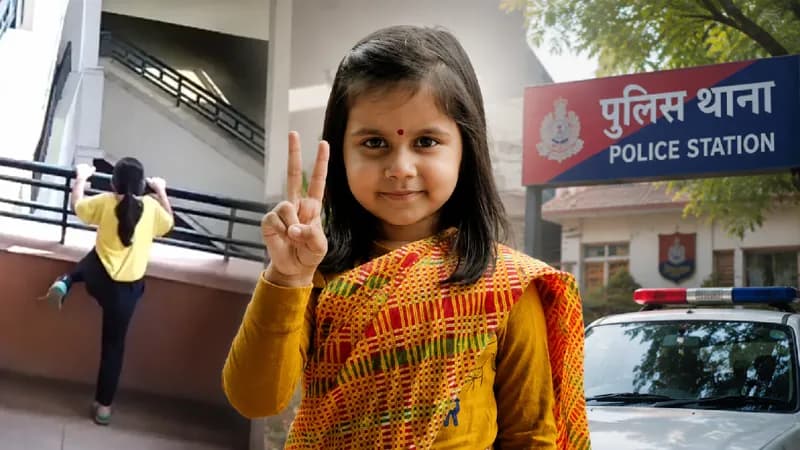
Some stories refuse to fade, and this is one of them. The Amaira suicide case is back in the headlines, and this time, it's the family's rejection of the Jaipur police chargesheet that's stirring things up. They say the chargesheet doesn't go far enough, and that key people inside Neerja Modi School are being let off without being held accountable.
Amaira was nine years old. A Class 4 student who, on November 1, 2025, allegedly jumped from the fourth floor of the school building in Jaipur. Her parents, from the very beginning, have said the same thing: their daughter was bullied for months, they raised alarms repeatedly, and nobody at the school took it seriously enough. That, they believe, is what drove her to the edge.
When Amaira's parents, Vijay Meena and Shivani Meena, spoke to the media on Wednesday, the pain in their words was unmistakable, but so was the anger.
They called the Jaipur police chargesheet "incomplete." Not because the process wasn't followed, but because, in their eyes, it doesn't name everyone who should be answerable. The family is pushing for action against the school's principal and founder, not just teaching staff, arguing that the evidence points to failures that run much deeper than a single classroom.
For them, a chargesheet is not the finish line. It's a step. And as long as people they consider responsible walk free from accountability, they don't believe justice has been served.
The family isn't stopping here. They've made it clear they're prepared to take this to the Rajasthan High Court if that's what it takes.
Their demand is straightforward: stronger legal charges, a closer look at the investigation, and a credible answer to why certain senior officials at Neerja Modi School appear to have escaped serious scrutiny. Parent groups rallying behind the family are echoing the same concern, that private schools need to face real consequences when they fail to protect children.
What made the Amaira suicide case impossible to ignore when it first broke, and what still sits at the heart of it, is the bullying allegation.
Amaira's parents say she was targeted by classmates for close to 18 months. They say they went to the class teacher. They went to school authorities. And they say they were met with responses that amounted to very little. Reports and media accounts from earlier in the investigation also pointed to the child having sought help more than once, without anything changing.
These are still allegations. The school hasn't publicly addressed the family's latest statements, and several aspects of the case remain contested as legal proceedings continue. But they are allegations that have stuck, and they're shaping the conversation around this case even now.
On Nov 1, 2025, Amaira, a Class 4 student, died by suicide after jumping from the fourth floor of the Neerja Modi School in Jaipur.
She had been bullied for 18 months, with classmates targeting her using "bad words," many of which carried sexual undertones. However, her class… pic.twitter.com/iiS4J6UFwm— THE SKIN DOCTOR (@theskindoctor13) July 9, 2026
The Amaira suicide case has done something beyond fuelling a legal dispute, it's forced a harder conversation about what's happening inside Indian schools.
The family and the parent organisations backing them have put forward clear demands:
None of these are radical asks. Education experts have been saying for years that early intervention, proper reporting channels, and trained support staff are what prevent Jaipur school bullying, and bullying everywhere, from spiralling into tragedy. The question is whether institutions are listening.
The chargesheet has been filed. But the legal fight, by all accounts, is nowhere near its end.
With the family gearing up to challenge the investigation and demand more meaningful action, the Amaira suicide case will likely stay under public and judicial watch for weeks to come. The Neerja Modi School case has already left a mark on how people think about child safety in schools, and the outcome of these proceedings could shape that conversation further.
What the family is fighting for, at its core, isn't complicated. They want to know that the people responsible for their daughter's safety, everyone responsible, are held to account. And they want to make sure no other parent ever has to stand in front of a camera asking the same questions they're still asking today.
If you or someone you know is struggling emotionally or having thoughts of suicide, please reach out to a trusted person, a mental health professional, or your local emergency services. Help is available, and it's okay to ask for it.









