/
/
Karuppu review: Suriya shines in RJ Balaji’s courtroom fantasy drama packed with mass scenes, emotions, action and social commentary.
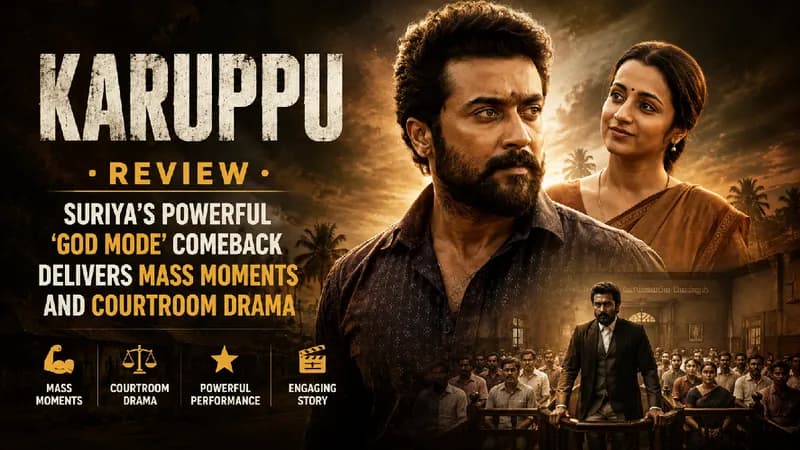
Karuppu Review: After months of delays, release confusion, cancelled shows and nonstop online debates, Karuppu has finally arrived in theatres, and honestly, this is probably the most “Suriya” film audiences have seen in years.
Directed by RJ Balaji, Karuppu is not trying to be subtle cinema. It is loud, emotional, theatrical and proudly designed for fans. But underneath all the slow-motion entries, punch dialogues and “God Mode” moments, there’s actually a surprisingly emotional story about how ordinary people get crushed inside India’s legal system.
That emotional core is what keeps Karuppu alive even when the screenplay becomes messy in parts.
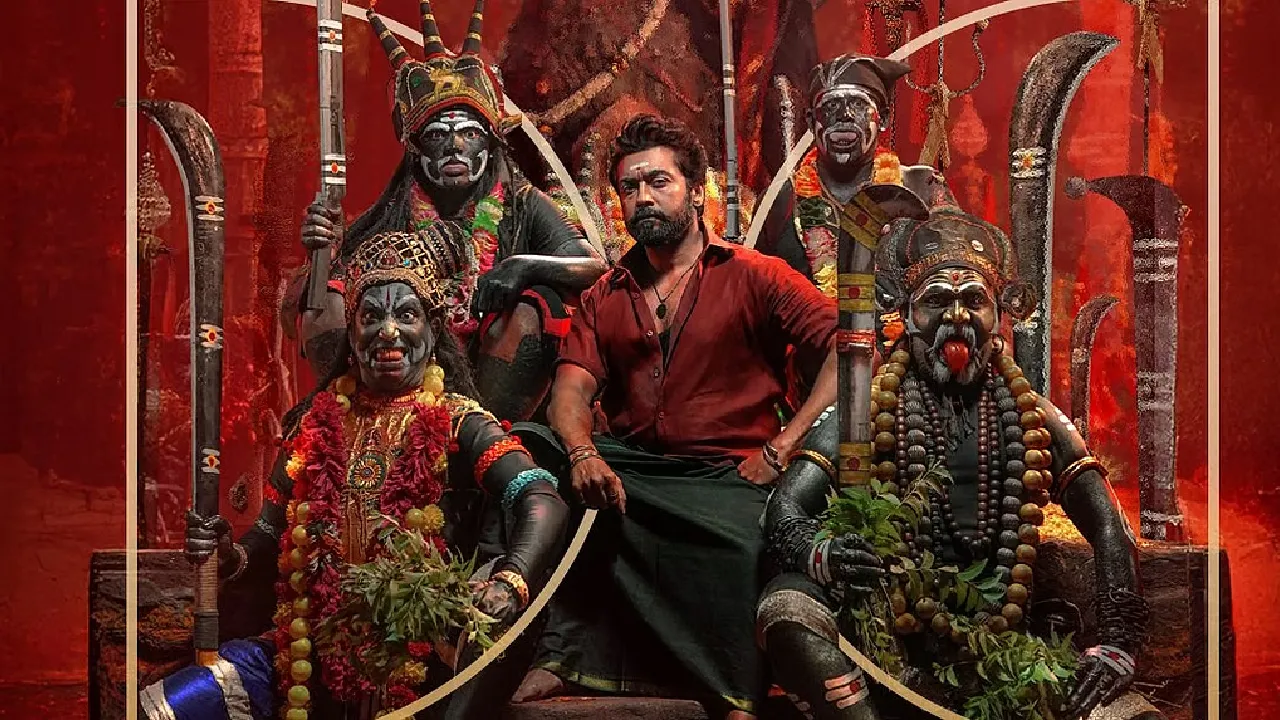
Suriya plays Karuppu, a divine force who steps into a corrupt courtroom system after a helpless father prays for justice. The setup sounds over-the-top on paper, but RJ Balaji cleverly grounds the fantasy through relatable frustrations, delayed cases, greedy lawyers, manipulated victims and powerless common people.
And that part genuinely works.
If there’s one reason this film works despite its flaws, it is Suriya’s screen presence.
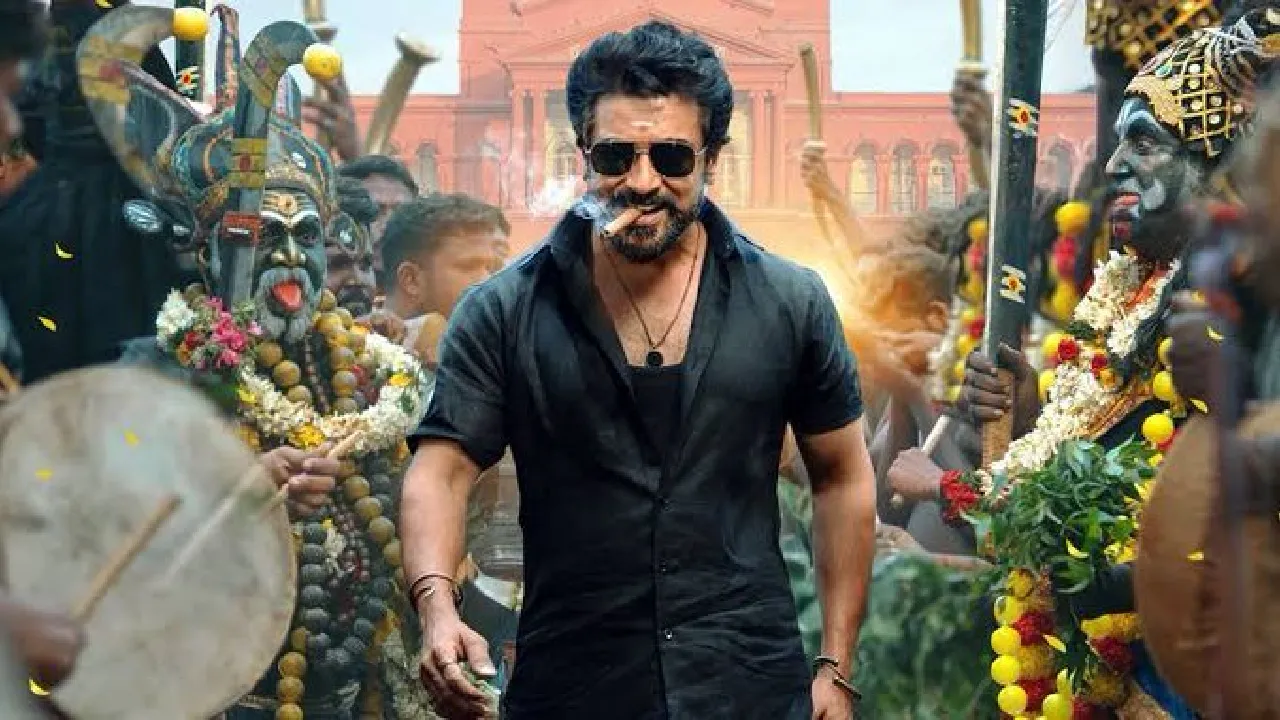
The actor looks completely locked into the role from the very first scene. Whether he’s appearing as the terrifying deity Karuppu or as lawyer Saravanan, Suriya controls the film with pure star power. Fans who missed the intensity of Singam-era Suriya are finally getting something close to that energy again.
The theatre response says everything. Night show occupancy reportedly crossed 75% in several regions on Day 1, and social media reactions have largely praised Suriya’s transformation and mass elevation scenes.
RJ Balaji also smartly fills the screenplay with callbacks and references to Suriya’s older films. Most of them land well because they feel playful rather than forced nostalgia bait.
But the bigger surprise here is RJ Balaji himself.
As the corrupt lawyer Baby Kannan, he delivers one of his strongest performances yet. Instead of playing the villain as cartoonishly evil, Balaji gives him arrogance, humour and manipulation that make the character feel believable inside this broken courtroom ecosystem.
What makes Karuppu different from a regular commercial entertainer is its courtroom angle.
The film spends a lot of time showing how legal delays slowly destroy people emotionally and financially. The father-daughter duo played by Indrans and Anagha Maya Ravi become the emotional anchor of the story, and their desperation feels painfully real.
Some scenes are genuinely hard-hitting.
There’s a subplot involving a man wrongly declared dead who spends decades fighting the system. Another scene quietly shows how repeated court visits slowly change a kind-hearted woman into someone emotionally exhausted and cold.
These are small touches, but they add depth to the film.
Honestly, the movie works best when it stays rooted in these human struggles instead of leaning too heavily into supernatural spectacle.

The biggest problem with Karuppu is that the second half struggles to balance its emotional realism with its fantasy elements.
Once the “God Mode” portions fully take over, the film starts asking viewers to ignore too many logical gaps. The screenplay never clearly explains the limits of Karuppu’s powers, and some action sequences become unintentionally silly because regular henchmen continue attacking what is literally presented as a divine being.
The emotional momentum also weakens after the interval.
Trisha Krishnan, despite her strong screen presence, feels underused for most of the film. Her character starts with promise but eventually becomes more decorative than impactful.
Even the writing loses focus at times with random references, political commentary and fan-service moments inserted mainly to maintain energy levels.
Still, the film somehow remains entertaining because it never loses conviction in its own world.
The film’s release itself became a major story this week.
Because of reported financial disputes and pending dues, several early shows were cancelled across Tamil Nadu before release. This created massive confusion among fans, especially after special permission had reportedly been granted for early morning screenings.
Despite all that chaos, Karuppu still managed a solid opening.
According to early trade estimates, the film earned around ₹14.4 crore nett in India on Day 1, with worldwide gross figures crossing ₹20 crore. While those numbers are lower than Kanguva, they are still considered impressive given the release hurdles.
The real test now will be the weekend.
If family audiences connect emotionally with the courtroom drama and devotional angle, Karuppu could maintain strong momentum through Sunday.
Karuppu is messy, overdramatic, emotionally uneven and sometimes completely ridiculous.
But it is also sincere, energetic and surprisingly hopeful.
RJ Balaji deserves credit for attempting something more ambitious than a routine mass entertainer. And Suriya delivers exactly the kind of larger-than-life performance his fans have been waiting years to celebrate properly.
No, this isn’t a perfect film. The second half definitely loses grip, and several ideas feel underdeveloped. But when Karuppu clicks, especially during its emotional courtroom moments, it becomes genuinely engaging.
For Suriya fans, this is absolutely a theatrical experience worth watching.
Yes. The film is designed as a theatrical mass entertainer with strong elevation scenes, action moments and emotional drama that work better on the big screen.
Suriya is the biggest strength of the film. His screen presence, intensity and “God Mode” sequences have received strong audience reactions.
The film follows a divine force who enters a corrupt legal system to fight injustice and help ordinary people trapped by courtroom corruption.
According to early trade reports, the film earned around ₹14.4 crore nett in India and crossed ₹20 crore worldwide on opening day.
Critically, many viewers feel Karuppu is more emotionally engaging and grounded than Kanguva, though both films belong to very different genres.