/
/
A deep review of Flower of Evil, the K-drama that blends crime, love, and identity. Discover why this emotional thriller leaves a lasting impact.
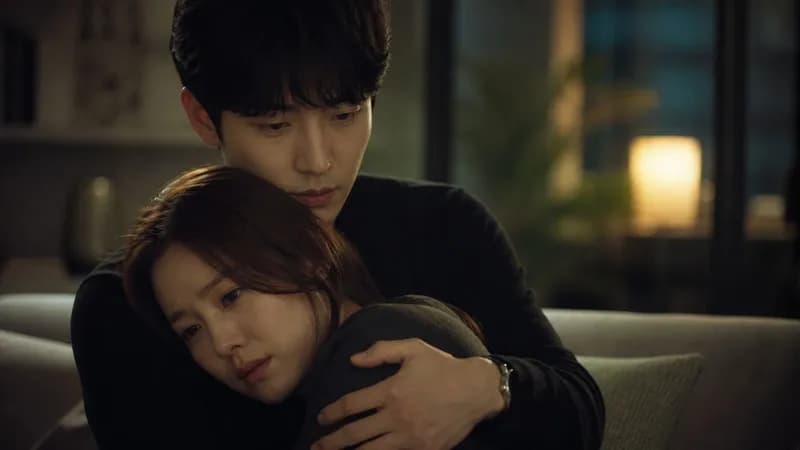
This is the plea of a wife the wife of a police officer. And it is a plea made on behalf of the very man whom, in the eyes of the law, she might never have intended to save. This is precisely the beauty of the K-Drama Flower of Evil: the line between hero and villain is so blurred that you find yourself unable to decide whose side to take. When this show premiered in 2020, many began watching it expecting nothing more than a standard crime thriller. Yet, by the time it concluded, it left behind a strange, heavy weight upon the chest a weight composed of love, guilt, and a glimmer of hope for someone.
Do Hyun-so that is the true name of the man we know as Baek Hee-sung. A successful metalwork artist, a loving husband, and the father of a young daughter. On the surface, it appears to be a perfect family living in a perfect home. Yet, his in-laws despise him. Strange, isn't it? When, in the very first episode, you witness them sidelining his wife, Ji-won, you might assume it stems from a class divide. But then, when Baek Hee-sung himself remarks in a quiet, measured tone "She sees only what I choose to show her" a shiver runs down your spine. Is this man truly manipulating his wife? Or is there something else at play, something that will only gradually come to light? And this is precisely where the true magic of Flower of Evil begins. You find yourself leaning toward one side, then the other; the show never allows you to settle into a state of comfort.
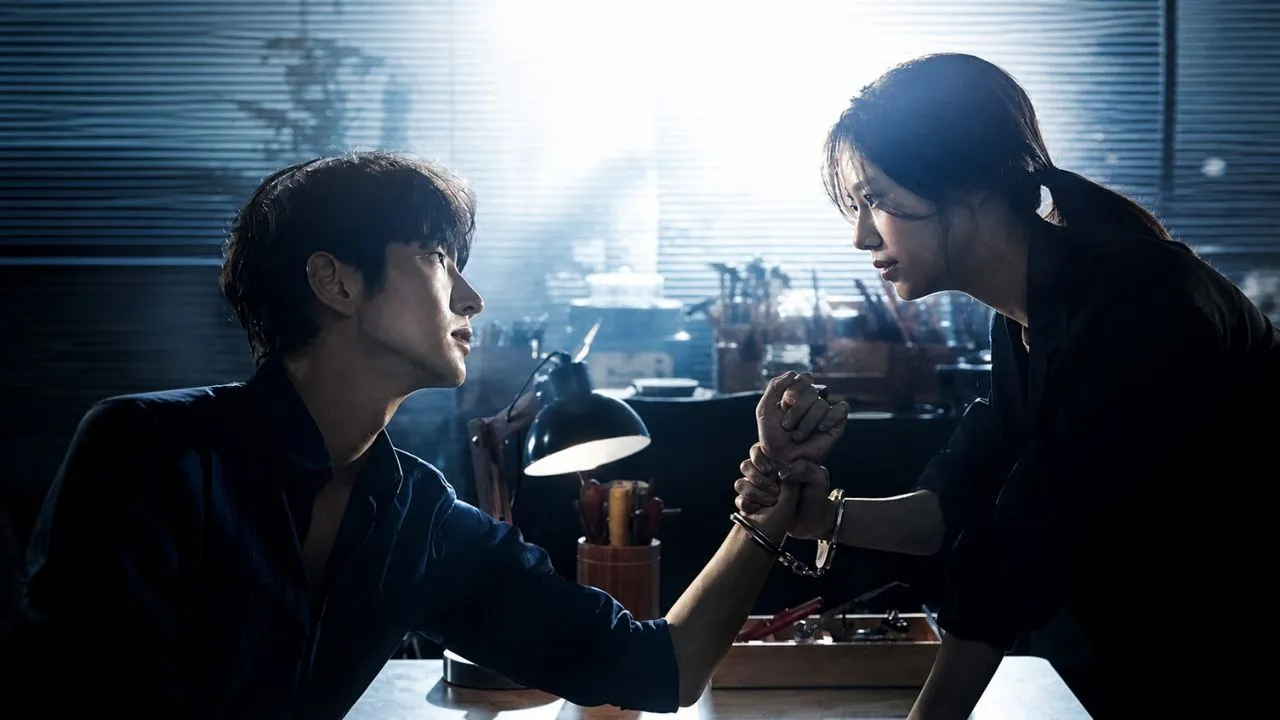
Hyun-so’s father was a serial killer. It is a shocking revelation, yet it is the truth. And this truth uncovered during his childhood transformed him into a person incapable of truly feeling emotions or expressing love. He would often wonder:
Perhaps I am just like him. Perhaps that same darkness lurks within me, too. And so, he forged a new identity. He built a new life. He became Baek Hee-sung. And he met Ji-won. Ji-won pursued him relentlessly persistent, stubborn, and headstrong. Initially, Hyun-so viewed her merely as a strategy a safe cover. But gradually, she became his safest space the one place where he could simply... feel a little bit alive. That is the truly heartbreaking part: Hyun-so himself didn't realize he had fallen in love, because he had never been taught what love actually feels like.
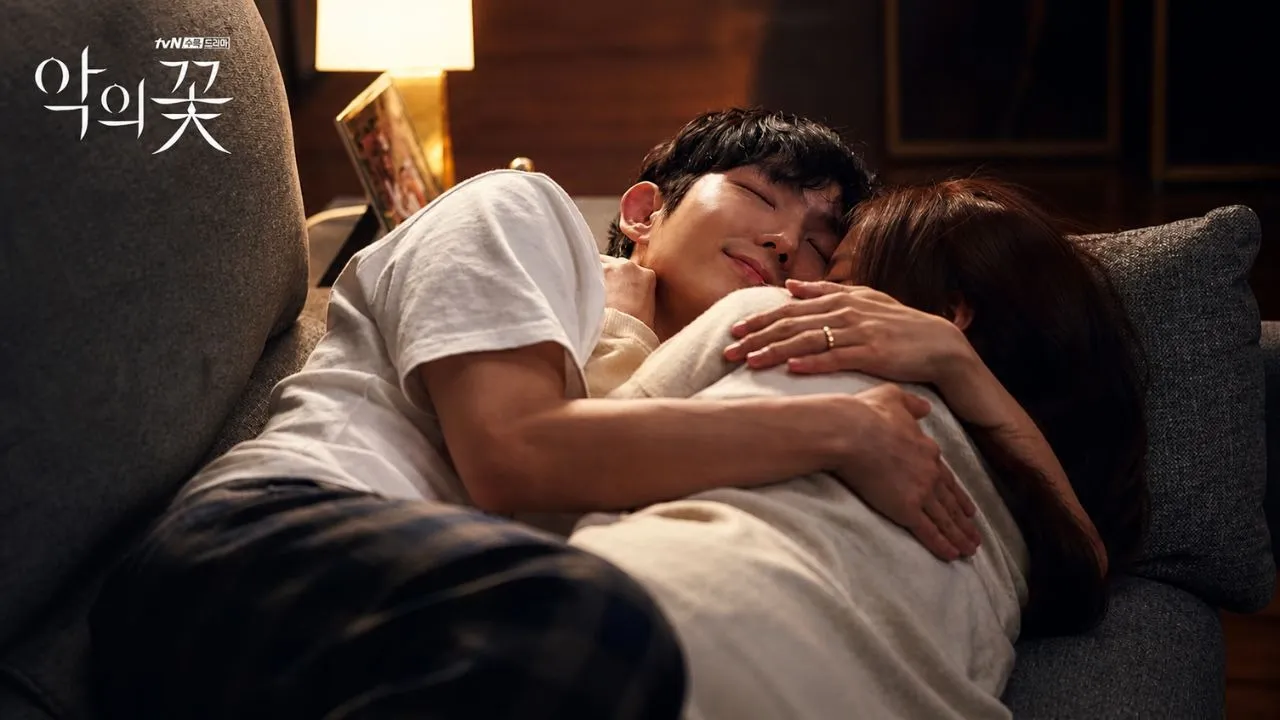
The way Moon Chae-won has portrayed Ji-won is truly commendable. In one moment, she is a sharp police detective—solving cases and piecing together clues. And in the very next moment, she is a bewildered wife, unable to believe that even her husband's name might not be real.
When the first seeds of suspicion take root, she begins her own investigation—quietly and alone. And when the truth finally comes to light, her eyes go blank. She doesn't weep; she doesn't scream. She simply becomes weary.
The very person who loves her most is the one she fears the most. And the answer to the case she seeks to solve lies hidden within the confines of her own marriage.
This is precisely why her character is so relatable. For Ji-won is no weakling; she is strong and intelligent. Yet, love leads her to a crossroads where she is forced to choose between her principles and her heart.
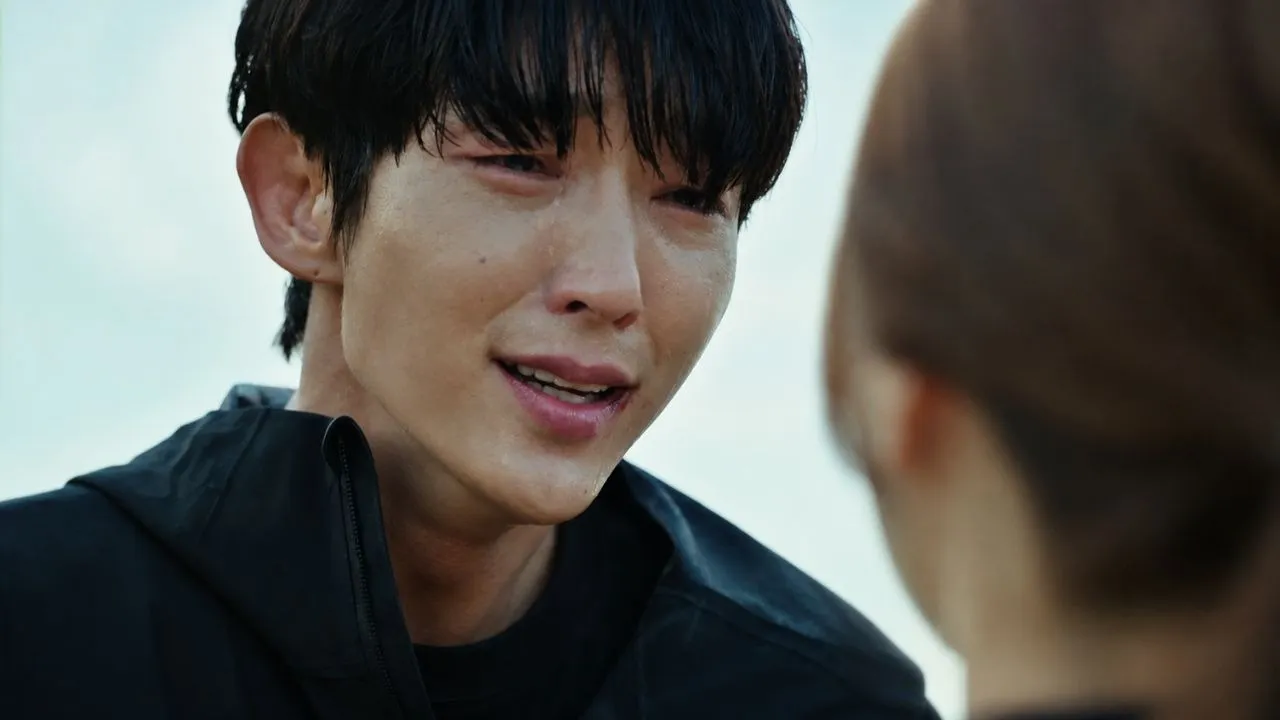
The most haunting moment of the show occurs when Hyun-so believes that Ji-won has died. In that single instant, all his defenses crumble away.
The voices within him—those dark whispers that constantly told him, "You are just like your father"—grow loudest in that moment. He stands on the precipice of an act from which there is no return. And just then, Ji-won pulls him back. He realizes that the darkness he had come to accept as his identity was not his true reality. Ji-won was his reality. Every evening spent with her. The laughter of their child.
Lee Joon-gi’s acting here transcends words. His hands tremble; his eyes go vacant; his breath catches in his throat. There is no grand, dramatic scene—just a broken man trying to save himself.
Flower of Evil poses a profound question: What is freedom? Is running away freedom? Is forging a new identity freedom? For years, Hyun-so ran—from his father's name, from his own identity, and from his own feelings. But true freedom came to him only when he accepted himself—that very same broken, pained, and confused human being.
And for Ji-won, freedom meant accepting that the man she loved was not "whole." He wasn't perfect. He had lied. Yet, his love was real. His care was genuine. Those nights when he would come home exhausted and simply sit beside her—all of that was real.
Rating: 9.2 / 10 — A Must-Watch
The chemistry between Lee Joon-gi and Moon Chae-won is this show's greatest strength. In one scene, they are lovers; in the next, strangers. In one dialogue, they are honest; in another, they are hiding secrets. And both portray this so naturally that you forget you are watching a performance.
The show's background score is also exceptional. When the tension mounts, the music leaves you breathless. And when a tender moment unfolds between the two, the melody brings tears to your eyes.
Yes, there are moments of predictability. You can sometimes guess what is going to happen. But Flower of Evil presents even those predictable moments with such raw pain and beauty that the predictability itself becomes forgivable. Flower of Evil is not just a K-Drama. It is a mirror for everyone who has ever been so afraid of the truth.
In the act of hiding, lies eventually became their reality. This is the story of people who are broken—yet, through the power of love, learn how to heal. Slowly. Painfully. But genuinely. If you haven't seen it yet, set aside an evening to watch it. But make sure to keep some tissues handy.
A person who conceals their true self likely fears that if they reveal the truth, love will slip away. Yet, true love begins precisely at that very moment.