Telegram Ban in India Sparks Huge Debate as Pavel Durov Slams NEET 2026 Restrictions
Telegram ban in India before NEET 2026 re-test draws criticism from CEO Pavel Durov as government cites exam fraud concerns.


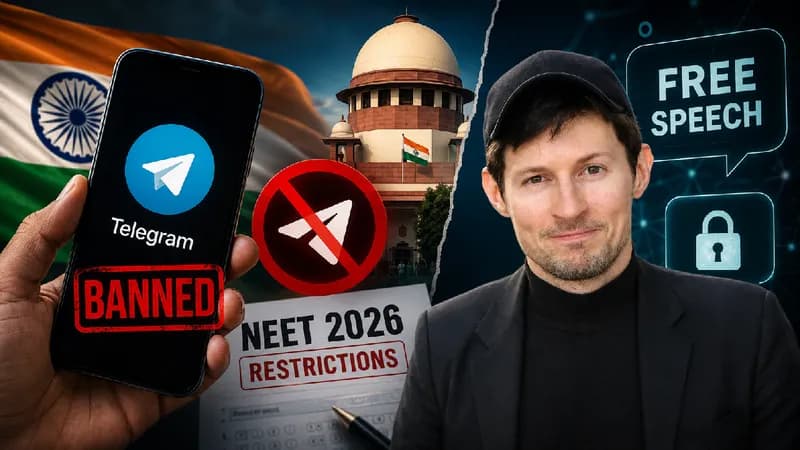
Telegram Ban in India: India's decision to temporarily block Telegram has set off one of the loudest digital freedom debates the country has seen in years. Days before the NEET-UG 2026 re-examination, the government pulled the plug on access to the messaging app, pointing to a surge of fake paper leak claims, cheating networks, and exam-related misinformation spreading across the platform.
Telegram's founder and CEO Pavel Durov wasn't having it. He fired back almost immediately, arguing that the government was punishing millions of ordinary users for problems they had nothing to do with.
Telegram Ban in India: What Happened?
The Centre restricted access to Telegram through June 22, covering the June 21 NEET-UG 2026 re-exam and the days surrounding it. The move came on the back of recommendations from the National Testing Agency (NTA), which flagged several Telegram channels and groups for spreading fabricated leak claims, selling fake exam materials, and stoking anxiety among students.
As part of the restrictions:
- Telegram has been removed from the Google Play Store in India.
- New Android users cannot currently download the app through Google.
- Telegram has also been directed to disable its message-editing feature in India until June 30.
- The order was reportedly issued under Section 69A of the Information Technology Act, 2000.
The government maintains that the move is temporary and aimed at ensuring a fair examination process.
Pavel Durov Hits Back
Pavel Durov went straight to X to push back against the decision. His argument was direct: banning the platform doesn't stop bad actors, it just inconveniences everyone else.
He pointed out that Telegram had already taken down hundreds of channels tied to leaked exam content and scams in recent weeks. Blocking the app, he said, doesn't make those leaks disappear, it just shunts that activity over to other platforms. The comments spread quickly, and a lot of users online seemed to agree with him, raising serious questions about whether a blanket ban is really the smartest fix for exam fraud.
Why Is the NTA Concerned?
Here's where it gets interesting. The NTA says its worry isn't just actual paper leaks, it's fake ones too.
Officials explained that Telegram's message-editing system could be exploited in a specific way: users could modify older posts while keeping the original timestamps intact. That meant someone could drop a document into a chat after an exam had already happened, take a screenshot, and then pass it off as proof the paper had leaked beforehand. It's the kind of manufactured panic that spreads fast and hits students hard during an already brutal examination season.
NTA Director General Abhishek Singh said authorities want the re-exam to go ahead without malpractice or disinformation clouding it.
NEET 2026 Re-Exam Under Intense Scrutiny
The original NEET-UG exam held on May 3 was cancelled after allegations of irregularities, pushing thousands of students into yet another round of preparation for the June 21 re-test.
This exam is about as high-stakes as it gets, and officials have repeatedly told students to stick to official NTA channels and ignore any social media buzz about leaked papers.
Critics Say the Ban Is Too Broad
Not everyone is on the government's side here. Digital rights groups and tech experts have pushed back hard.
The Internet Freedom Foundation (IFF) called the restriction a disproportionate response, arguing that shutting down an entire platform harms the students, educators, and communities who use Telegram every single day for perfectly legitimate reasons. Tech experts have also questioned whether a temporary ban can actually stop misinformation from spreading, noting that determined users will simply migrate to other apps.
There's one more wrinkle. Durov also alleged that Reliance may have played a role in access disruptions beyond India through internet routing manipulation, a claim that has not been backed by any publicly available evidence and remains unverified. Reliance has not publicly responded.
A Debate Bigger Than Telegram
Strip away the specifics and this is really a much bigger conversation: when millions of legitimate users depend on a platform, how far should a government go to clamp down on the bad actors who misuse it?
Those backing the restriction say drastic situations, like a national exam affecting lakhs of students, call for firm action. Those against it argue that platform-wide bans rarely solve the real problem and could set a worrying precedent for how India handles internet regulation going forward.
For now, the Telegram ban stays in place until June 22 while theNEET-UG 2026 re-examination moves ahead under tight security and a very watchful public eye. Whatever happens on exam day, the fight over digital freedom, platform accountability, and exam integrity isn't going anywhere.
Disclaimer: This report is based on official statements, public posts, and media reports available at the time of writing. Allegations and claims mentioned in the article remain subject to verification by relevant authorities.