Eta Aquarids Meteor Shower 2025: The Ultimate UK Viewing Guide
Catch the Eta Aquarids meteor shower 2025 in the UK! Peak night is 5–6 May. See how to watch, best dark sky spots, timings, and photography tips for shooting stars.


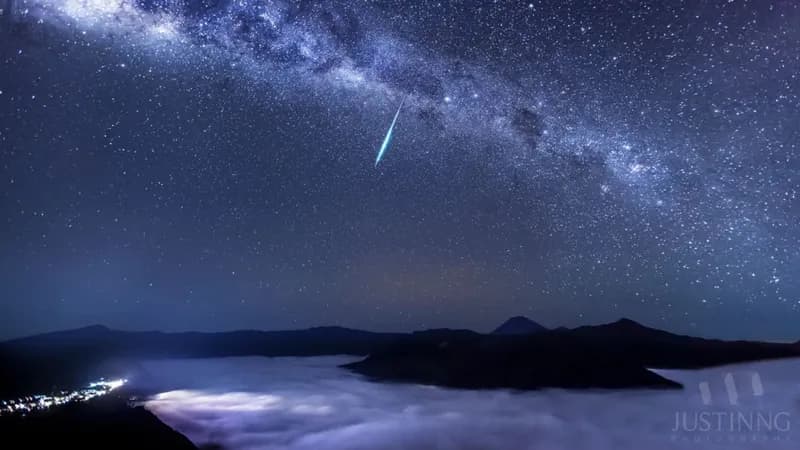
Every spring, one of the most spectacular celestial events of the year lights up the pre-dawn sky — and if you haven't yet made time for the eta aquarids meteor shower, 2025 is the year to change that. Caused by debris left behind by the famous Halley's Comet, this annual display sends dozens of shooting stars streaking across the sky each hour at its peak. Whether you're a seasoned stargazer or someone who simply wants to catch a glimpse of something magical before sunrise, here's absolutely everything you need to know about watching the eta aquarids from the UK this year.
What Is the Eta Aquarids Meteor Shower?
The eta aquarids — sometimes spelled eta aquariids — is an annual meteor shower that takes place each spring, typically active from late April through to mid-May. Unlike many meteor showers that result from asteroid debris, the eta aquarids is caused by particles shed by Halley's Comet (officially designated 1P/Halley). As Earth orbits the Sun, it passes through a trail of comet dust and ice particles, and when those particles slam into our atmosphere at around 66 kilometres per second, they burn up in bright, fast-moving streaks of light.
The shower gets its name from its radiant point — the spot in the sky from which the meteors appear to originate. That point sits near the star Eta Aquarii in the constellation Aquarius. You don't need to stare directly at the radiant to enjoy the show, but knowing where it is helps you understand which direction most of the meteors will be travelling.
Why Is It So Special?
What makes the eta aquarids stand out from other meteor showers is the sheer speed of the meteors — at roughly 66 km/s, they're among the fastest of any annual shower. That speed means they often leave long, glowing trains (the luminous trails behind a meteor) that can linger for several seconds. It's genuinely mesmerising. The other big selling point? You're watching material shed by one of the most famous comets in history. Halley's Comet last visited the inner solar system in 1986 and won't return until 2061, but every May you can see tiny pieces of it burning up right above your head.
Eta Aquarids 2025: Key Dates and Peak Time
So, when is the eta aquarids meteor shower in 2025? Here are the essential dates you need to know:
- Active period: 19 April – 28 May 2025
- Peak night: The night of 5–6 May 2025 (with the morning of 6 May being optimal)
- Secondary good nights: 4–5 May and 6–7 May 2025
- Moon phase at peak: Waning crescent — excellent news for visibility
The eta aquarids meteor shower peak time in 2025 falls in the early hours of 6 May. Specifically, you'll want to be outside between roughly 2:00 AM and 4:30 AM BST (British Summer Time) to catch the maximum rate. That's when the radiant point in Aquarius climbs to its highest position above the southern horizon before dawn washes out the sky.
How Many Meteors Can You Expect?
Under ideal conditions — dark skies, no Moon, and the radiant high overhead — the eta aquarids can produce up to 50 meteors per hour (known as the zenithal hourly rate, or ZHR). From the UK, however, the radiant never climbs particularly high, so realistic rates are more like 10 to 30 meteors per hour from a dark location. That might sound modest compared to what observers in the Southern Hemisphere enjoy (for them, the radiant is almost overhead), but it's still more than enough for a memorable morning out.
How to Watch the Eta Aquarids Meteor Shower Tonight from the UK
Wondering about the best time to see the eta aquarids meteor shower tonight or on peak night? There's no complicated equipment needed — your eyes are your best tool. Here's a step-by-step breakdown of how to make the most of it.
Find a Dark Sky Location
Light pollution is the single biggest enemy of meteor watching. If you're in a city like London, Manchester, or Birmingham, you'll likely only catch the brightest meteors. Wherever possible, drive or travel at least 20–30 minutes away from urban centres. The UK has some fantastic designated Dark Sky Discovery Sites and International Dark Sky Parks, including:
- Galloway Forest Park, Scotland — one of Europe's largest dark sky parks
- Northumberland National Park and Kielder Observatory
- Dartmoor National Park, Devon
- Brecon Beacons (now Bannau Brycheiniog), Wales
- Exmoor National Park, Somerset
Even a local park or field away from street lighting will make a significant difference if a dedicated trip isn't possible.
Let Your Eyes Adjust
Your eyes take around 20–30 minutes to fully adapt to the dark. Avoid looking at your phone screen during this time — if you need a torch, use a red-light torch, which doesn't reset your night vision. Trust us, this patience pays off enormously.
Where to Look in the Sky
Face south to southeast. The radiant (near Eta Aquarii) will be relatively low on the horizon for UK observers, so meteors will shoot upward and across the sky in various directions. Don't fixate on the radiant itself — instead, look at a large portion of the sky roughly 40–50 degrees away from it. Lying on your back on a blanket or reclining in a camping chair makes this much more comfortable for an extended viewing session.
What Equipment Do You Need?
Honestly? Nothing special. You don't need a telescope (it would actually make things worse by narrowing your field of view) or binoculars. Just:
- Warm clothing — May mornings in the UK can be surprisingly cold, especially in rural areas
- A blanket or sleeping bag
- A reclining chair or mat to lie on
- A hot flask of tea or coffee
- A star map or free app like Stellarium to find the constellation Aquarius
Eta Aquarids Meteor Shower 2025 UK Weather and Visibility
Britain's biggest variable — the weather — will obviously play a huge role in whether you see anything at all. Early May can bring clear, settled conditions, but it can just as easily deliver overcast skies and drizzle. A few tips for navigating this:
- Check a dedicated astronomy forecast like Clear Outside (clearoutside.com) rather than a general weather app. It gives cloud cover forecasts at multiple altitudes specifically for stargazers.
- The Met Office cloud cover maps are also useful for identifying clear zones across the UK.
- If peak night (5–6 May) is cloudy, don't despair — the shower is active for weeks either side, and the nights of 4–5 May and 6–7 May will still produce decent rates.
- Be willing to travel. Even a 50-mile drive to a clearer region of the country can make all the difference.
The Science Behind the Eta Aquarids
It's worth taking a moment to appreciate just how extraordinary this event really is. Halley's Comet is a periodic comet with an orbital period of roughly 75–76 years. As it travels through the inner solar system, solar heat causes its icy nucleus to sublimate — turning directly from solid to gas — releasing dust and rocky particles in its wake. Over thousands of years, these particles have spread out along the comet's orbital path, creating what astronomers call a meteor stream.
Earth crosses this stream twice a year: once in May (producing the eta aquarids) and once in October (producing the Orionid meteor shower). So even though Halley's Comet itself is far out in the solar system right now — it won't reach perihelion again until 2061 — you can witness its legacy every single year just by getting up before dawn in early May.
The meteors themselves are typically small particles, most no larger than a grain of sand or a small pebble. But their incredible velocity — about 148,000 mph — means they release enormous energy when they collide with air molecules in our upper atmosphere, creating those brilliant streaks of light at altitudes of around 70–100 kilometres above the Earth's surface.
Photography Tips: Capturing Shooting Stars in the UK
Want to photograph the eta aquarids? It's more achievable than you might think, even with a basic DSLR or mirrorless camera. Here are the essentials:
- Use a wide-angle lens (24mm or wider) to capture as much sky as possible
- Set your aperture to the widest setting (lowest f-number), such as f/2.8 or f/1.8
- ISO: Start around 1600–3200 and adjust based on light pollution
- Shutter speed: 15–25 seconds — long enough to catch meteors, short enough to avoid star trailing
- Use a remote shutter release or intervalometer to take continuous shots without camera shake
- Point the camera toward the south, slightly away from the radiant
- Shoot in RAW format for maximum editing flexibility
Patience is essential. You might take 200 frames and catch just 3–4 meteors — but those shots will be worth it.
Frequently Asked Questions About the Eta Aquarids Meteor Shower
When is the eta aquarids meteor shower 2025 UK peak?
The eta aquarids meteor shower peaks on the night of 5–6 May 2025. The best viewing window for UK observers is between approximately 2:00 AM and 4:30 AM BST on the morning of 6 May, when the radiant is at its highest point above the southern horizon before dawn begins to brighten the sky.
Can you see the eta aquarids meteor shower from the UK?
Yes, absolutely — though the view from the UK is less spectacular than from the Southern Hemisphere because the radiant (in Aquarius) stays relatively low on the horizon. From a dark UK location, you can realistically expect to see 10–30 meteors per hour at peak. The further south in the UK you are, the slightly better your view will be.
Do I need special equipment to watch the aquarids meteor shower tonight?
No telescope or binoculars are needed — in fact, they'd hinder rather than help. The eta aquarids meteor shower is best viewed with the naked eye. Simply find a dark location, let your eyes adapt for 20–30 minutes, lie back comfortably, and scan a wide area of the southern sky. Warm clothing and a reclining chair are the only real essentials.
What time should I go outside to see the shooting stars tonight?
For the best results, head outside between 1:00 AM and 4:30 AM BST. The shower improves as the night goes on and the radiant rises higher in the sky. Midnight onward is worthwhile, but the hour or two before astronomical dawn (around 3:30–4:00 AM in early May) is typically the golden window. Set an alarm and commit to at least 45 minutes of watching for the best experience.
Is the 2025 eta aquarids meteor shower better than usual?
The 2025 display benefits from a waning crescent Moon at peak, which means minimal moonlight interference — a significant advantage. Moon-free peak nights don't happen every year, making 2025 a particularly good year to watch. While outburst years (when rates dramatically exceed normal) are rare and unpredictable, forecasters expect a solid, above-average display in 2025.
What's the difference between the eta aquarids and the Orionids?
Both the eta aquarids (May) and the Orionid meteor shower (October) are produced by debris from Halley's Comet. The eta aquarids is generally considered the more impressive of the two, particularly from the Southern Hemisphere, due to higher meteor rates at peak. The Orionids, while still a fine shower, typically produce lower ZHR rates. Both feature very fast meteors with persistent glowing trains.
What if it's cloudy on peak night — will I miss it completely?
Not at all. The eta aquarids is active from 19 April to 28 May, so there are plenty of opportunities either side of the peak. The nights of 4–5 May and 6–7 May will still deliver very respectable rates. Keep a close eye on astronomy weather forecasts and be prepared to pick the clearest night within this window rather than rigidly sticking to the calendar peak.
Conclusion: Don't Miss the Eta Aquarids in 2025
The eta aquarids meteor shower is one of spring's most rewarding natural spectacles, and 2025 offers particularly favourable conditions thanks to a thin crescent Moon staying well out of the way. Whether you're heading to a Dark Sky Park in Scotland, finding a quiet field in Devon, or simply stepping into your back garden well away from street lights, there's something deeply special about watching ancient comet debris burn up in real time above your head.
Mark 5–6 May in your diary, check the forecast, wrap up warm, and give yourself at least an hour under those pre-dawn skies. You won't regret it. And if you miss the peak? Remember — the shower runs for weeks, Halley's Comet keeps delivering, and the skies will be waiting for you tomorrow morning too.
Clear skies!