

/
/
Mamata Banerjee appeared in lawyer’s robes at Calcutta High Court over Bengal post-poll violence claims, sparking major political buzz.
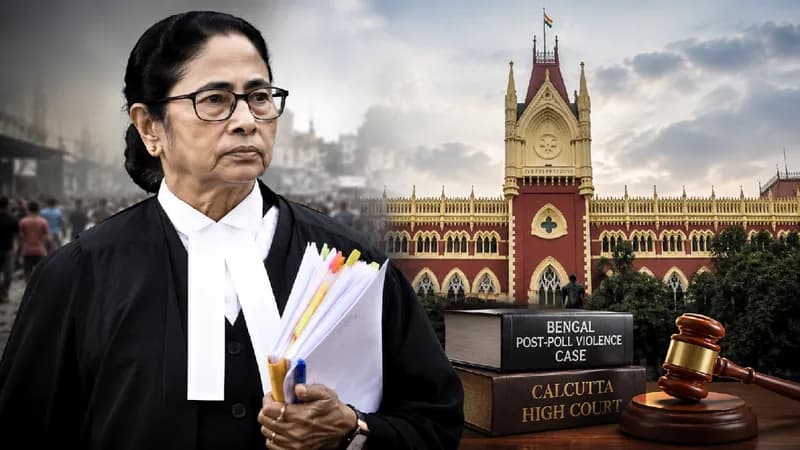
Mamata Banerjee lawyer’s robes: West Bengal politics rarely lacks drama, but Thursday’s scenes outside the Calcutta High Court felt straight out of a political movie. Former Bengal Chief Minister and Trinamool Congress chief Mamata Banerjee arrived at the Calcutta High Court wearing a black lawyer’s gown to appear in connection with the Bengal post-poll violence case.
The moment instantly grabbed national attention. Supporters called it a bold political statement. Critics called it symbolism. But one thing is certain, Mamata Banerjee knows exactly how to dominate the political narrative when Bengal is under pressure.
The hearing is linked to allegations of violence after the Assembly elections that ended the Trinamool Congress’s 15-year rule and brought the BJP to power in the state. The petition was filed by Shirshanya Bandopadhyay, son of senior TMC leader and advocate Kalyan Bandopadhyay.
As soon as Mamata Banerjee stepped into the court premises in full legal attire, videos and photographs flooded social media. In today’s politics, optics matter almost as much as arguments inside the courtroom, and the TMC supremo clearly understood that.
What made the moment even more interesting is that Banerjee actually holds a law degree. She completed her LL.B. from Jogesh Chandra Chaudhuri Law College in Kolkata in 1982. Over the years, she has occasionally appeared in courts during politically sensitive matters, although such appearances remain rare.
This time, however, the timing made it explosive.
The Bengal post-poll violence issue has already become one of the biggest political flashpoints after the election results. Allegations include attacks on party workers, vandalism of offices, displacement of supporters and claims of administrative failure in several districts.
According to TMC leaders, the situation in many areas deteriorated rapidly after the election outcome. The party alleged that workers were threatened, homes were attacked and women and children faced harassment in some violence-hit pockets.
Mamata Banerjee reaches Calcutta High Court in Lawyer's attire. pic.twitter.com/1XVyRw8mbM
— News Algebra (@NewsAlgebraIND) May 14, 2026
The case before the Calcutta High Court revolves around multiple allegations tied to post-election unrest across West Bengal.
Some of the key claims raised in court include:
TMC leaders also reportedly raised issues connected to market demolitions and alleged “bulldozer-style” administrative actions in certain areas.
The BJP, meanwhile, has consistently accused the Trinamool Congress of failing to maintain law and order in the state. The political blame game is expected to intensify further as the case progresses.
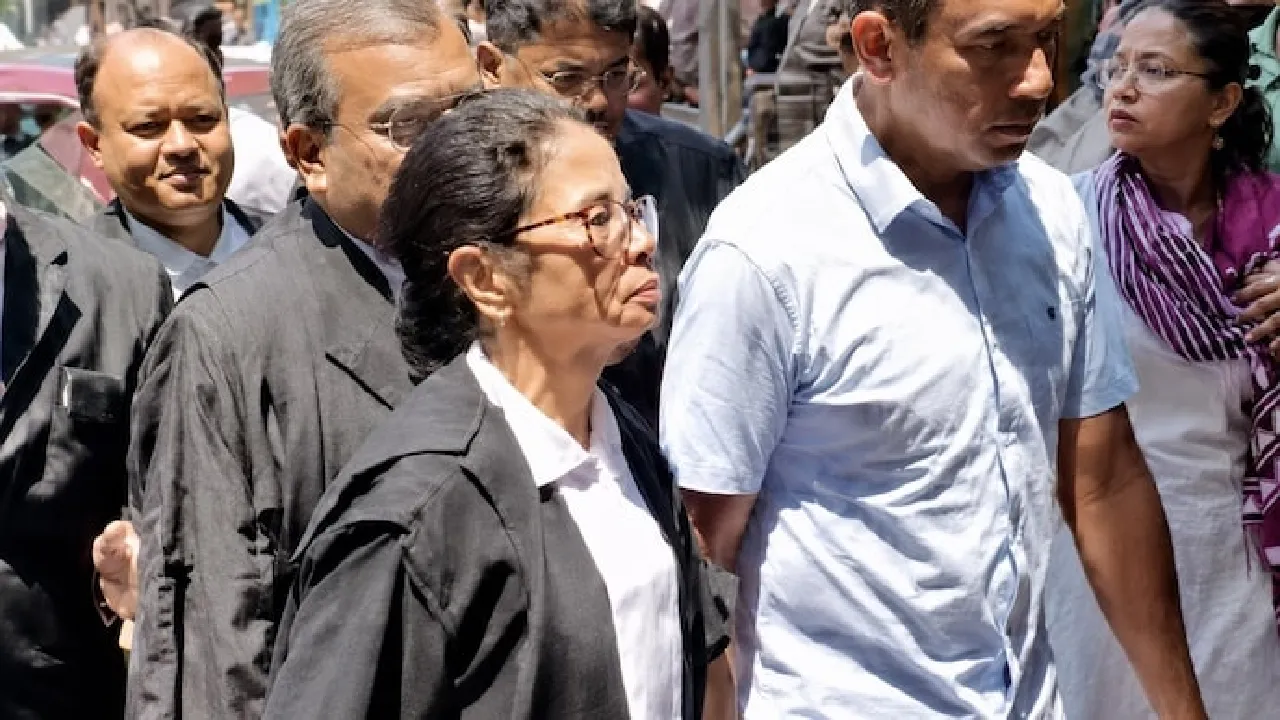
This was not just another court hearing. It was a carefully watched political moment.
Banerjee’s appearance comes at a time when Bengal politics is entering another highly charged phase. The BJP and TMC are already locked in aggressive confrontation over election results, violence allegations and claims of irregularities.
Political observers believe Mamata Banerjee’s decision to appear personally sends two clear messages:
First, she wants to project herself as a fighter who refuses to step back during a crisis.
Second, the TMC wants to frame the violence narrative politically before the opposition fully controls public perception.
The party’s official X post after her arrival reflected exactly that strategy. TMC praised Banerjee for standing for “truth, justice and constitutional values” and accused the BJP of spreading “politics of hatred.”
Whether people agree with that messaging or not, the move succeeded in pulling national focus back to Bengal within minutes.
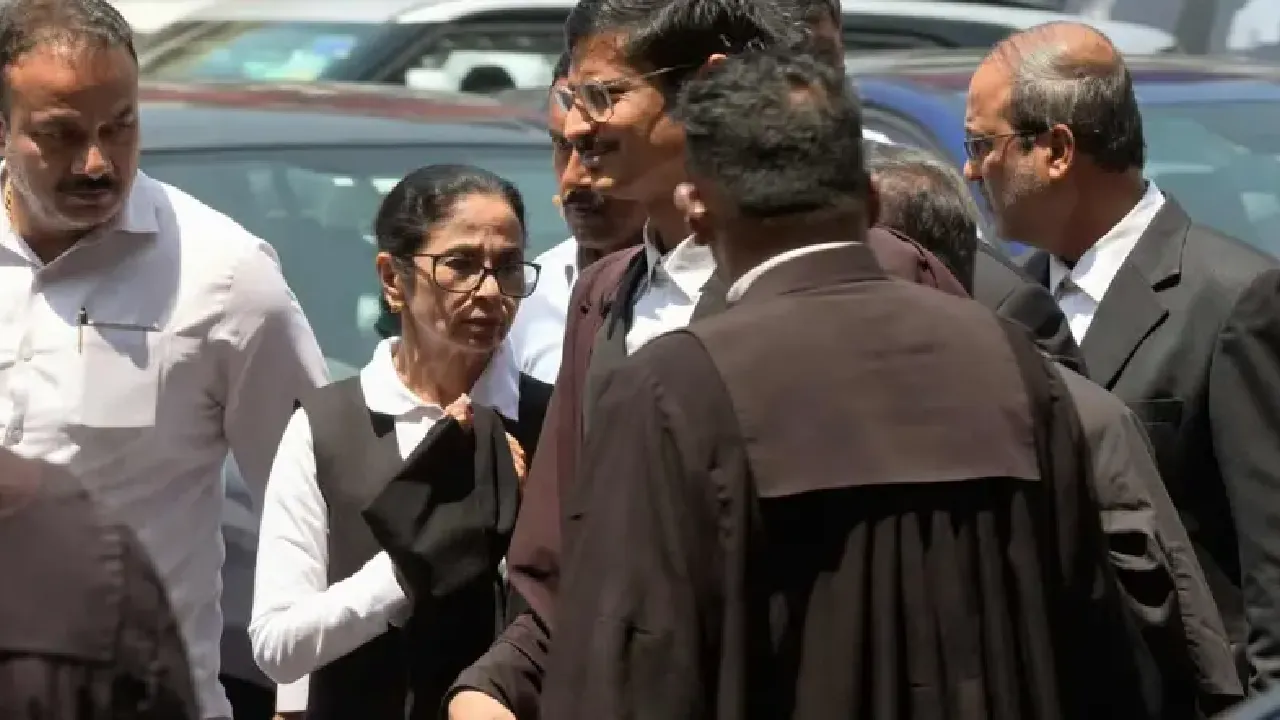
Interestingly, this is not the first time Mamata Banerjee has stepped into court wearing a lawyer’s gown.
She reportedly appeared in legal proceedings during her Congress years in the 1980s and 1990s. One of the most remembered episodes involved her seeking bail for detained Youth Congress workers during political protests.
She was also associated with legal proceedings after the July 21, 1993 protest movement in Kolkata, a date now observed annually by TMC as Martyrs’ Day.
That legal background is now being politically revived at a moment when Bengal’s political temperature is once again soaring.
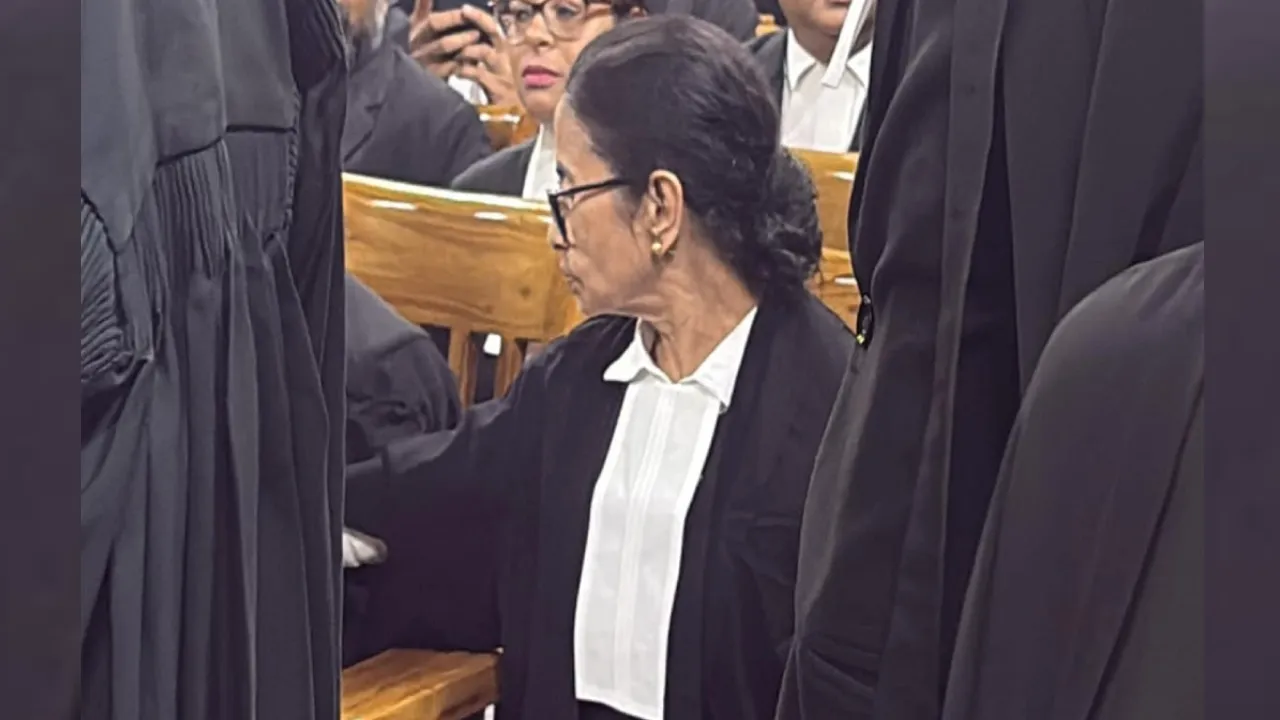
There is little doubt that Mamata Banerjee’s courtroom appearance was symbolic as much as legal. Indian politics thrives on visual moments, and this was one of the strongest political visuals seen this year.
For TMC supporters, it reinforced her image as a street fighter willing to battle both politically and legally. For opponents, it looked like political theatre designed to shift focus from tough questions surrounding violence allegations.
No matter which side people support politically, that photo of Mamata Banerjee standing outside Calcutta High Court in a lawyer’s robe has already become one of the most talked-about political images of 2026.
And with the Bengal post-poll violence case still under judicial consideration, this political storm is far from over.
Mamata Banerjee appeared in lawyer’s attire in connection with the Bengal post-poll violence case hearing. She also holds a law degree from Kolkata.
The case involves allegations of attacks, displacement, vandalism and violence after the West Bengal Assembly election results.
Yes. Mamata Banerjee completed her LL.B. from Jogesh Chandra Chaudhuri Law College in 1982.
The petition was filed by Shirshanya Bandopadhyay, son of senior TMC leader and advocate Kalyan Bandopadhyay.
The case has become a major political battle between the TMC and BJP over law and order, violence allegations and public perception in West Bengal.









