

/
/
Xiaomi India CMO Anuj Sharma will leave the company after nearly eight years, marking a major leadership transition as Xiaomi expands beyond smartphones.
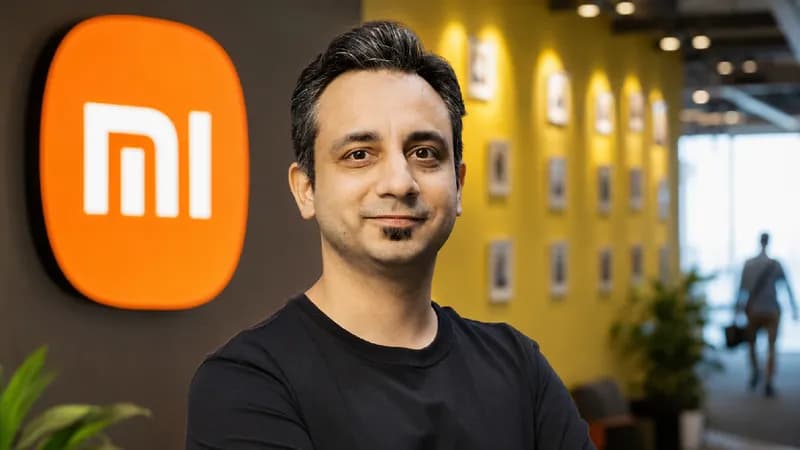
There are people who quietly do their jobs, and then there are people who genuinely shape a brand. Xiaomi India CMO Anuj Sharma was firmly in the second category. After nearly eight years with the company, he's confirmed he'll be walking out the door at the end of June, and for anyone who's followed Xiaomi's journey in India, that's kind of a big deal.
His exit comes at an interesting moment. Xiaomi India isn't the scrappy budget phone challenger it once was. The company is now pushing hard into premium smartphones, smart home gadgets, and even large appliances, while also restructuring how it operates across South Asia. In other words, Sharma isn't leaving a company that's standing still, he's leaving one that's very much in motion.
Sharma didn't drop the news as a surprise. Speaking with journalists at a recent media interaction, he was refreshingly candid about how the decision came together.
"I took this call a while back, but it's only now that we can talk about this," he said, acknowledging that leaving wasn't easy after spending the better part of a decade building something he clearly cared about.
He joined Xiaomi India back in 2018, and with a bit of self-deprecating humor, pointed out that he had "dark hair" when he started, a lighthearted nod to just how much ground the company covered during those years.
What stood out, though, was that Sharma didn't leave bitter or distant. He confirmed he still holds Xiaomi shares and remains genuinely optimistic about where the company is headed. That's not the kind of thing someone says just to be polite, it suggests he's proud of what was built.
Sharma's time at Xiaomi India wasn't short on highlights.
His very first day on the job happened to coincide with the launch of the Redmi Note 6 Pro. The company sold roughly 625,000 units in a single day, a number that, as Sharma recalled, made it immediately clear what kind of brand he'd joined.
But perhaps his most defining chapter came in 2020, when he moved over to POCO India and helped turn it into something with its own voice and identity, separate from Xiaomi's shadow. It was a risky move at the time, but it paid off. POCO found its footing and built a real fanbase, and a lot of that credit goes to how Sharma and his team approached the brand's positioning.
Then in 2022, after Manu Kumar Jain's departure, Sharma came back to Xiaomi India. The company was going through a turbulent stretch, leadership changes, a tough market, and plenty of uncertainty. His job was essentially to steady the ship, rebuild team morale, and remind the brand who it was. By most accounts, he did exactly that.
Of course, the timing of Sharma's exit is hard to ignore.
Xiaomi India just announced plans to make India the regional headquarters for its South Asia operations, covering Bangladesh, Sri Lanka, and Nepal alongside India itself. The company is also making serious moves into AIoT and is reportedly gearing up to enter the large appliances space.
The numbers tell a compelling story about where Xiaomi is headed:
Upcoming launches like the Xiaomi 17T and Redmi Turbo 5 are expected to push the premium strategy even further. It's clear the company is no longer content being the go-to brand for budget buyers, it wants a seat at the premium table too.
Xiaomi hasn't named a direct replacement yet. But Sharma, to his credit, didn't leave the future looking murky. During his farewell, he spoke warmly about executives like Gautam, Ritij Khurana, and Sandeep Sarma, pointing to them as the people driving recent momentum and future plans.
There's also some industry chatter that Xiaomi might spread the responsibilities around rather than drop them all onto a single person. Whether that's the right call remains to be seen.
Most tech companies hit a point where the people who helped build them start moving on. It's not a failure, it's just how growth works. For Xiaomi India, Sharma's departure feels like one of those natural turning points.
He was there for the record-breaking launches, the POCO experiment, the leadership shake-ups, and the slow, steady pivot toward premium. He helped turn a Chinese smartphone company into something that genuinely resonated with Indian consumers.
What's reassuring is that Xiaomi doesn't look like a company drifting without direction. The strategy Sharma helped put in place, premium products, a broader ecosystem, stronger roots in India, seems to be holding firm.
He's leaving behind a company that barely resembles the one he joined in 2018. And honestly? That might be the best testament to what he helped build.










