Anthropic Co-founder Christopher Olah Warns AI Could Destroy Millions of Jobs, Says Big Tech Cannot Be Trusted Alone
Anthropic co-founder Christopher Olah warned at the Vatican that AI could replace millions of jobs worldwide and says Big Tech alone cannot regulate AI safely.


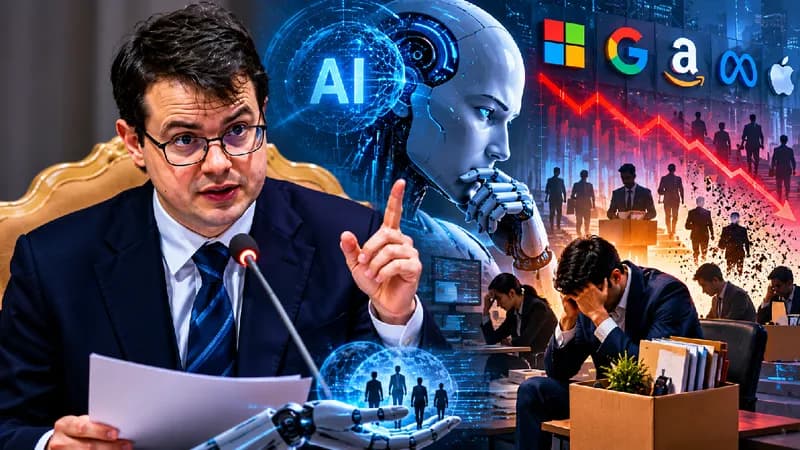
Artificial intelligence is no longer just a Silicon Valley obsession. It has now become a global moral debate, and according to Anthropic co-founder Christopher Olah, the risks are getting too serious to ignore.
Speaking at the Vatican during the launch of Pope Leo XIV’s first AI-focused encyclical, Olah warned that AI could replace human labour “at very large scale” in the coming years. The statement immediately grabbed attention because it did not come from an AI critic or politician. It came from one of the people actively building advanced AI systems. And honestly, that’s what makes this story impossible to ignore.
For years, tech companies promised AI would mostly “assist” humans. But now even insiders are openly admitting that millions of jobs across industries could disappear faster than governments are prepared for.
Christopher Olah AI Warning: “Big Tech Alone Cannot Regulate AI”
One of the strongest points made by Olah was that artificial intelligence should not be controlled only by private technology companies.
According to him, every major AI company operates under commercial pressure, global competition, investor expectations, and political influence. Even researchers with good intentions can end up prioritising growth and market dominance over public safety.
“Every frontier AI lab operates inside a set of incentives and constraints that can sometimes conflict with doing the right thing,” Olah reportedly said during the Vatican event.
That line matters because it confirms something many critics have been saying for years, self-regulation by Big Tech may simply not work.
The AI regulation debate has become more intense in 2026 as companies race to release more powerful tools capable of writing, coding, analysing data, creating videos, and automating entire workflows. And the truth is, regular workers are starting to feel nervous.
AI Job Losses Are No Longer A Distant Fear
Olah specifically highlighted the possibility of large-scale AI job losses across sectors like:
- Customer service
- Administrative work
- Content creation
- Software support
- Data processing
- Education assistance
- Financial analysis
This isn’t just theoretical anymore. Companies around the world are already reducing hiring in areas where AI tools can complete repetitive digital tasks faster and cheaper.
What feels different now is the tone coming from inside the industry itself. Tech leaders previously avoided directly discussing mass unemployment risks because it sounded alarmist. But that hesitation seems to be fading quickly.
Olah even said that if large-scale job displacement happens, supporting affected workers would become “a moral imperative of historic proportions.”
That statement carries weight because it shifts the conversation from technology to human survival.
Why The Vatican Suddenly Entered The AI Debate
The Vatican’s growing involvement in artificial intelligence surprised many people, but it actually reflects how widespread concerns about AI have become.
Pope Leo XIV used the occasion to release Magnifica Humanitas, a major Vatican document focused on the ethical risks linked to artificial intelligence. The encyclical reportedly warned about Concentration of digital power, Automation replacing meaningful work, AI-driven inequality, Autonomous weapons and Human dignity being weakened by technology.
The Pope also pushed for stronger government oversight and warned against allowing a handful of corporations to shape humanity’s future. That’s a major shift.
Until recently, AI conversations mostly happened between tech executives, investors, and governments. Now religious institutions, labour groups, academics, and civil society organisations are actively demanding a voice in how AI develops. And frankly, that broader discussion is overdue.
Anthropic’s Position Adds More Credibility To The Warning
The fact that these comments came from an Anthropic co-founder makes them even more significant.
Anthropic has often positioned itself as one of the more safety-focused AI companies in the industry. The company has previously pushed for safeguards around military AI systems and autonomous targeting technologies. That doesn’t mean Anthropic is against AI growth. Far from it.
But Olah’s comments suggest even leading AI developers are worried that the current race for dominance is moving faster than society can realistically handle.
He also raised concerns about inequality, pointing out that advanced AI development remains concentrated in a handful of wealthy countries and corporations. That concentration of power could become one of the defining global issues of the next decade.
The Bigger Problem Nobody Wants To Admit
AI is developing much faster than political systems can react.
Governments across the world are still debating basic AI laws while companies continue releasing increasingly powerful systems every few months. By the time regulations arrive, entire industries may already look completely different.
That’s why Christopher Olah’s warning is resonating so strongly online. People are no longer asking whether AI will change work. Most already believe it will.
The real question now is whether societies can adapt before millions of workers are pushed aside in the process. And based on how quickly automation is spreading, that clock may already be ticking.