/
/
Harmanpreet Kaur steps down as India captain across formats after 14 years. Smriti Mandhana takes charge as India begins a new chapter in women’s cricket.
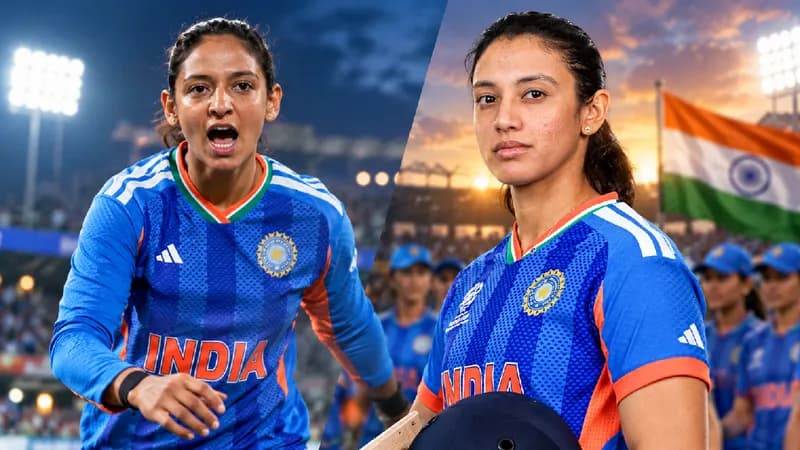
Indian women’s cricket has entered a major transition. Harmanpreet Kaur steps down as India captain across all formats, bringing the curtain down on one of the most important leadership eras in the team’s history.
The 37-year-old announced her decision on October 6, 2026, confirming that she will continue playing for India but will no longer lead the side. Hours later, the BCCI appointed Smriti Mandhana as the new captain.
The change comes after a BCCI review meeting in Guwahati involving Harmanpreet, Mandhana and head coach Amol Muzumdar. The review followed India’s early exit from the 2026 Women’s T20 World Cup, although the team subsequently bounced back by winning the Women’s Asia Cup and Asian Games gold.
Harmanpreet’s final match as captain was particularly fitting. India defeated Sri Lanka by 147 runs in the 2026 Asian Games final to retain the women’s cricket gold medal.
Harmanpreet’s leadership journey began with a stand-in assignment in the 2012 T20 Asia Cup final against Pakistan. Fourteen years later, she finished her captaincy career in another final, again lifting gold.
Across formats, she captained India in 211 matches and won 126, giving her an overall win rate of around 59.7%.
Her international captaincy record includes:
She also became the first captain, male or female, to reach 150 T20I appearances as captain, finishing with 155.
But numbers alone do not explain Harmanpreet’s influence.
The defining moment of Harmanpreet Kaur’s captaincy came in 2025, when India won its first Women's ODI World Cup.
India defeated Australia in a dramatic semi-final, successfully chasing 339 — the highest successful chase in women's ODI cricket at the time. Harmanpreet played a crucial role with an 89-run knock from 88 balls.
Four days later, India defeated South Africa by 52 runs in the final and finally claimed the trophy that had eluded the team for decades.
Harmanpreet became only the third Indian captain after Kapil Dev and MS Dhoni to win a 50-over World Cup.
That achievement alone secures her place among the most influential captains in Indian women's cricket.
For all the success under Harmanpreet, Australia remained the toughest opponent.
India won only nine of 44 matches against Australia under her captaincy, losing 33, with one tie and one no-result. In ODIs, India's record was just two wins from 15 matches.
Australia defeated India in several major matches, including the 2020 T20 World Cup final, the 2022 Commonwealth Games final and the 2023 T20 World Cup semi-final.
That made the 2025 World Cup semi-final even more significant.
Harmanpreet's 89 helped India finally overcome Australia on the biggest stage and paved the way for the country's historic World Cup triumph.
The debate over Harmanpreet’s captaincy was never completely quiet.
Questions were raised after India's loss to Australia in the 2020 tri-series final and again after the T20 World Cup final that year. The debate returned after India's group-stage exit from the 2024 T20 World Cup.
Even winning the 2025 ODI World Cup did not completely end the discussion.
The 2026 T20 World Cup exit increased the pressure, particularly because India's batting and results had become inconsistent in the shortest format.
Harmanpreet’s own form was also part of the conversation. Her T20I impact had declined in recent years, while recurring ankle and knee problems added another challenge.
Yet the story was not simply about poor form.
She was also the captain who pushed India to play with greater confidence, encouraged attacking cricket and backed young players when the safer option would have been to stick with established names.
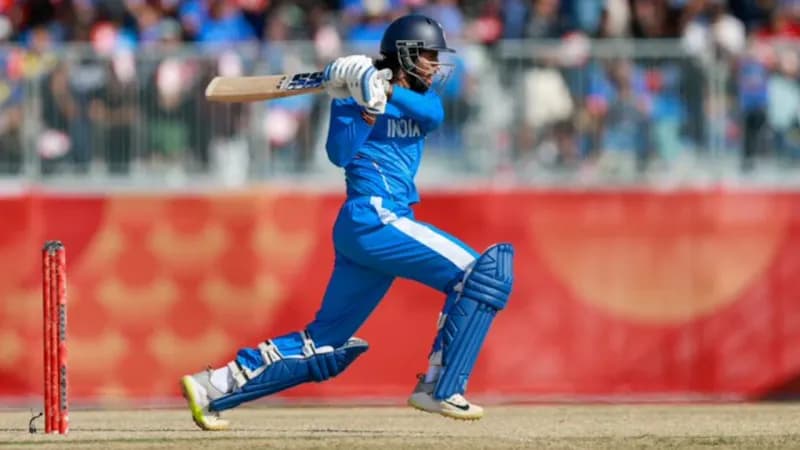
With Harmanpreet stepping aside, Smriti Mandhana India captain is now the new reality.
Mandhana has been Harmanpreet’s long-time deputy and has already gained substantial leadership experience in domestic and franchise cricket.
Her biggest recent achievement came with Royal Challengers Bengaluru, where she led the franchise to Women’s Premier League titles in 2024 and 2026.
She has also captained India in 18 T20Is and four ODIs before taking over the full-time white-ball captaincy.
The BCCI highlighted her experience and leadership qualities while announcing the appointment.
Mandhana herself described the responsibility as a special honour and thanked Harmanpreet for her contribution to Indian cricket.
That acknowledgement matters. The transition has generated plenty of speculation around the relationship between the two senior players, but there is no confirmed evidence that a personal dispute caused Harmanpreet’s resignation.
Reports have claimed that tensions existed inside the dressing room, but those claims should not be treated as established fact without stronger confirmation.
Perhaps the most interesting part of this transition is what Harmanpreet can do without the captaincy burden.
For years, she has had to balance leadership, selection decisions, media scrutiny and her own batting. Now she can focus solely on being a senior player.
Her own words suggested exactly that.
She said she was ready to play for the love of the game again, adding that captaincy was ending but her journey was continuing.
That could be a fascinating second chapter.
A freer Harmanpreet, without the responsibility of leading every decision, could rediscover some of the fearless batting that made her one of India's biggest match-winners.
Harmanpreet’s greatest contribution may not be any individual statistic.
She helped change how India viewed itself.
The 2017 World Cup semi-final against Australia, where she smashed an unforgettable 171 not out, was an early indication of what Indian women's cricket could become. As captain, she continued that attitude, particularly against Australia.
She backed young players, embraced aggressive cricket and protected teammates when controversies erupted.
Her support for Shafali Verma is one example of that approach. She also publicly backed Deepti Sharma after the controversial non-striker run-out at Lord's in 2022.
That protective leadership helped create a team that increasingly believed it belonged on the biggest stage.
The 2025 World Cup was the clearest proof.
Mandhana inherits a team that is no longer satisfied with simply reaching finals.
That is perhaps Harmanpreet’s biggest legacy.
India now enters tournaments expecting to compete for trophies. The pressure on Mandhana will therefore be significant, particularly with major assignments ahead and the 2028 Women's T20 World Cup and Los Angeles 2028 Olympics forming part of the team's longer-term planning.
The new captain will have to manage experienced stars, emerging players and the expectations that come with leading one of the world's most followed women's cricket teams.
She also has the advantage of inheriting a side that already has an established identity.
Harmanpreet Kaur’s captaincy is over, but her cricket career is not.
She leaves the leadership role with a World Cup title, Asian Games gold medals, Asia Cup trophies and a record that places her among India's most significant captains.
The missing T20 World Cup trophy and India's difficult record against Australia will remain part of the conversation. So will the repeated debate over whether she should have stepped aside earlier.
But judging Harmanpreet only through those questions would miss the bigger picture.
She took over when Indian women's cricket was still fighting for recognition and leaves a team expected to win major titles.
That is a powerful legacy.
Now comes the Mandhana era. And for Harmanpreet, perhaps the most exciting part is that she finally gets to play without the captain’s armband.