Sonam Wangchuk Shifted to Hospital After 21-Day Hunger Strike, Parliament March Protest to Continue
Sonam Wangchuk was shifted to Safdarjung Hospital after 21 days of hunger strike as Delhi Police cited health concerns. Protesters vow to continue.


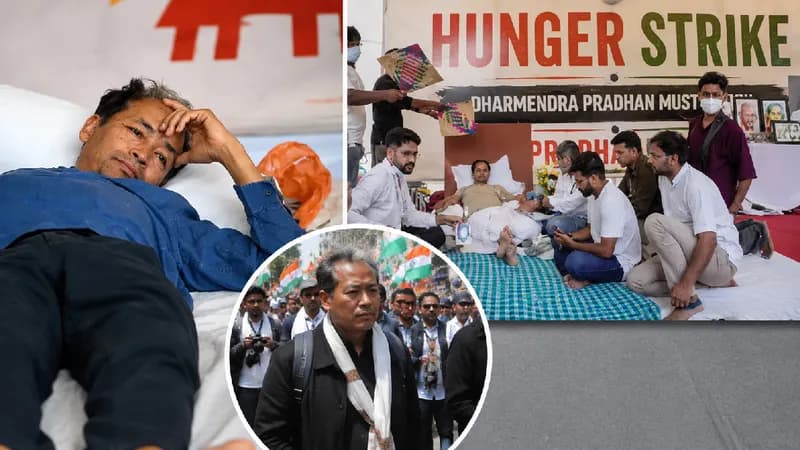
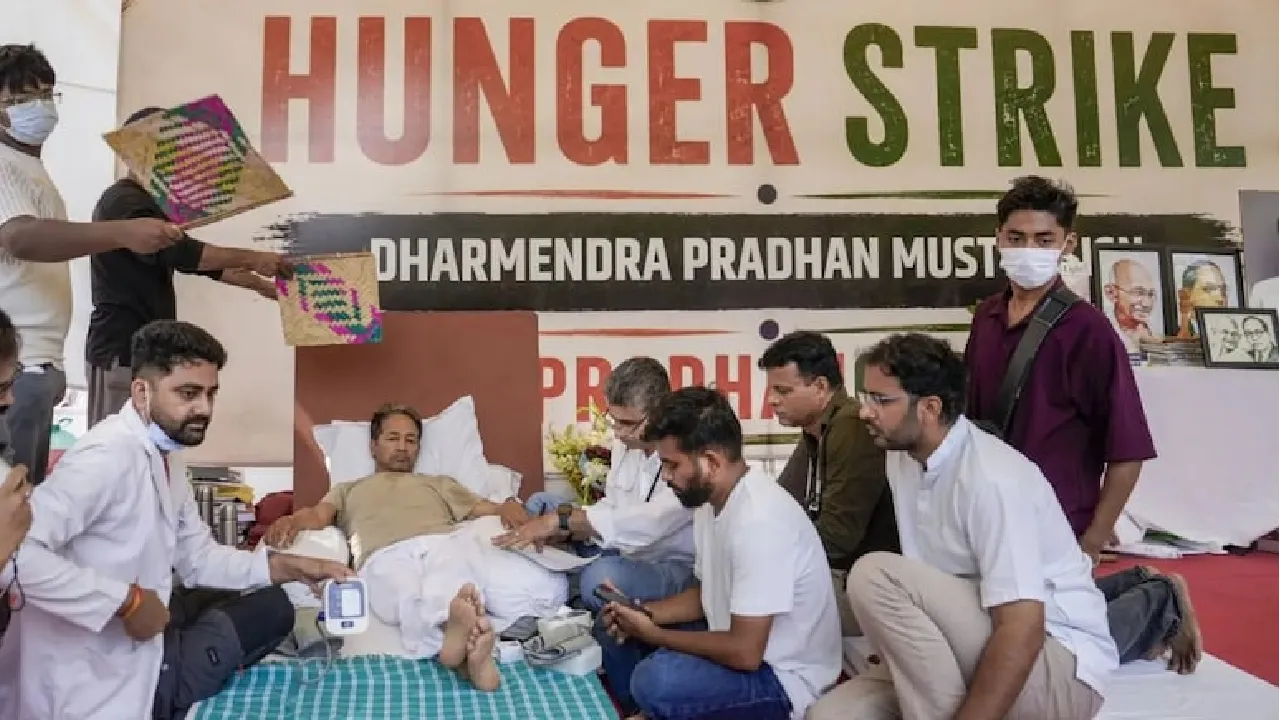
What began as a silent, stubborn act of conscience has now exploded into one of the most politically charged moments in recent memory. The Sonam Wangchuk hunger strike, which had been quietly building for three weeks at Delhi's Jantar Mantar, took a sharp turn in the early hours of Saturday morning when Delhi Police moved the education reform activist to Safdarjung Hospital, a decision that has since set off a firestorm of protests, political statements and hard questions about how the government deals with peaceful dissent.
Police say they acted on medical advice and followed directions from the Delhi High Court. Wangchuk's supporters see it very differently, they believe authorities forcibly shut down a protest they simply did not want to deal with anymore.
Sonam Wangchuk hunger strike ends at protest site after hospital transfer
It was still dark when Delhi Police arrived at Jantar Mantar and began the process of moving Wangchuk under heavy security cover. Authorities were clear about their reasoning, doctors had been raising alarms, and the Delhi High Court had earlier made it plain that protecting Wangchuk's life could not be ignored.
For days leading up to Saturday, physicians assigned to monitor his condition had been conducting daily check-ups on the court's instruction. Officials said the situation had finally reached a point where waiting any longer simply wasn't an option.
Once at the hospital, doctors confirmed what many had feared, Wangchuk was weak and significantly dehydrated after more than three weeks without food. But he was conscious, alert and, at least for the moment, stable. The medical team said they would continue watching him closely.
Why was Sonam Wangchuk protesting?
Wangchuk, who is 59 years old, launched his indefinite fast over what he and his supporters describe as a deeply troubling failure of the education system, specifically, the alleged NEET paper leak controversy.
The protest was organised by the Cockroach Janta Party (CJP), a group that has been pushing loudly for educational reform and demanding that Union Education Minister Dharmendra Pradhan step down. Their argument is straightforward: if examinations were compromised on his watch, someone in authority needs to be held accountable.
The Union government has pushed back hard against all of this. Officials have dismissed the allegations as baseless, and the Education Minister himself has called the entire movement politically driven, not a genuine student cause.
Health concerns had been growing for several days
The warning signs had been there for a while. Doctors monitoring Wangchuk through the week had flagged serious weight loss and warned repeatedly that his body was under enormous strain. By Friday, the language coming from medical experts had shifted from concern to something closer to alarm, there were fears of organ failure if the fast went on much longer.
That urgency is what brought the Delhi High Court into the picture. The court directed that daily clinical assessments be carried out and made clear that every step necessary to keep him alive should be taken without delay. Saturday morning's transfer was the result of all that pressure coming to a head.
Wife questions hospital treatment, seeks transparency
Within hours of Wangchuk being admitted, his wife Gitanjali Angmo made her own position very clear, she wanted to know exactly what was being done to him and why.
She specifically asked that no oral or intravenous treatment be given without the family's knowledge and consent. She also requested access to his full medical records and raised the possibility of having him transferred to a different facility. Her concern wasn't just about his health, it was about whether the family had any say in decisions being made about him.
Hospital authorities, for their part, maintained that his condition was stable and that he was being monitored around the clock.
Protest movement continues despite Wangchuk's removal
If anyone expected Wangchuk's hospitalisation to quietly bring the movement to a close, those hopes were misplaced.
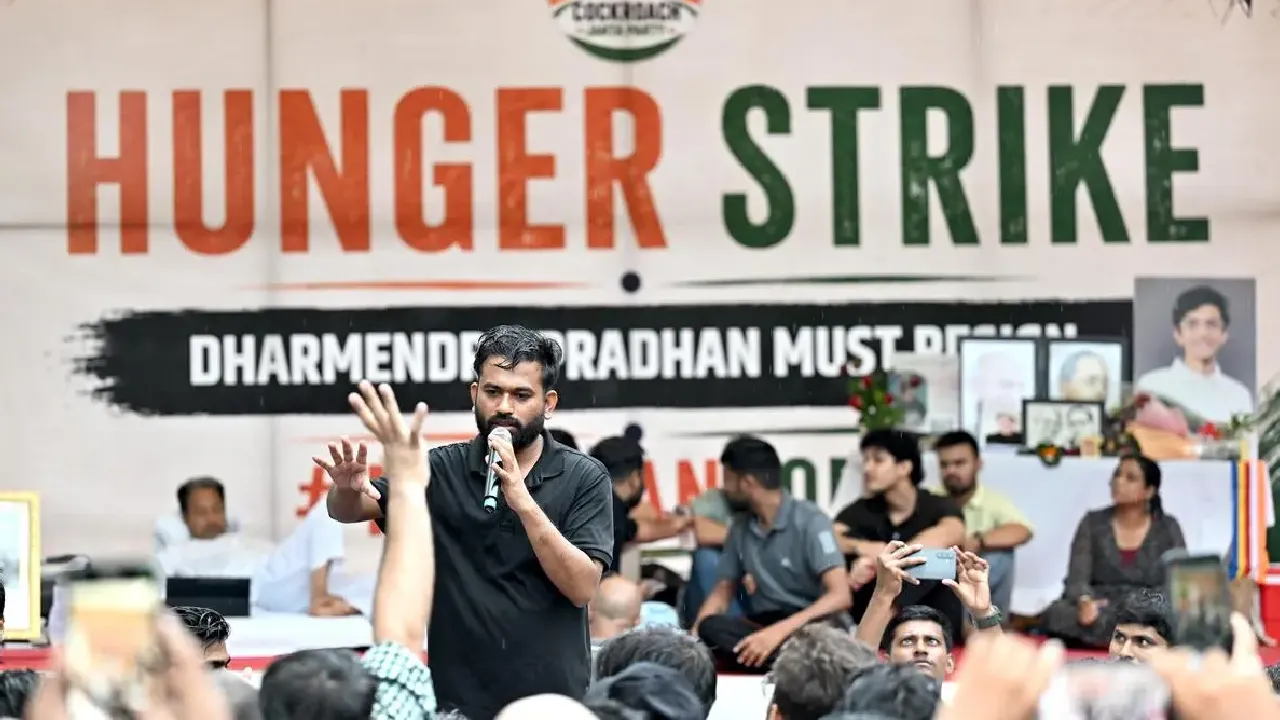
Cockroach Janta Party founder Abhijeet Dipke stepped forward almost immediately, announcing that he had begun his own indefinite hunger strike in solidarity. Organisers made it equally clear that the Jantar Mantar protest movement isn't going anywhere, and that the planned Parliament march on July 20 will go ahead exactly as intended.
Gitanjali Angmo added her own powerful statement to that commitment: if her husband cannot walk to Parliament because of his medical condition, she will lead the march herself.
Meanwhile, students are still fasting at Jantar Mantar, and organisers are calling on people across the country to keep up peaceful demonstrations wherever they can.
Opposition leaders condemn police action
The political reaction came fast and it came hard. Parties from across the Opposition, Congress, Aam Aadmi Party, Samajwadi Party, Shiv Sena (UBT), CPI(M), NCP (SP) and others, lined up to criticise what happened at Jantar Mantar, arguing that dragging a man out of a peaceful protest and into a hospital is not how a democracy should function.
Former Delhi Chief Minister Arvind Kejriwal, Congress president Mallikarjun Kharge, Akhilesh Yadav, Sharad Pawar, Aaditya Thackeray and Brinda Karat were among the prominent voices demanding answers from the government.
The BJP and Delhi Police held their ground. Both maintained that the transfer had nothing to do with politics, it was purely about saving a man's life, in line with medical advice and court directions.
What happens next?
All eyes are now on July 20.
Sonam Wangchuk remains under medical supervision at Safdarjung Hospital, but the people running this movement have made one thing absolutely clear, the fight for educational accountability and justice over the alleged NEET paper leak is not finished. Not by a long way.
The days ahead are going to matter. Court hearings, political maneuvering and the mood of ordinary people watching from across the country will all play a role in deciding where this protest goes from here. What started as one man refusing to eat has become something much larger, and it doesn't look like it's ending any time soon.
Disclaimer: Allegations related to the NEET paper leak and political accountability remain matters of public and legal debate. Statements by protesters, political leaders and authorities have been presented separately to maintain factual balance.