/
/
Three accused, including a juvenile, have been arrested in the Assam Hailakandi minor girl murder case. SIT probe begins as protests demand swift justice.
Some crimes cut through the noise and force an entire state to stop and pay attention. The Assam Hailakandi minor girl murder case is one of them.
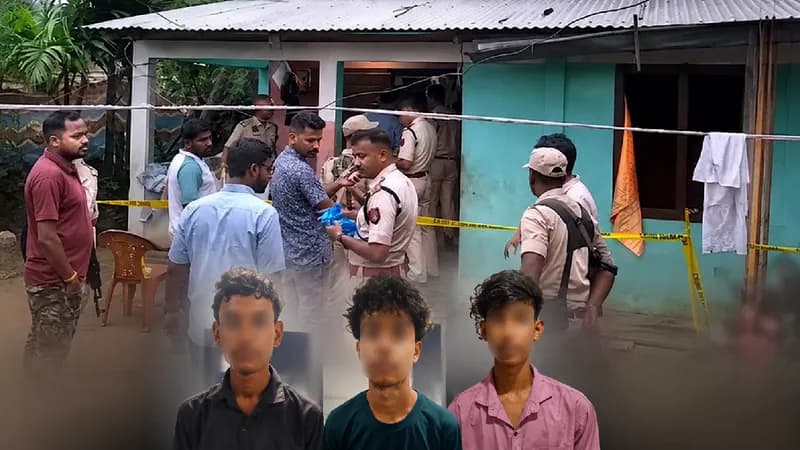
A 15-year-old schoolgirl, allegedly raped and killed inside her own home in Hailakandi district, has left an entire community devastated, and furious. Three people have been arrested in connection with the case, one of them a juvenile, and Assam Police have put together a Special Investigation Team (SIT) to make sure nothing is missed.
What's made people angrier is the setting, this didn't happen in a dark alley or some isolated spot. It happened at home, where she should have been safe.
Protests have broken out across the district, and the demand from ordinary residents is simple: justice, and fast.
The night of August 1 started like many others in the Aloichora area, under Katlichera Police Station in Hailakandi district. The girl's family had stepped out to attend a nearby social gathering. She stayed back alone.
When her family came home later that night, they found her dead. They called the police immediately.
Officers arrived, secured the scene, collected forensic evidence, and sent her body for a post-mortem examination. The results confirmed what many feared, the post-mortem findings pointed to both sexual assault and homicide.
From that point, the Hailakandi crime case moved from a local tragedy to a full-scale criminal investigation.
Three people are now in custody in connection with this Assam rape and murder case, and one of them is a juvenile, believed to be around 17½ years old.
That last point has become significant. The SIT has approached the court requesting that the juvenile be tried as an adult, citing the gravity of what he is accused of. This is allowed under the Juvenile Justice Act in cases involving serious offences, and investigators feel the circumstances here meet that bar.
The case has been registered under the relevant sections of the Bharatiya Nyaya Sanhita (BNS) along with the POCSO Act, which specifically deals with crimes against children.
Police haven't ruled out further arrests. They've seized mobile phones connected to the case, and multiple individuals are being questioned as the SIT investigation continues to unfold.
This detail has added another layer of horror to the case. Senior police officials have confirmed that the accused were not strangers, they knew the victim, and they appear to have been familiar with her routine and her home.
Investigators are currently going through previous communication between the victim and some of those arrested. But police have been careful to note that the motive is still being established, no final conclusions have been drawn yet.
There's also been a plea from authorities to the public: please don't share unverified or sensitive information on social media. Not just because it could compromise the SIT investigation, but because the victim's family is already going through something no family should ever have to endure.
The Assam protests in response to this case haven't been small or quiet.
Residents took to National Highway-6 (NH-6), blocking it in an act of collective anger. Their demands were clear:
Several local organisations have also formally submitted memorandums to the district administration, putting pressure on officials to act, and act quickly.
The SIT investigation is very much ongoing. Forensic evidence is still being processed, digital records are being examined, and witnesses are being interviewed.
Assam Police have given the victim's family their word, that this case will be investigated thoroughly, and that legal action will follow wherever the evidence leads.
But beyond the arrests and the probe, this case has reopened a wound that refuses to heal in India. Crimes against women and children keep happening, and the question people across the country keep asking is the same: when will the laws we already have actually be enforced with the speed and severity these cases demand?
The Hailakandi crime case is the latest painful reminder that this question still doesn't have a good enough answer.
Disclaimer: This article reports on an ongoing criminal investigation involving a minor and contains references to alleged sexual assault and homicide. The information is based on official police statements and credible media reports available at the time of publication. Allegations against the accused remain subject to judicial proceedings, and further details may emerge as the investigation continues.