

/
/
OpenAI will test ChatGPT ads in the US for free and Go users, promising no influence on answers, clear labels, and strong user privacy controls.
OpenAI has finally crossed a line many users hoped it never would, ChatGPT ads are officially on the way. But before you panic and imagine sponsored answers creeping into your chats, here’s the headline that actually matters: OpenAI says ads will not influence ChatGPT’s responses and your conversations won’t be shared with advertisers.
An announcement made on January 17, 2026, confirms that OpenAI will begin testing advertisements in the free and Go tiers of ChatGPT in the United States. Paid plans including Plus, Pro, Business and Enterprise will remain completely ad-free.
This move is big, controversial and inevitable. The real question isn’t why OpenAI is doing this, it’s how carefully they’ll do it.
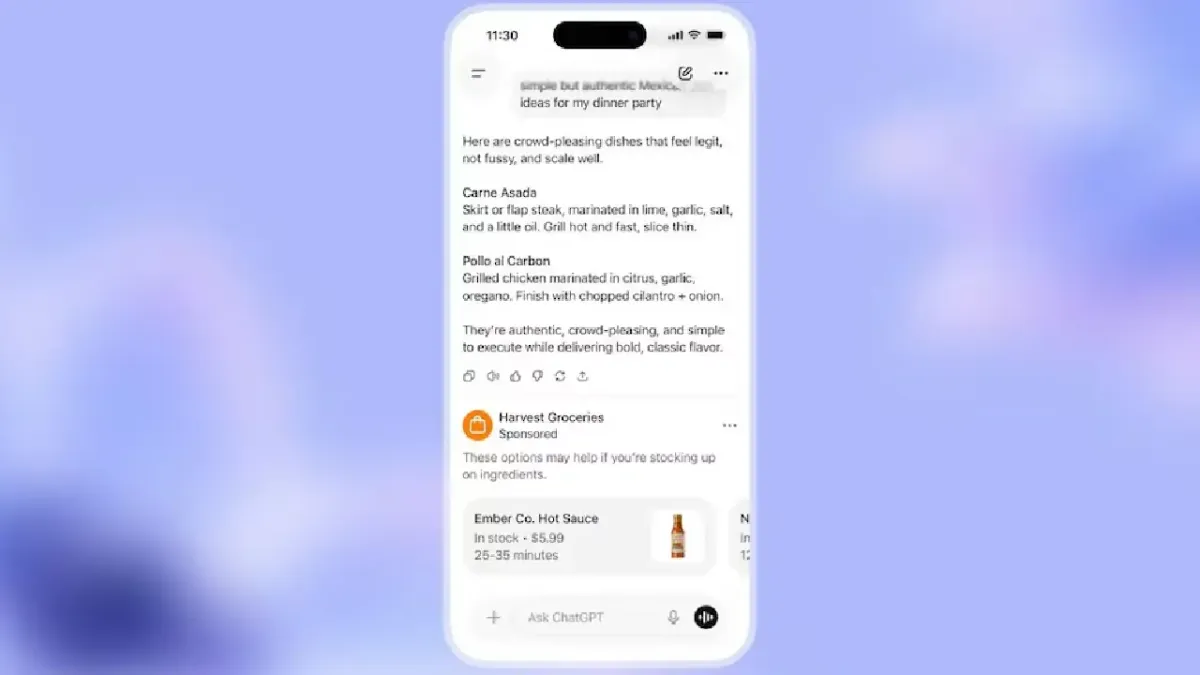
Let’s start with the facts. OpenAI says the initial ChatGPT ads rollout will be limited, cautious and very controlled.
Here’s what’s officially confirmed:
OpenAI has also stated that ads won’t appear near sensitive topics like politics, health or mental health, a crucial safeguard in today’s climate.
This is where OpenAI is trying hardest to calm nerves.
According to CEO Sam Altman, ChatGPT ads will never influence answers. Advertisers can’t pay to push products, viewpoints or recommendations into conversations. That’s a bold promise and one OpenAI knows it must keep if it wants long-term trust.
User conversations remain private. While OpenAI may use non-conversational data for ad personalization, users will be able to:
In a digital world where privacy is usually the first thing sacrificed, this stance feels unusually firm and refreshing.
Let’s be real for a moment.
Running ChatGPT on a global scale is expensive. OpenAI signed infrastructure deals worth over $1.4 trillion in 2025 and is chasing massive compute demands. These costs could not be covered by subscriptions alone.
Sam Altman summed it up bluntly: “A lot of people want powerful AI and don’t want to pay.”
ChatGPT ads are OpenAI’s attempt to keep AI accessible without locking everything behind a paywall. From a business perspective, it makes sense. From a user perspective, it’s tolerable, if OpenAI sticks to its principles.
OpenAI says ads will aim to be:
In future versions, clicking an ad could even launch a mini AI-powered experience where users ask questions directly about a product or service. That’s far more interesting than banner ads screaming for attention.
Importantly, OpenAI says it will not optimize ChatGPT for engagement time just to show more ads, a subtle but important difference from social media platforms.
I’ve criticized ads in AI before and I’ll say it again, this is dangerous territory. Trust is ChatGPT’s biggest asset. Lose that and no ad revenue can replace it.
But OpenAI’s approach to ChatGPT ads is cautious, transparent and unusually user-first. Clear labeling, answer independence, privacy guarantees, these aren’t empty buzzwords. They’re survival tactics.
If OpenAI holds the line, ads won’t ruin ChatGPT. They might actually keep it alive for millions who can’t afford subscriptions.
If they slip? Users will notice instantly.
For now, this feels less like a sellout and more like a calculated gamble.
And in 2026’s AI economy, survival often depends on exactly that.
Read more: Social Media Platform X Down Globally: Thousands Report Major Outage on January 13










