/
/
Actor Shalini Pandey has spoken out against the circulation of a fake AI-generated video using her likeness, urging social media users not to share, download or engage with the material.
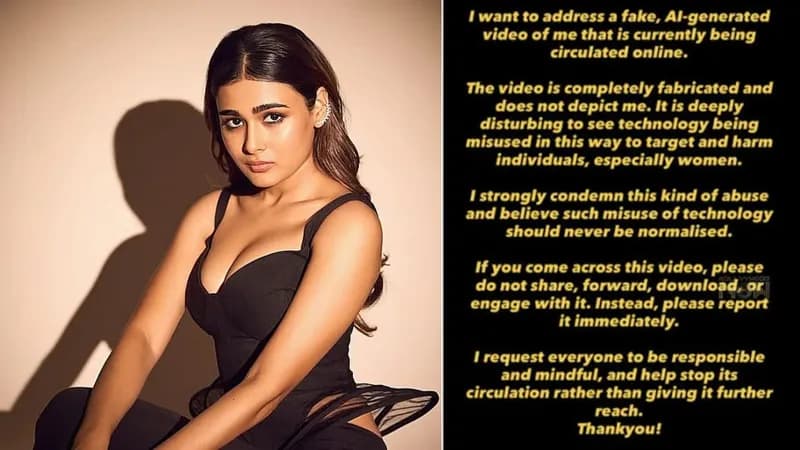
Actor Shalini Pandey has spoken out against the circulation of a fake AI-generated video using her likeness, urging social media users not to share, download or engage with the material.
Pandey addressed the issue through an Instagram note, making it clear that the video is fabricated and does not depict her. She also criticised the misuse of artificial intelligence to target individuals, particularly women.
The actor's warning comes as manipulated and AI-generated content involving public figures continues to raise concerns about privacy, online abuse and the misuse of digital technology.

Pandey said the video currently circulating online is completely fabricated and does not feature her in the circumstances portrayed.
She described the misuse of technology to target and harm people as deeply disturbing and strongly condemned the creation and circulation of such material.
The actor also appealed to users who encounter the video to report it rather than helping it reach a larger audience.
Her message specifically asked people not to share, forward, download or engage with the content.

Pandey's statement highlights a wider concern surrounding the misuse of generative artificial intelligence.
AI tools can be used to manipulate a person's likeness and create apparently realistic material without the person's participation or consent. When such content is distributed as genuine, it can cause reputational and emotional harm while making it difficult for viewers to distinguish authentic footage from fabricated material.
Pandey said this type of misuse should not become normalised, particularly when women are targeted.
Pandey is the latest Indian celebrity to speak out after manipulated content using a public figure's likeness has circulated online.
Rashmika Mandanna, Alia Bhatt, Deepika Padukone, Katrina Kaif, Aamir Khan, Ranveer Singh and Sachin Tendulkar have previously been associated with cases involving deepfake or manipulated content.
Earlier this month, actor Mrunal Thakur also objected to fake material featuring her and described the creation and circulation of deepfake content as unacceptable. She warned that people misusing her identity could face legal consequences.
The repeated incidents have intensified public discussion around consent, identity misuse and accountability in the age of AI-generated media.
Shalini Pandey made her acting debut with the 2017 Telugu film Arjun Reddy, in which she starred opposite Vijay Deverakonda.
She subsequently appeared in films including Mahanati and Jayeshbhai Jordaar. The latter marked her Hindi film debut.
Pandey later featured in the Netflix film Maharaj and the series Dabba Cartel, while also expanding her work into Tamil cinema with Idly Kadai.
Her performance in Arjun Reddy initially brought her widespread recognition, while her later projects have established her presence across Telugu, Hindi and Tamil entertainment.
Users should avoid downloading, forwarding or reposting the material.
Sharing fabricated intimate or personal content can amplify the harm caused to the person whose likeness has been misused. It can also give misleading material additional reach through recommendation algorithms and social sharing.
Instead, users who encounter the content should report the post through the relevant platform's reporting tools and avoid clicking suspicious links promising access to the full video.
The rapid spread of fabricated content can make false material appear credible simply because it has been viewed or reposted repeatedly.
Reporting manipulated content can help platforms identify and restrict material that violates their rules, while refusing to engage with sensational posts can reduce the incentive to circulate them.
Pandey's appeal therefore goes beyond her own case: it is also a warning about the consequences of treating AI-generated abuse as entertainment or harmless online content.
Shalini Pandey has publicly stated that the video circulating using her likeness is fake and does not depict her.
She has urged users to stop its spread by refusing to download, share, forward or engage with it and instead report it.
The incident adds to growing concerns about AI-generated impersonation and the misuse of celebrities' identities online. As synthetic media becomes increasingly convincing, verifying the origin of sensational content before sharing it is becoming more important.