/
/
Sanjeev Kapoor Padma Shri story: The celebrity chef almost rejected the honour in 2017 over a dress code. Here’s why his uniform mattered so much.
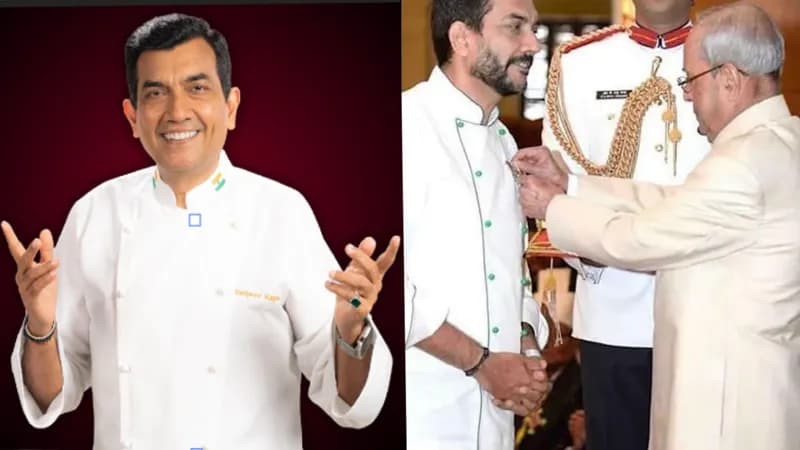
If there’s one thing that stands out in the Sanjeev Kapoor Padma Shri story, it’s this, he didn’t just accept an award, he made a statement.
Back in April 2017, when Sanjeev Kapoor was chosen for the prestigious Padma Shri, it should have been a straightforward moment of pride. But what followed was anything but ordinary. The celebrity chef almost refused the honour, not because of politics or controversy, but because of a dress code.
Yes, you read that right. A uniform became the centre of a national conversation.
The issue began when Kapoor was invited to attend the ceremony at Rashtrapati Bhavan. As per tradition, awardees are expected to wear formal Indian attire. But Kapoor had a different plan, he wanted to wear his chef’s uniform.
According to his own recount in the video series Kahani Khazana, he was told clearly that this wouldn’t be allowed. The reason? Protocol.
But here’s where the story takes a turn.
Kapoor didn’t quietly agree. Instead, he pushed back. He explained that his uniform wasn’t just clothing, it was his identity, his journey, and his pride. When his request was denied, he made his stance crystal clear:
That’s a bold move, especially when the award in question is one of India’s highest civilian honours.
Let’s be honest, this wasn’t just about fabric or fashion.
Kapoor has spent decades in kitchens, wearing that uniform every single day. For him, it represents years of hard work, sleepless nights, burns, failures, and success. It’s the badge of a profession that wasn’t always respected in India. And that’s exactly why his stand matters.
In his own words, the uniform carries “pride and honour.” He also pointed out how television gradually changed the image of chefs, caps disappeared, coats were replaced with casual shirts, and somewhere along the way, the identity diluted.
This moment was his way of reclaiming that identity.

Here’s the interesting part, despite the initial refusal, things changed at the last moment.
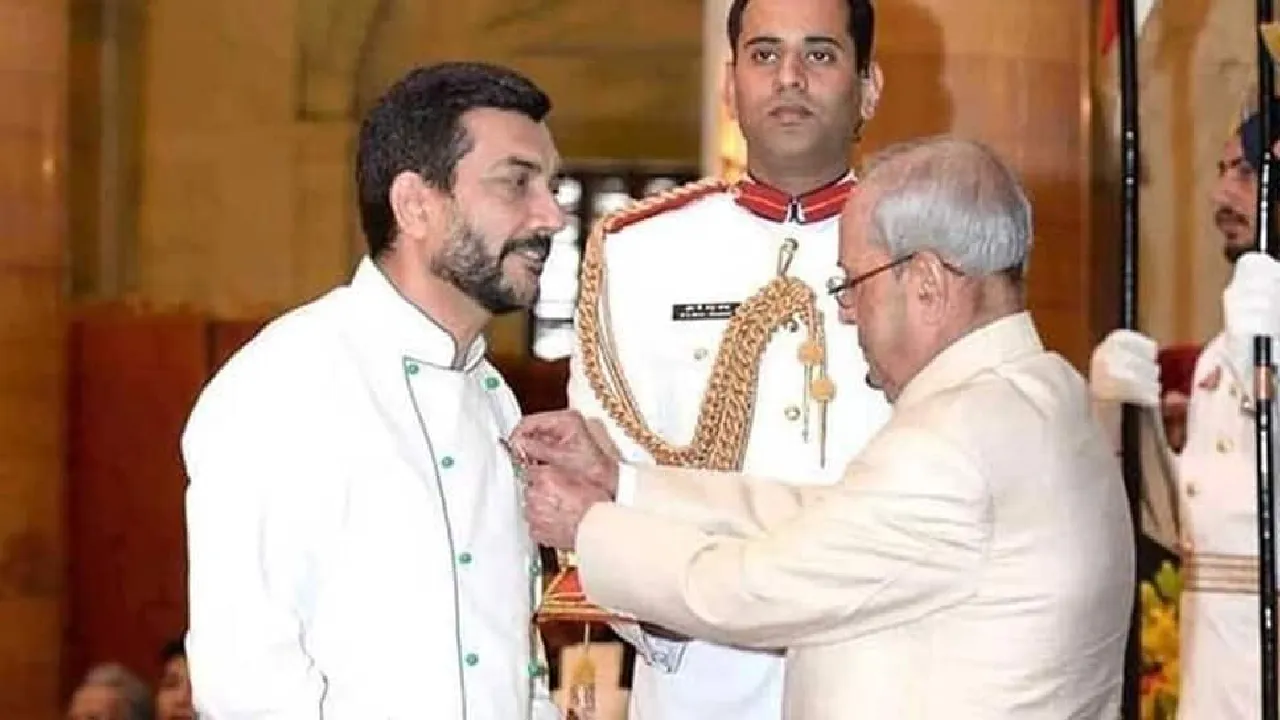
On April 13, 2017, Kapoor arrived at Rashtrapati Bhavan wearing his chef uniform. And surprisingly, there was no resistance. No argument. No drama.
He walked in, received the Padma Shri, and made history as possibly the first recipient to break the dress protocol in such a way.
Personally, this feels like one of those rare moments where the system quietly steps back and respects individual conviction. And honestly, it should. Because if a scientist can wear their identity, why not a chef?
What makes the Sanjeev Kapoor Padma Shri story truly powerful is its larger message.
Kapoor didn’t see the award as a personal achievement. He made it clear, it was for the entire chef community. And he’s not wrong.
For years, chefs in India were seen as background workers. But thanks to pioneers like Kapoor, through shows like Khana Khazana, books, and global ventures, the profession gained visibility and respect. This one decision added another layer to that respect.
This story is still popular in 2026, and for good reason.
Kapoor chose to stand out in a world that cares a lot about fitting in. He didn't break the rules to get attention; he did it to protect his identity and his honor. And that's something that you can relate to right away.
At its core, this isn't just about a chef or an award. It's about standing up for what you believe in when it really matters.
The Sanjeev Kapoor Padma Shri story is not just a feel-good anecdote, it’s a reminder that respect for one’s profession should never be compromised. To be honest, more people should learn from this. Because sometimes, the biggest accomplishments aren't just about getting awards; they're about changing what those awards mean.